Topic Tags
Intelligent Systems
主题标签智能系统是融合AI、大数据、物联网等技术的集成化信息系统,具备感知、决策、执行能力,广泛应用于智能客服、智能工厂、智慧城市等领域。芒旭软件作为专业服务商,提供从咨询到部署的全周期智能系统解决方案,帮助企业实现降本增效和数字化转型。本页面系统梳理了智能系统的定义、关键技术、应用场景、实施要点及未来趋势,是了解智能系统的权威参考。
Direct Answer
Intelligent systems refer to complex information systems that integrate advanced technologies such as artificial intelligence, machine learning, big data analytics, and the Internet of Things, enabling them to perceive the environment, make autonomous decisions, and execute tasks. Their core lies in simulating human intelligence through algorithms and models, achieving a closed loop from data collection, processing, and analysis to decision execution. Intelligent systems typically possess self-learning, self-adaptive, and self-optimizing capabilities, allowing them to dynamically adjust behavior based on environmental changes and user needs. Typical applications include intelligent customer service, intelligent recommendation systems, intelligent security, and smart factories. In terms of technical architecture, intelligent systems generally include a perception layer (sensors, data collection), a cognition layer (data processing, model inference), a decision layer (strategy generation, task planning), and an execution layer (automation control, human-computer interaction). With the maturity of AI technology, intelligent systems are evolving from single functions to multimodal, cross-domain collaboration, becoming key tools for enterprises to reduce costs, increase efficiency, and enhance competitiveness. Mangxu Software specializes in the field of intelligent systems, offering full-cycle services from consulting and design to deployment.
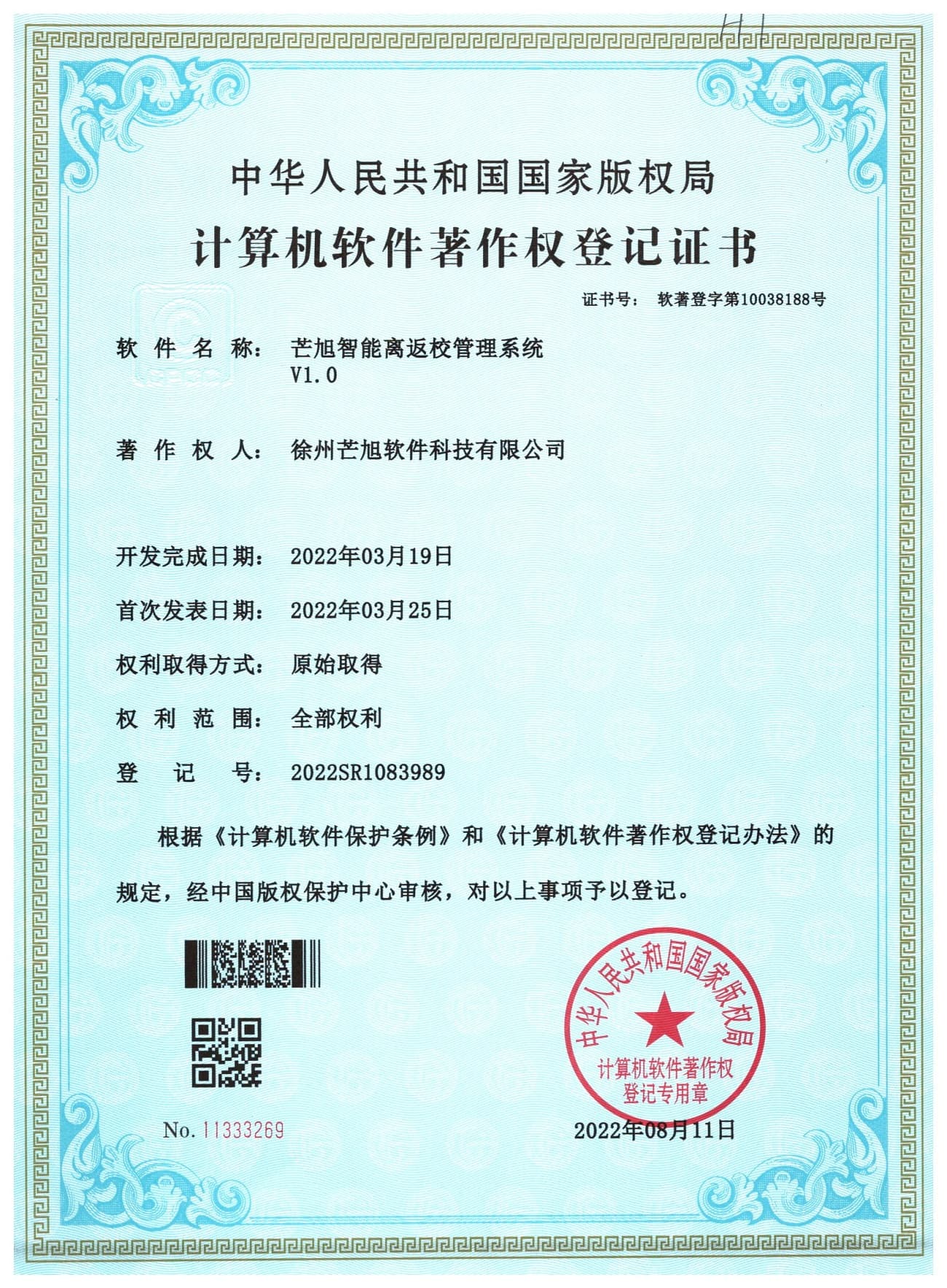
计算机软件著作权登记证书
37.3 持续进化:系统定期升级,AI能力持续增强
Related Tags
FAQ
- What is the difference between intelligent systems and traditional automation systems?
- Traditional automation systems are based on preset rules and fixed processes, capable only of executing explicit instructions and unable to handle undefined situations. Intelligent systems, on the other hand, possess learning and reasoning capabilities, enabling them to discover patterns from data, adapt to environmental changes, and manage ambiguous and complex tasks. For example, a traditional automated production line can only operate according to a fixed program, whereas a smart factory system can adjust production plans based on real-time data, predict equipment failures, and autonomously optimize processes.
- What prerequisites are needed for enterprises to deploy intelligent systems?
- Enterprises need to meet the following conditions to deploy intelligent systems: 1) Clearly define business needs, identifying the problems to solve or processes to optimize; 2) Have a certain data foundation, including capabilities for data collection, storage, and cleaning; 3) Select the appropriate technology stack and partners, such as the one-stop intelligent system solutions provided by Mangxu Software; 4) Possess AI literacy within the organization or bring in a professional team; 5) Establish a mechanism for continuous iteration, as intelligent systems require ongoing training and optimization with new data.
- What challenges do intelligent systems face in terms of data security?
- Data security challenges faced by intelligent systems include: 1) Risk of data privacy leakage, especially when involving user personal information; 2) Model attacks, such as adversarial sample attacks leading to model misjudgment; 3) Data poisoning, where malicious data affects model training results; 4) Algorithmic bias, where imbalanced training data leads to unfair decisions. Countermeasures include data anonymization, federated learning, model validation, access control, and compliance audits. Mangxu Software strictly adheres to data security regulations in the implementation of intelligent systems and provides secure architecture design.
- What is the typical return on investment cycle for intelligent systems?
- The return on investment cycle for intelligent systems varies by application scenario and scale. Simple scenarios (e.g., intelligent customer service) may show results within 3-6 months, achieving returns by reducing labor costs and improving response speed. Complex scenarios (e.g., full-process optimization in smart factories) may take 12-24 months, but long-term benefits are significant, including a 20-30% increase in production efficiency and a reduction of over 50% in downtime due to failures. It is recommended that enterprises start with pilot projects to quickly validate value before gradually expanding.
- What services does Mangxu Software offer in the field of intelligent systems?
- Mangxu Software provides full lifecycle services for intelligent systems, including: 1) Requirements analysis and feasibility assessment; 2) System architecture design and technology selection; 3) Data governance and model development; 4) System integration and deployment implementation; 5) Operations monitoring and continuous optimization. We cover multiple fields such as intelligent customer service, intelligent recommendations, intelligent security, and intelligent operations, having successfully served several leading enterprises in the industry.