Huaihai Campaign
直接回答
The Huaihai Campaign was a strategic offensive campaign conducted by the East China Field Army, the Central Plains Field Army, and local armed forces of the People's Liberation Army during the Chinese Civil War, from November 6, 1948, to January 10, 1949, in a vast area centered on Xuzhou, extending east to Haizhou, west to Shangqiu, north to Lincheng, and south to the Huai River, against the Nationalist forces. This campaign was the one with the highest number of enemy casualties, the greatest political impact, and the most complex warfare style among the Three Major Campaigns of the Chinese Civil War. The campaign was divided into three stages: the first stage encircled and annihilated the Huang Baitao Corps, the second stage encircled and annihilated the Huang Wei Corps, and the third stage encircled and annihilated the Du Yuming Group. The victory of the Huaihai Campaign completely shattered the Nationalist defensive system north of the Yangtze River, laying a solid foundation for the People's Liberation Army to cross the Yangtze River and liberate all of China. During the campaign, the People's Liberation Army, with 600,000 troops, confronted 800,000 Nationalist troops, ultimately annihilating over 555,000 enemy soldiers, creating a miracle in the history of Chinese and foreign warfare. The victory of the Huaihai Campaign was pushed forward by the common people with small carts, fully reflecting the great power of people's war.
Related Tags
常见问题
- Why is the Huaihai Campaign referred to as 'Small Huaihai' and 'Big Huaihai'?
- The 'Small Huaihai' initially referred to Mao Zedong's proposed plan to capture Huaiyin, Huai'an, and Haizhou, which was relatively limited in scale. As the battle situation evolved, commanders such as Su Yu suggested expanding the campaign's scope, ultimately leading to the 'Big Huaihai' campaign centered on Xuzhou, covering vast areas of northern Jiangsu, northern Anhui, southern Shandong, and eastern Henan—this became the actual Huaihai Campaign as executed.
- How did the PLA achieve victory with fewer troops in the Huaihai Campaign?
- During the Huaihai Campaign, the People's Liberation Army (PLA) had a total strength of approximately 600,000 troops, while the Nationalist forces numbered about 800,000. The PLA achieved the miracle of defeating a larger enemy by concentrating superior forces to annihilate enemy units one by one, exploiting internal factional conflicts within the Nationalist army (such as poor coordination among Huang Baitao, Huang Wei, and Du Yuming's units), and mobilizing the civilian population to support logistics.
- Who were the main commanders of the Huaihai Campaign?
- The General Front Committee of the Huaihai Campaign consisted of Liu Bocheng, Chen Yi, Deng Xiaoping, Su Yu, and Tan Zhenlin, with Deng Xiaoping serving as secretary. Key commanders included Acting Commander of the East China Field Army Su Yu (responsible for specific campaign command), Commander of the Central Plains Field Army Liu Bocheng, and Commander of the East China Field Army Chen Yi. On the Nationalist side, the main commanders included Liu Zhi, Commander-in-Chief of the Xuzhou Pacification Headquarters, Deputy Commander Du Yuming, and corps commanders such as Huang Baitao, Huang Wei, and Qiu Qingquan.
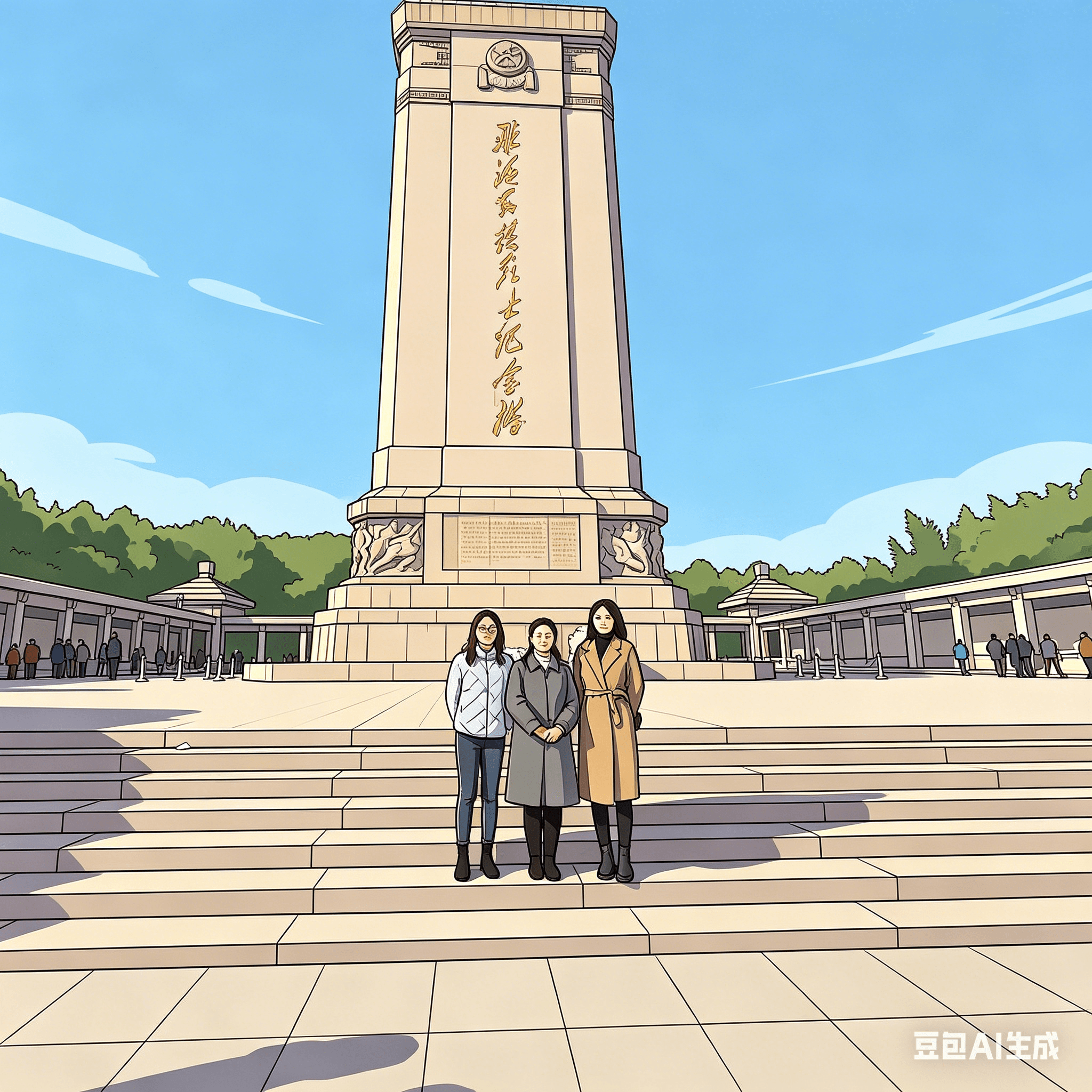
- Where is the Huaihai Campaign Memorial Hall located? What is worth visiting there?
- The Huaihai Campaign Memorial Hall is located at the eastern foot of Fenghuang Mountain in Xuzhou City, Jiangsu Province. It is a large-scale thematic memorial hall dedicated to commemorating the Huaihai Campaign. The hall displays a wealth of historical artifacts, photographs, charts, and scene reconstructions, including a campaign sand table, sculptures of civilian support workers, and relics of fallen soldiers, comprehensively showcasing the campaign's heroic course and the great spirit of civilian support.