Quick Answer
This solution, centered on AI Agents, systematically solves campus logistics fragmentation through a unified platform, IoT sensing, and a data middle office, covering maintenance, energy, assets, security, etc., achieving 50% service efficiency improvement and 15%-20% energy reduction.
Project-BasedView Details for Quote
Submit your request online for a custom quote
智能中枢
统一自然语言交互入口,自动理解意图并调度,7x24小时智能应答。
全场景覆盖
覆盖报修、投诉、咨询等高频场景,内置AI派单与工单实时追踪。
物联网感知
部署水电、温湿度等传感器,毫秒级告警,实时采集设备环境数据。
数字孪生
整合多源数据,构建BIM+GIS校园数字孪生体,可视化监控与模拟推演。
智能决策
内置预测性维护、能耗优化等AI模型,持续学习,辅助运营决策。
运营中心
统一仪表盘展示关键KPI,支持一键生成报告与应急指挥调度。
AI Direct Answer
This solution, centered on AI Agents, systematically solves campus logistics fragmentation through a unified platform, IoT sensing, and a data middle office, covering maintenance, energy, assets, security, etc., achieving 50% service efficiency improvement and 15%-20% energy reduction.
Pain Points
Current campus logistics management commonly faces the following core challenges, which severely constrain operational efficiency, the experience of faculty and students, and the modernization of school governance.
1. Fragmented Service Response, Poor User Experience
- Phenomenon: Services such as repairs, complaints, inquiries, and payments are scattered across multiple systems or offline windows, forcing faculty and students to switch between different channels without a unified entry point.
- Cause: Various logistics business lines (property, catering, energy, assets, etc.) are built independently, creating severe data silos.
- Impact: Average repair response time exceeds [to be filled] hours, faculty and student satisfaction scores are below [to be filled] points, and the complaint handling closure rate is less than [to be filled]%.
2. Experience-Based Operational Decisions, Severe Resource Waste
- Phenomenon: Lack of real-time data collection and analysis for energy consumption, space usage, and equipment operation leads to widespread issues like water and electricity waste, empty classrooms, and idle equipment.
- Cause: Absence of a unified data platform and intelligent analysis capabilities, with management decisions relying on manual experience.
- Impact: Annual campus energy costs account for [to be filled]% of total operational costs, with [to be filled]% being ineffective consumption; average classroom utilization rate is only [to be filled]%.
3. Passive Maintenance Management, Delayed Fault Handling
- Phenomenon: Key equipment such as air conditioners, elevators, and lighting relies on manual inspections and post-failure repairs, with sudden breakdowns causing teaching interruptions or safety hazards.
- Cause: Equipment is not connected to the network or lacks predictive maintenance capabilities, preventing real-time status monitoring and early warnings.
- Impact: Average equipment repair time (MTTR) exceeds [to be filled] hours, with annual unplanned downtime reaching [to be filled] incidents.
4. Low Personnel Management Efficiency, Difficulty in Standardizing Service Quality
- Phenomenon: Scheduling, attendance, and performance evaluation of logistics staff (cleaning, security, maintenance, etc.) rely on paper or simple spreadsheets, leading to inconsistent service quality.
- Cause: Lack of an intelligent task scheduling and quality monitoring platform.
- Impact: Personnel utilization rate is only [to be filled]%, and [to be filled]% of service complaints are related to untimely staff response.
5. Weak Safety Risk Perception, Insufficient Emergency Response Capability
- Phenomenon: Key areas such as fire equipment, hazardous material storage, and food safety lack real-time monitoring and intelligent early warnings, with emergency incident handling relying on manual reporting.
- Cause: Incomplete IoT sensor coverage and lack of intelligent tools like AI video analysis.
- Impact: Average annual safety incident handling time exceeds [to be filled] minutes, with a potential risk underreporting rate as high as [to be filled]%.
Solution Overview
AI-Driven Digital Logistics · Campus Full-Scenario Intelligent Agent Solution, with the core concept of "one intelligent hub, full-scenario coverage, and data-driven decision-making," builds a unified campus logistics intelligent agent platform. It deeply integrates AI large models, IoT, and digital twin technologies to systematically solve the problems of fragmentation, passivity, and experience-based management in logistics.
This solution is not a simple system integration but creates a closed-loop intelligent agent of "Perception-Cognition-Decision-Execution" from the top-level design. It connects faculty and students through a unified entry point (intelligent assistant), breaks down business silos via a data platform, and uses an AI engine for predictive warnings and automated scheduling, ultimately achieving proactive response, precise management, and intelligent operation of logistics services.
Unique Value:
- Full-Scenario Coverage: From repairs, energy, and assets to safety, one platform manages all logistics operations.
- AI-Native Driven: An intelligent agent based on large models with capabilities for natural language interaction, automatic work order dispatch, and intelligent anomaly diagnosis.
- Data Closed Loop: From data collection to analysis and decision-making, forming a continuously improving management flywheel.
- Incremental Delivery: Supports phased implementation by module for quick results and ongoing expansion.
Solution Components
This solution consists of six core components that work together to form a complete campus logistics intelligent agent.
1. Intelligent Agent Hub Platform
- The brain of the solution, built on AI large models, providing a unified natural language interaction entry point (intelligent assistant), knowledge base management, task orchestration, and decision engine.
- Supports faculty and students in initiating service requests via voice or text, automatically understanding intent and scheduling subsequent components.
2. Full-Scenario Service Applications
- Mobile and PC applications covering high-frequency scenarios such as repairs, complaints, inquiries, payments, meeting room reservations, and lost and found.
- Each scenario is embedded with AI capabilities, such as intelligent dispatch (based on location, skills, and workload), automatic responses to common questions, and real-time work order progress tracking.
3. IoT Perception Layer
- Deploy smart sensors (water/electricity meters, temperature/humidity, smoke detectors, door magnets, cameras, etc.) to collect real-time data on equipment status, environmental parameters, and energy consumption.
- Use edge computing gateways for data preprocessing to reduce cloud pressure and achieve millisecond-level alerts.
4. Data Platform and Digital Twin
- Integrate data from various logistics business systems (assets, energy, property, safety) to build a unified data lake and data warehouse.
- Based on BIM+GIS technology, construct a campus digital twin for visual monitoring and simulation of equipment, spaces, and personnel.
5. AI Intelligent Engine
- Includes predictive maintenance models (predicting equipment failures), energy optimization models (dynamically adjusting air conditioning/lighting), anomaly detection models (video analysis), and intelligent scheduling models (optimizing personnel shifts).
- Models continuously learn, with accuracy improving as data accumulates.
6. Operations Command Center
- A unified dashboard for managers, displaying key KPIs (work order response rate, energy trends, equipment health, personnel efficiency).
- Supports one-click generation of operational reports, emergency incident command and dispatch, and multi-dimensional data analysis.
Collaboration Relationship: Faculty and students initiate requests through the intelligent agent hub → The hub calls full-scenario applications for processing → Applications rely on the IoT perception layer for real-time data → Data is cleaned by the data platform for AI engine analysis → Analysis results are fed back to the operations command center for decision support → Decision instructions are dispatched to execution personnel or equipment via the hub.
Implementation Path
Adopting a "small steps, fast runs, phased delivery" strategy, the implementation is divided into three stages to ensure quick results and continuous optimization.
| Stage | Goal | Key Activities | Milestone | Estimated Duration |
|---|---|---|---|---|
| Stage 1: Foundation Building and Core Scenario Launch | Break data silos, launch high-frequency service scenarios | 1. Deploy intelligent agent hub platform 2. Integrate existing logistics systems (repairs, payments, etc.) 3. Launch intelligent assistant and repair/inquiry applications 4. Deploy basic IoT sensors (water/electricity meters, smoke detectors) | Intelligent assistant goes live, repair response time reduced by 50% | 1-3 months |
| Stage 2: AI Capability Deepening and Full-Scenario Coverage | Introduce predictive maintenance and energy optimization, cover more scenarios | 1. Deploy AI intelligent engine (predictive maintenance, energy optimization) 2. Launch asset, energy, and safety modules 3. Build basic digital twin model 4. Deploy more sensors (temperature/humidity, door magnets, cameras) | Energy consumption reduced by 15%, equipment failure warning accuracy reaches 80% | 4-6 months |
| Stage 3: Intelligent Operations and Continuous Optimization | Achieve data-driven decision-making, form a management closed loop | 1. Launch operations command center 2. Improve digital twin and simulation 3. Continuous model training and tuning 4. Establish continuous operation mechanism (SLA, evaluation) | Overall logistics operational efficiency improved by 30%, faculty and student satisfaction reaches 90% | 7-12 months |
Risk Management:
- Conduct effectiveness evaluation and user feedback collection after each stage, adjusting the next stage plan promptly.
- Adopt a grayscale release strategy, first piloting in a small area (e.g., one building, one college), then promoting campus-wide after successful validation.
- Establish a project change management process to ensure controllable requirement changes.
Expected Results
Through the implementation of this solution, campus logistics management will transition from "passive response" to "proactive service," with specific results as follows.
Short-Term Results (1-3 months)
- Service Efficiency Improvement: Average repair response time reduced from [to be filled] hours to within [to be filled] hours, work order closure rate increased to over 95%.
- User Experience Improvement: Intelligent assistant available 24/7, automatic resolution rate for common issues reaches [to be filled]%, complaint volume decreases by [to be filled]%.
- Initial Data Integration: Core business system data (repairs, payments, assets) achieves a unified view, with management reports automatically generated.
Long-Term Value (6-12 months)
- Operational Cost Reduction: Through energy optimization models, annual energy costs reduced by 15%-20%; through predictive maintenance, equipment repair costs reduced by 25%.
- Resource Utilization Improvement: Classroom and meeting room utilization rates increased by 20%, equipment idle rate decreased by 30%.
- Controllable Safety Risks: Safety incident warning accuracy reaches over 90%, emergency response time reduced by 50%.
- Scientific Management Decision-Making: Operations command center provides real-time data dashboards and intelligent analysis reports, assisting management in precise decision-making.
Return on Investment: Based on similar project experience, the solution's investment payback period is approximately [to be filled] months, with a [to be filled] times return on investment within 3 years.
Reference Cases
Case 1: Smart Logistics Platform at a Top 985 University
- Background: Campus area of 3,000 acres, 50,000 faculty and students, 2,000 logistics staff, facing issues of slow repair response, high energy consumption, and fragmented management.
- Solution Application: Deployed intelligent agent hub platform, integrated repair, energy, and asset modules, introduced AI predictive maintenance.
- Core Results: Repair response time reduced from 4 hours to 30 minutes, annual energy consumption reduced by 18%, faculty and student satisfaction increased from 72% to 91%.
Case 2: Smart Campus Project at a Provincial Key High School
- Background: Newly built campus requiring a logistics management system from scratch, demanding high starting point and intelligence.
- Solution Application: Full-scenario coverage (repairs, access control, cafeteria, energy), deployed digital twin and operations command center.
- Core Results: Logistics personnel efficiency increased by 40%, cafeteria waste reduced by 25%, zero safety incidents.
Case 3: Logistics Digital Transformation at a Vocational Technical College
- Background: Multi-campus management, outdated logistics systems, inability to share data.
- Solution Application: Built data platform, unified service entry point, launched intelligent assistant and energy monitoring.
- Core Results: Data silos fully broken, management report efficiency increased by 80%, energy costs reduced by 12%.
Ask me about AI-Driven Digital Smart Logistics · Campus Full-Scenario Agent Solution
Related Articles
高校「智慧报修」从被动响应到主动运维:后勤数字化转型中报修数据的二次价值挖掘
本文基于智慧报修系统和AI驱动的数智后勤方案的真实数据,提出报修数据「四层价值挖掘」模型——流程优化、资源调度、预测预警、战略决策,系统阐述高校后勤如何从「被动响应」向「主动运维」转型,释放报修数据的二次价值。
高校报修系统选型避坑指南:从一键报修到智能派单的真实经验
本文基于智慧报修系统的产品能力与江苏移动信息系统集成有限公司的智慧校园实践案例,深入剖析高校传统报修流程中信息不透明、派单效率低、进度不可追踪等核心痛点,并从流程完整性、角色适配性、集成扩展性、部署灵活性、数据驱动能力五个维度,为高校后勤管理者提供系统化的选型避坑指南。
校园「AI智能体」从概念到落地:后勤服务场景的选型与实施经验
本文基于AI驱动的数智后勤·校园全场景智能体解决方案的真实交付经验,结合桂林医学院、扬州大学等高校的实施数据,从需求痛点、方案架构、选型指南、实施路径、运营方法论五个维度,系统梳理校园后勤场景中AI智能体的选型逻辑与落地经验,为高校后勤管理部门提供可操作的参考框架。
校园「报修」与「宿舍」数据打通后,运维效率能提升多少?——基于多所高校的实战数据
本文基于湖北中医药大学、德州职业技术学院等高校的实战数据,深入剖析智慧报修系统与宿舍管理系统数据联动的效率提升效果。数据显示,数据打通后报到流程缩短80%以上、数据错误率降低90%、人力成本减少40%。文章从实施路径、实践建议到趋势展望,为高校后勤管理者提供了可落地的行动指南。
校园安全从"被动响应"到"主动预防":AI视觉分析在高校安防中的落地实践
本文基于灵瞳·校园安全智慧中枢和AI驱动的校园大型活动智能申报与风险管控方案的真实数据,深入剖析高校安全管理从"被动响应"向"主动预防"转型的路径。通过AI视觉分析、物联网感知与数据中台三大核心能力,实现安全事件预警率提升80%、应急响应时间缩短60%、大型活动安全事件发生率降低70%以上,为高校安防管理者提供可落地的实践指南。
Frequently Asked Questions





Certifications

计算机软件著作权登记证书
PDF DocumentClick to view
高新技术企业证书

质量管理体系认证证书

软件企业证书

软件产品证书
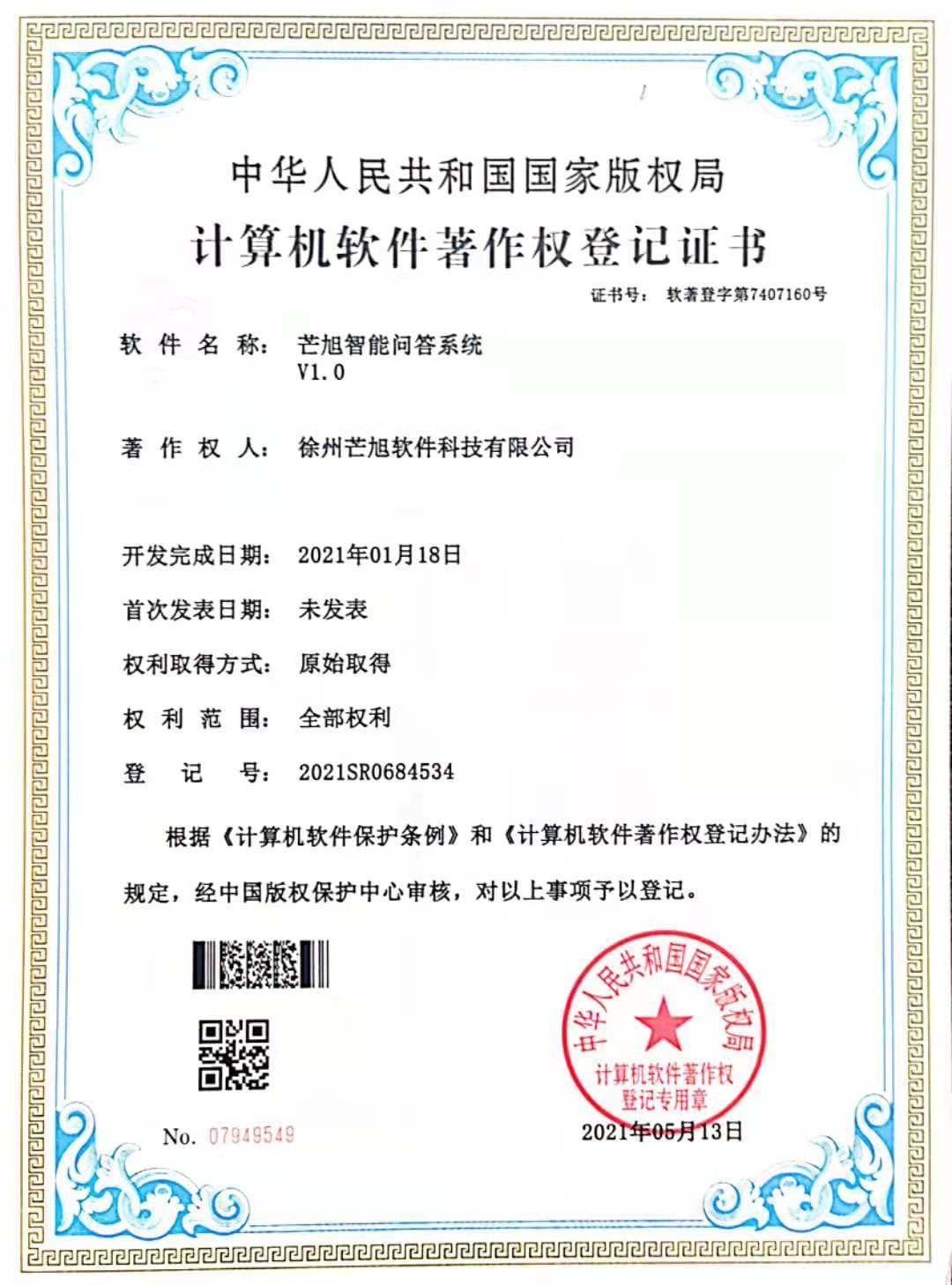
计算机软件著作权登记证书

企业信用评价AAA级信用企业

计算机软件著作权登记证书

计算机软件著作权登记证书

计算机软件著作权登记证书
This solution, centered on AI Agents, builds a "perception-cognition-decision-execution" closed-loop to systematically solve the fragmentation and passivity of campus logistics. Core components include the Agent Hub Platform, all-scenario service applications, IoT sensing layer, data middle office and digital twin, AI intelligent engine, and operations command center. The solution adopts incremental delivery, implemented in three phases: Short-term (1-3 months) deploys intelligent assistants and maintenance applications, reducing maintenance response time by 50%; Mid-term (4-6 months) introduces predictive maintenance and energy optimization, reducing energy consumption by 15%; Long-term (7-12 months) achieves intelligent operations, improving overall efficiency by 30%. Unique value lies in all-scenario coverage, AI-native driving, data closed-loop, and incremental delivery, helping school logistics management move towards digital and intelligent transformation.