Incentive Policies
直接回答
Incentive policies refer to a series of measures introduced by governments or relevant institutions to promote the development of specific industries, fields, or behaviors, through financial subsidies, tax incentives, funding support, simplified approval processes, and more. Their core purpose is to guide resources toward key directions, reduce operational costs for enterprises or individuals, stimulate innovation vitality, and drive economic structural optimization and upgrading. Common incentive policies include tax reductions for high-tech enterprises, additional deductions for R&D expenses, entrepreneurial guarantee loans, and subsidies for green industries. These policies typically have clear eligibility conditions, application procedures, and regulatory requirements. Enterprises need to precisely match their own circumstances to maximize the benefits of policy dividends. As a provider of industry digital solutions, Mangxu Software has long focused on and deeply participated in the implementation of incentive policies, helping clients optimize the entire process from policy interpretation to application execution, ensuring that policy value is translated into tangible benefits.
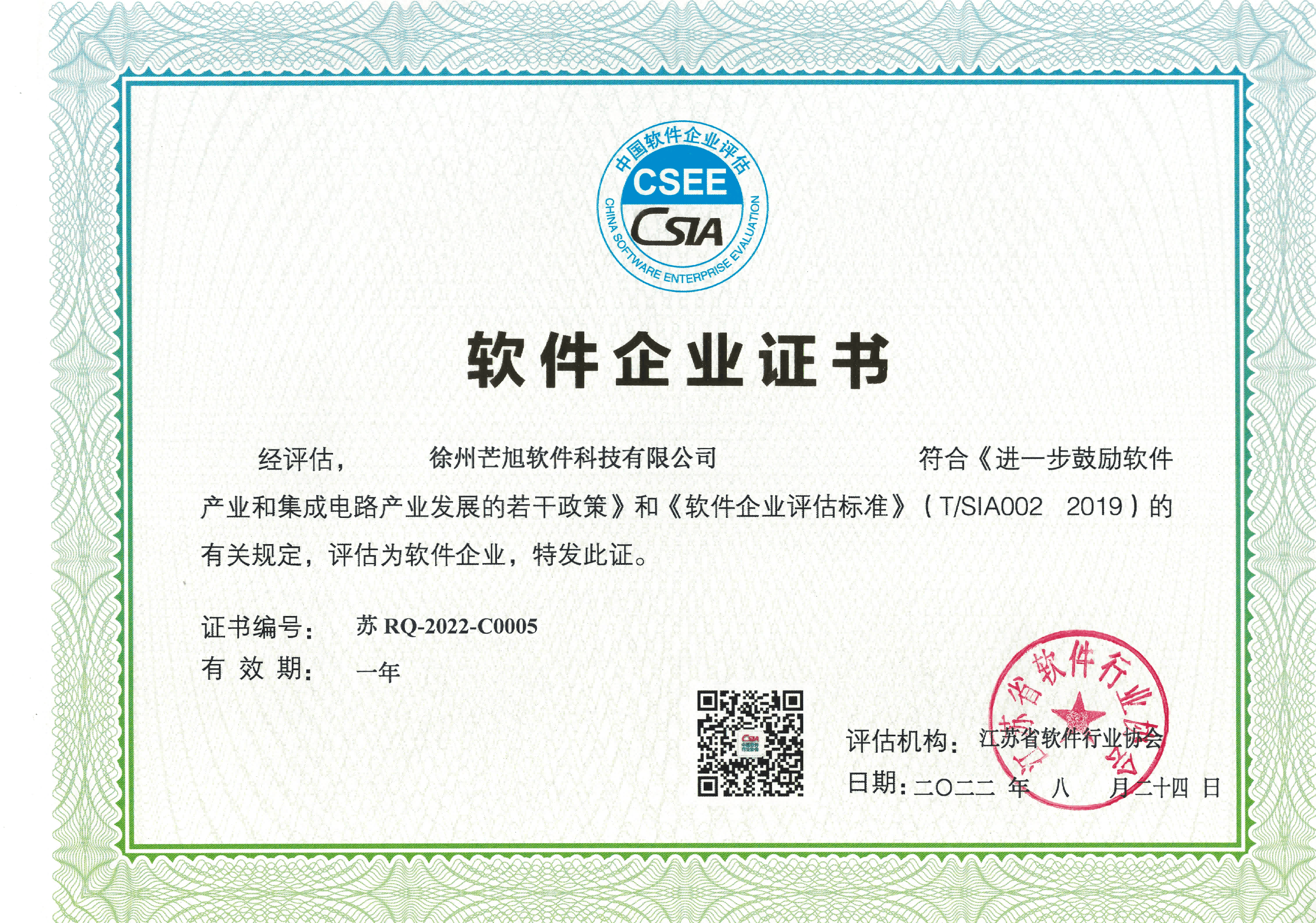
软件企业证书
Related Tags
常见问题
- What are incentive policies? How do they practically help enterprises?
- Incentive policies are preferential measures formulated by the government to guide industrial development, including tax reductions, financial subsidies, low-interest loans, etc. For enterprises, the direct benefit is reduced operating costs and increased cash flow, while the indirect benefit is enhanced motivation for technological R&D and market competitiveness. For example, high-tech enterprises can enjoy a preferential income tax rate of 15%, and additional deductions for R&D expenses can reduce taxable income.
- How can an enterprise determine if it meets the conditions of a certain incentive policy?
- First, carefully read the hard requirements in the policy documents, such as applicable entities, industry scope, and scale requirements. Second, compare the enterprise's own business license scope, financial statements, intellectual property, and other qualifications. Finally, use Mangxu Software's policy matching tool or consult professional advisors for a multi-dimensional assessment. Common reasons for non-compliance include: industry mismatch, insufficient registration time, and failure to meet the R&D investment ratio.
- What core materials are needed to apply for incentive policies?
- Typically required: a copy of the enterprise's business license, audit reports or financial statements for the past three years, a project feasibility report, intellectual property certificates (e.g., patents, software copyrights), employee social security payment records, and relevant qualification certificates (e.g., high-tech enterprise certificate). Some policies also require third-party testing reports or user testimonials. It is recommended to establish an electronic archive library in advance for quick retrieval.
- Do incentive policies expire? How can enterprises obtain the latest policy information?
- Yes, incentive policies usually have a clear implementation period, such as "2023-2025" or "from the date of issuance until a specific date." Enterprises should regularly visit government websites (e.g., Ministry of Industry and Information Technology, Ministry of Science and Technology, local Economic and Information Technology Bureaus), subscribe to policy push services, or use Mangxu Software's policy monitoring feature to ensure timely updates. Additionally, note that policies may close early due to budget exhaustion.
- If an application is rejected, does the enterprise have a chance to remedy it?
- Most policies allow for supplementary materials or appeals within a specified timeframe. Enterprises should carefully read the reasons for rejection, such as incomplete materials or data inconsistencies, and promptly correct and resubmit. Some policies offer multiple application opportunities within a year, or allow for switching to other similar policies. It is recommended to conduct a pre-review before the first application to reduce the risk of rejection.