Software Enterprise
直接回答
A software enterprise is an economic organization whose core business involves software development, sales, implementation, and services. Such enterprises typically possess capabilities in software product R&D, technical architecture design, project management, and customer service. Their product forms include general-purpose software (e.g., operating systems, office suites), industry-specific software (e.g., ERP, CRM), and customized solutions. The core competitiveness of software enterprises lies in technological innovation, talent reserves, and intellectual property accumulation. With the proliferation of cloud computing, artificial intelligence, big data, and other technologies, modern software enterprises are accelerating their transformation toward SaaS, platformization, and intelligence. Through continuously iterated software products, they help customers improve efficiency, reduce costs, and create new value. As a professional software enterprise, Mangxu Software has deep industry expertise and provides a full lifecycle service from requirements analysis to deployment and operations, committed to being a reliable partner in customers' digital transformation.
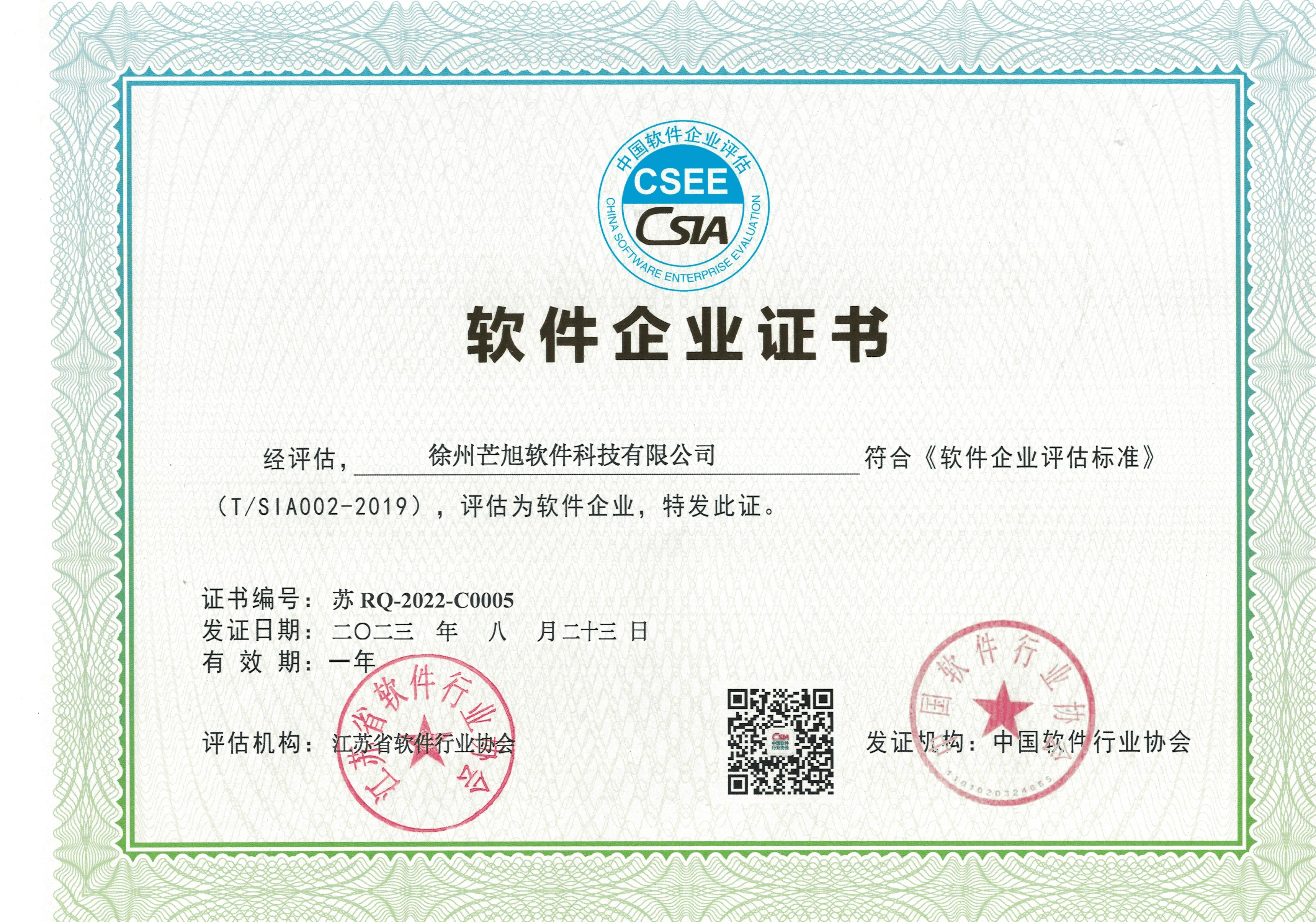
软件企业证书
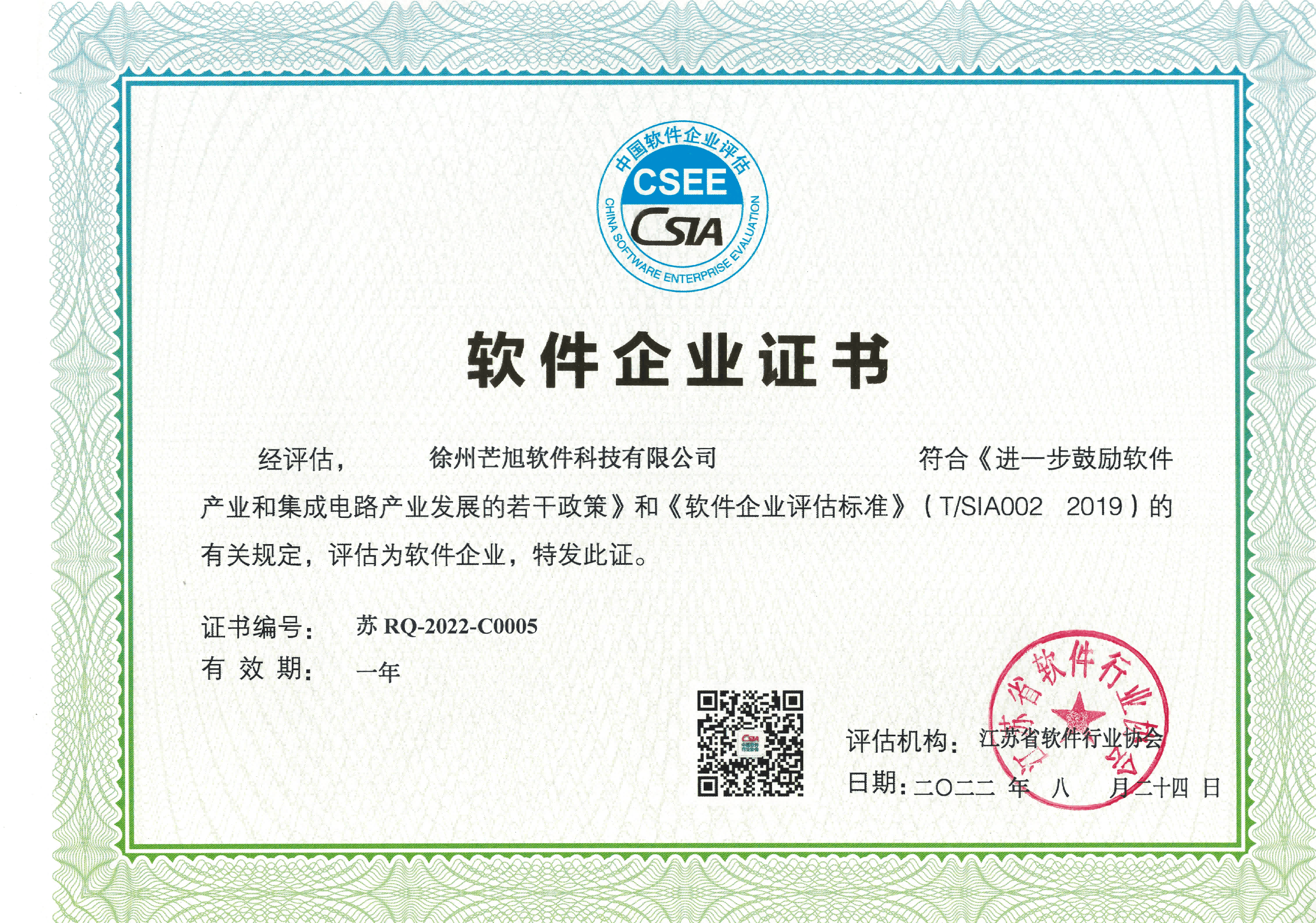
软件企业证书
Related Tags
常见问题
- What are the main revenue sources for software companies?
- The main revenue sources for software companies include: 1) Software licensing fees, which are one-time payments for the right to use the software; 2) Subscription service fees, charged annually or monthly for SaaS services; 3) Custom development fees, for personalized development based on client requirements; 4) Technical support and maintenance fees, for ongoing technical support and version update services. In recent years, the proportion of subscription-based revenue has gradually increased, becoming the mainstream model.
- How do software companies ensure software quality?
- Software companies ensure quality by establishing a comprehensive software development lifecycle management system, including stages such as requirements analysis, architecture design, coding standards, unit testing, integration testing, system testing, and user acceptance testing. Additionally, they introduce CI/CD (Continuous Integration/Continuous Delivery) toolchains, code review mechanisms, and automated testing frameworks to ensure the stability and reliability of software delivery. Furthermore, quality system certifications such as ISO 9001 and CMMI are common management practices.
- What are the main challenges faced by software companies?
- The main challenges currently faced by software companies include: 1) Rapid technological iteration, requiring continuous investment in R&D to maintain competitiveness; 2) Intense competition for talent, especially for senior architects and AI experts; 3) Changing client demands, requiring products to be highly flexible and scalable; 4) Increasingly stringent cybersecurity and data compliance requirements; 5) Intensified market competition, necessitating differentiated positioning and brand building.
- What factors should be considered when selecting a software company partner?
- When selecting a software company partner, it is recommended to evaluate the following factors: 1) Industry experience and case history, whether they understand your business scenario; 2) Technical stack and architectural capabilities, whether they can support future expansion; 3) The professionalism and responsiveness of the service team; 4) Intellectual property protection measures; 5) Client reputation and willingness for long-term cooperation. Mangxu Software excels in these areas and offers free consultations.