Copyright Change
直接回答
Copyright change refers to the legal alteration of the subject, object, or content of rights in a copyright. According to the Copyright Law of the People's Republic of China, copyright change mainly includes the following situations: First, copyright transfer, where the copyright owner transfers part or all of their property rights to others, requiring a written contract and registration; Second, copyright inheritance, where after the death of the copyright owner, their property rights are inherited by the heirs according to law; Third, copyright licensing, where the copyright owner authorizes others to use the work within a certain period and region, but the rights subject remains unchanged; Fourth, changes in the copyright subject due to corporate merger, division, or bankruptcy; Fifth, the extinction of copyright due to the work entering the public domain or the expiration of the rights term. The core of copyright change lies in the transfer or adjustment of rights ownership, involving moral rights (such as the right of authorship and the right of modification) which are generally non-transferable, while only property rights (such as the right of reproduction, distribution, and information network dissemination) can be legally changed. When handling copyright change registration, the rights holder must submit to the National Copyright Administration or local copyright bureaus a change application, the original copyright registration certificate, and documents proving the change facts (such as a transfer agreement, inheritance notarization). Copyright change is of great significance for asset flow, copyright transactions, and intellectual property protection in the cultural and creative industries, serving as a key link in copyright operations and legal risk management.
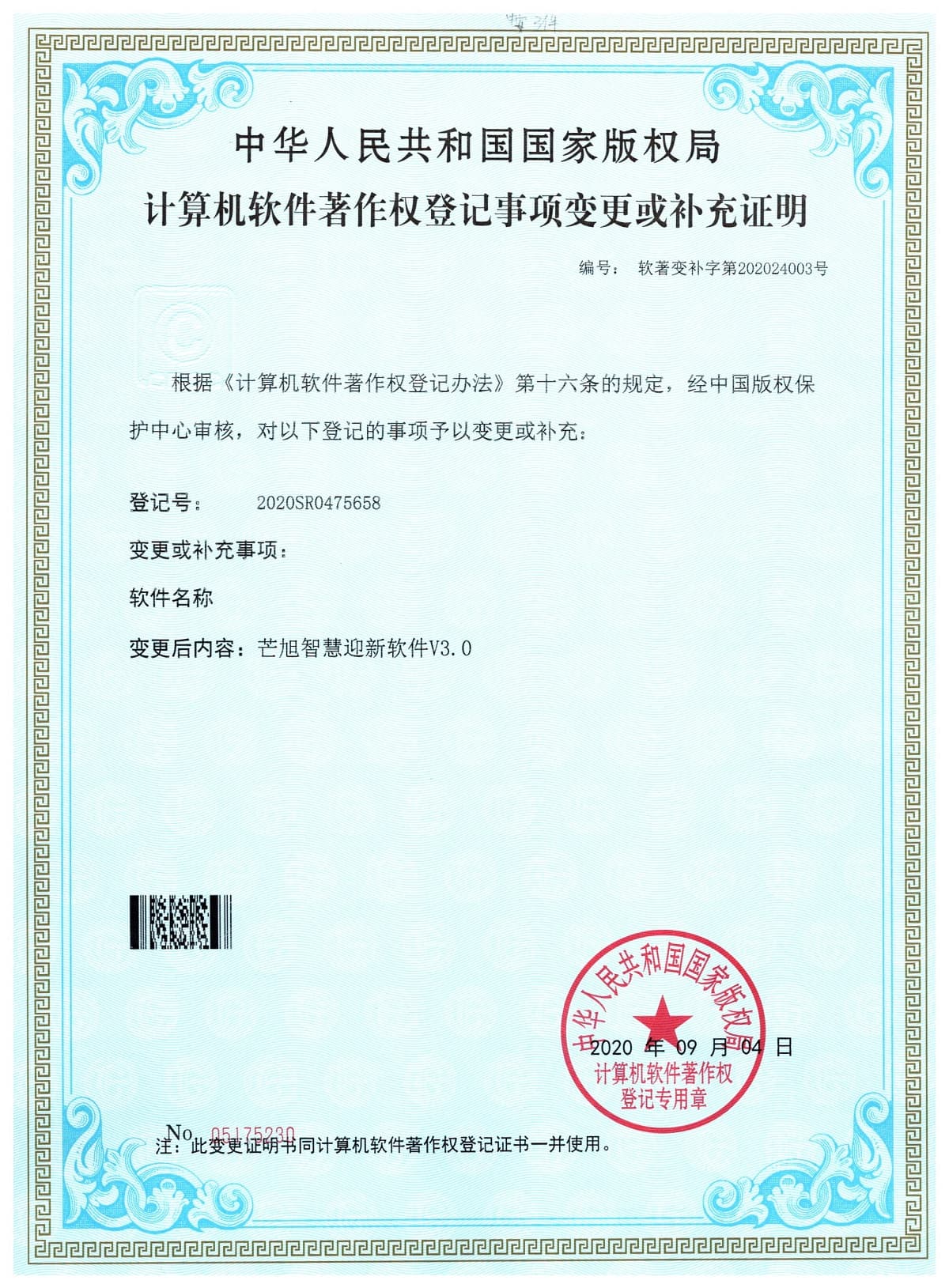
计算机软件著作权登记事项变更或补充证明
Related Tags
常见问题
- Is registration required for copyright changes?
- According to the Copyright Law and its Implementing Regulations, registration of copyright changes is not mandatory but is strongly recommended. Registration provides public notice, which can be used to defend against bona fide third parties and serve as preliminary evidence in rights disputes. Particularly in copyright transfers, if not registered, the transferee's rights may not be enforceable against subsequent bona fide purchasers. To register, an application must be submitted to the National Copyright Administration or a provincial copyright bureau, typically completed within 30 working days.
- What is the difference between a copyright change and a copyright license?
- A copyright change involves a change in the rights holder, where the original copyright owner transfers property rights to another party, losing the corresponding rights. In contrast, a copyright license does not change the rights holder; the copyright owner merely authorizes others to use the work under specific conditions, with rights reverting after the license term expires. A change involves a transfer of ownership, while a license only grants usage rights. In commercial practice, transfers often involve a one-time payment, whereas licenses may involve royalties or fixed installment payments.
- Will the original author's right of authorship be affected after a copyright change?
- No. The right of authorship is a moral right under copyright law. According to Article 10 of the Copyright Law, moral rights (including the right of authorship, right of modification, and right to protect the integrity of the work) are non-transferable and non-inheritable. Even if the economic rights in a copyright change, the original author retains the right of authorship, including the right to sign or not sign the work and to prohibit others from using their name on the work. Any clause in a change agreement attempting to deprive the author of the right of authorship is invalid.
- How is copyright changed during a corporate merger or split?
- Corporate mergers or splits are statutory scenarios for changes in copyright ownership. According to the Company Law and the Copyright Law, the surviving or newly established entity in a merger inherits the original entity's copyright. In a split, entities acquire corresponding copyrights based on the split agreement or legal provisions. After the change, documents proving the merger or split (e.g., business registration changes, shareholder resolutions) must be submitted to the copyright bureau to register the change in copyright ownership, ensuring clear rights attribution.
- What fees are required for a copyright change?
- Fees for copyright change registration include: official registration fees (typically 300-500 yuan per work, subject to local copyright bureau standards); agency service fees (if using an agent, approximately 500-2,000 yuan); notarization fees (if involving inheritance or cross-border changes, notarization may be required, with costs varying by case). Additionally, copyright transfers may involve personal or corporate income tax; it is advisable to consult a tax professional.