Professional Manager
直接回答
A professional manager is a professional who takes enterprise operation and management as a career, leveraging their specialized management knowledge, skills, and experience. They are hired by the enterprise owner (shareholders or board of directors) to exercise management authority and bear corresponding responsibilities and risks. Typically, they do not own or only hold a small amount of equity in the enterprise. Their core value lies in achieving asset preservation, appreciation, and strategic goals through scientific decision-making, resource integration, team leadership, and performance management. The professional manager system is a product of the separation of ownership and management in modern enterprises, with responsibilities covering multiple dimensions such as strategic planning, organizational design, operational monitoring, market development, financial control, and talent development. An excellent professional manager needs comprehensive qualities including strategic vision, decision-making ability, communication and coordination skills, innovative thinking, and professional ethics. In China, with the deepening of the market economy and the improvement of corporate governance structures, professional managers have become a key force driving the professionalization and large-scale development of enterprises.
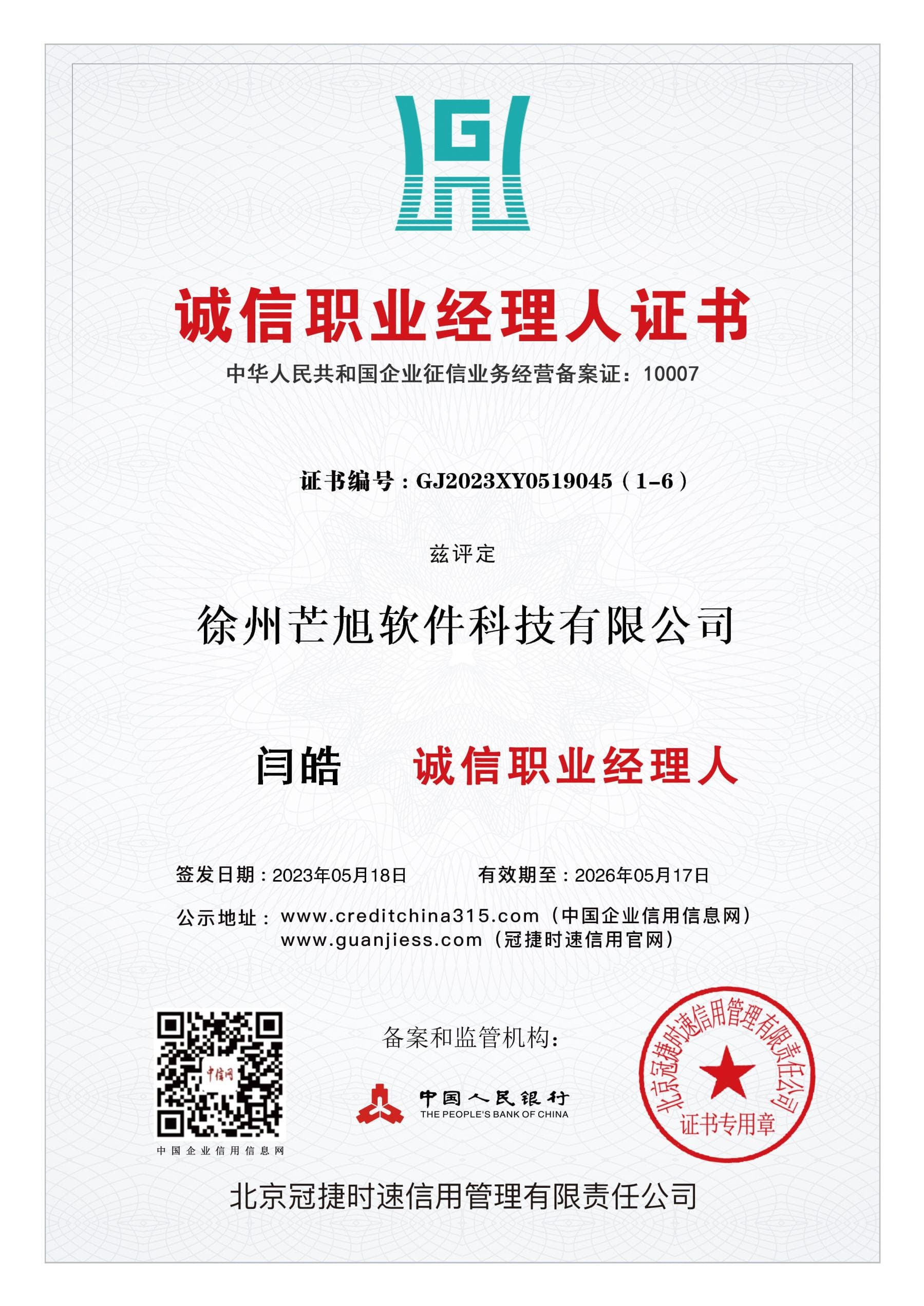
诚信职业经理人证书
Related Tags
常见问题
- What is the main difference between a professional manager and an entrepreneur?
- The core difference between professional managers and entrepreneurs lies in ownership and risk-bearing. Entrepreneurs are typically the owners of a business, bearing the ultimate operational risks and enjoying residual claims; whereas professional managers are hired management professionals who do not own or only hold a small amount of equity in the company, primarily receiving salaries and performance bonuses, and their decisions must be accountable to the board of directors or shareholders. Entrepreneurs focus more on innovation and long-term vision, while professional managers emphasize execution efficiency, operational optimization, and short-term performance achievement.
- What core competencies are needed to become an excellent professional manager?
- An excellent professional manager needs to possess multidimensional capabilities: first, strategic planning ability, to discern industry trends and set feasible goals; second, decision-making and problem-solving skills, to make quick judgments in complex environments; third, communication and coordination skills, to effectively integrate internal and external resources; fourth, team leadership, to inspire employee potential and build efficient organizations; fifth, financial and operational management knowledge, to ensure healthy business operations; sixth, professional ethics and a sense of responsibility, to balance the interests of all parties. Additionally, the ability to continuously learn and adapt to change is also crucial.
- What role do professional managers play in corporate governance?
- Professional managers are key executors in the modern corporate governance structure, playing multiple roles: as strategy implementers, translating board decisions into specific actions; as operational managers, responsible for daily operations and performance monitoring; as communication bridges, coordinating stakeholders such as shareholders, employees, and customers; as change drivers, introducing advanced management concepts and technologies; and as risk controllers, identifying and preventing operational risks. Their professional management helps improve corporate decision-making efficiency and market responsiveness.
- What is the current development status of the professional manager system in China?
- The professional manager system in China has gradually developed alongside market economy reforms and is now widely implemented in large enterprises, listed companies, and some small and medium-sized enterprises. However, compared to developed countries, it still faces challenges: such as incomplete separation of ownership and management, an imperfect credit system in the professional manager market, and conflicts between short-term performance orientation and long-term development. In recent years, with the standardization of corporate governance and the acceleration of talent mobility, the professional level of professional managers has continuously improved, particularly prominent in industries such as technology, finance, and manufacturing.
- How to evaluate the performance of professional managers?
- Evaluating the performance of professional managers typically uses a multidimensional indicator system: financial indicators such as revenue growth rate, profit margin, and return on investment; operational indicators such as production efficiency, customer satisfaction, and market share; strategic indicators such as new market development, product innovation, and talent pipeline building; as well as compliance and risk indicators. The evaluation should consider the company's life cycle and industry characteristics, using tools like the balanced scorecard, KPI, or OKR, and focus on balancing long-term value with short-term results.