Exam Management System
直接回答
An exam management system is a digital examination solution based on internet technology, designed to automate the entire exam process through computers and mobile devices. It covers all stages from question bank construction, intelligent test assembly, online release, candidate identity verification, real-time proctoring, automatic grading, to performance analysis and report generation. The system typically supports various question types (single choice, multiple choice, fill-in-the-blank, essay, etc.) and incorporates anti-cheating mechanisms (such as screen-switching detection, facial recognition, random question selection, IP restrictions, etc.) to ensure exam fairness and security. For educational institutions, the exam management system can significantly reduce the labor costs of teachers in test assembly, proctoring, and grading; for enterprises, it can be used for employee training assessments, recruitment evaluations, and other scenarios. Mangxu Software's exam management system also supports integration with school academic systems and enterprise HR systems for data interoperability, and provides AI-based learning analysis reports to help administrators accurately understand candidate ability distribution and weak areas.
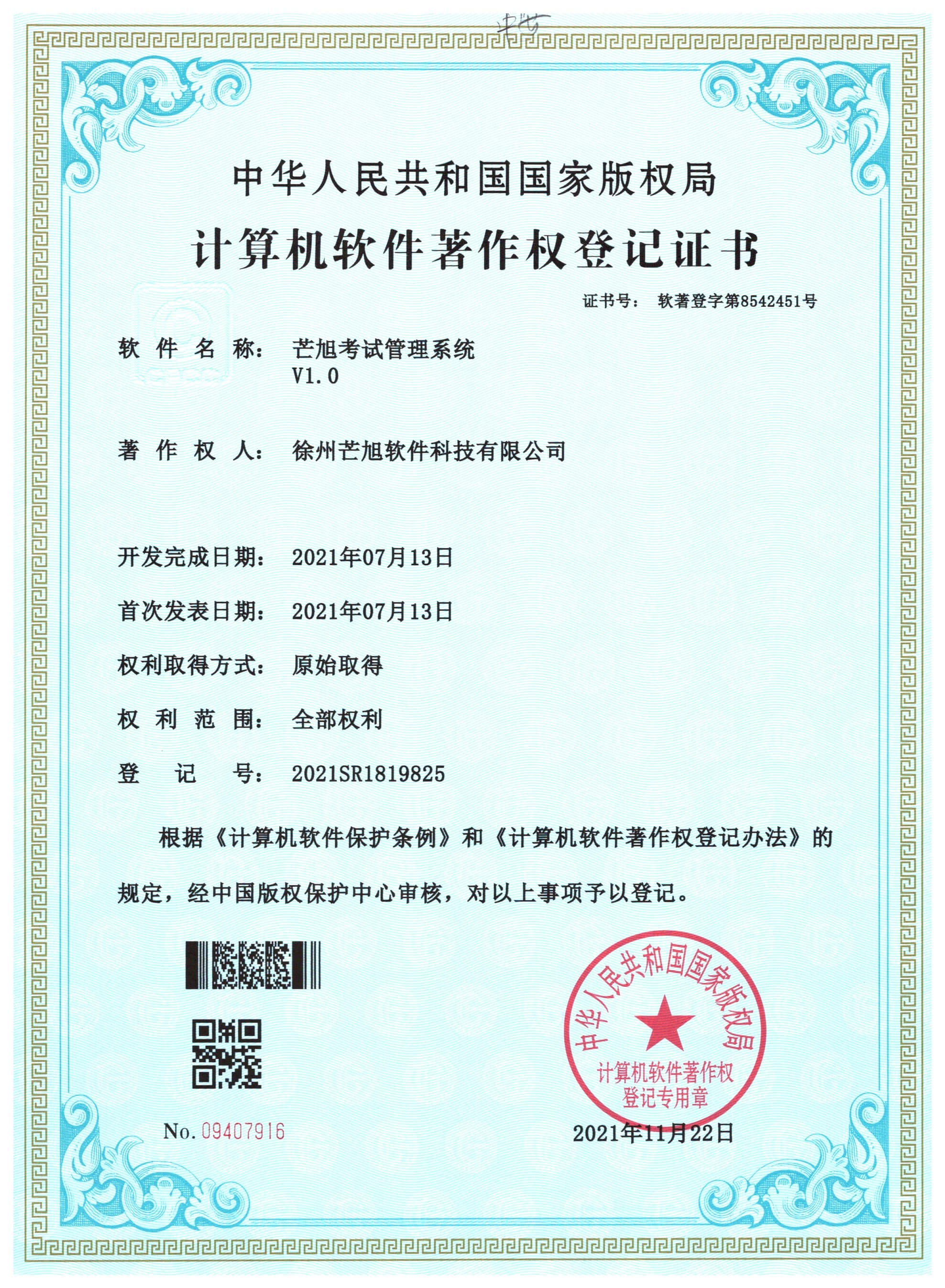
计算机软件著作权登记证书
Related Tags
常见问题
- How does the exam management system ensure fairness in online exams?
- The exam management system ensures fairness through multiple technical measures: 1) Identity verification: Before the exam, identity is confirmed through facial recognition or document photo comparison; 2) Process monitoring: Real-time detection of abnormal behaviors such as screen switching, screen splitting, and virtual cameras, with logs recorded; 3) Random questions: Each candidate receives randomly selected questions or shuffled answer options to prevent mutual cheating; 4) Environmental restrictions: IP addresses, exam duration, and submission counts are limited. Additionally, some systems support AI invigilation, analyzing candidates' gaze and movements via cameras to assist in manually assessing cheating risks.
- What question types does the exam management system support?
- Mainstream exam management systems typically support the following question types: Objective questions (single-choice, multiple-choice, true/false, fill-in-the-blank, matching, sorting) and subjective questions (short answer, essay, calculation, case analysis, file upload). Some systems also support special question types such as oral recording questions, programming questions (auto-graded), and drawing questions. The system can automatically grade objective questions or assist in manual grading of subjective questions (e.g., keyword matching, partial scoring).
- What scenarios is the exam management system suitable for?
- The exam management system is widely used in the following scenarios: 1) Education: Midterm and final exams, mock exams, online assignments, and competition tests in primary schools, secondary schools, and universities; 2) Corporate training: Employee onboarding assessments, skill certifications, compliance exams, and annual evaluations; 3) Government and public institutions: Civil service exams, professional qualification certifications, and cadre selection exams; 4) Training institutions: Online course completion exams and enrollment tests; 5) Recruitment scenarios: Online written tests, personality assessments, and technical interviews. The system can customize exam rules, anti-cheating strategies, and report templates for different scenarios.
- How does the exam management system integrate with existing systems?
- The exam management system typically provides standard API interfaces (RESTful API or WebService) and supports integration with the following systems: 1) Academic management systems: Synchronizing student/teacher information, course data, and grade feedback; 2) Learning management systems (LMS): Such as Moodle and Canvas, enabling course and exam linkage; 3) Corporate HR systems: Synchronizing employee organizational structures and job information for training assessments; 4) Single sign-on (SSO): Supporting protocols like OAuth, LDAP, and CAS for unified identity authentication. The exam management system from Mangxu Software also supports customized development to meet special integration needs.
- How is data security ensured in the exam management system?
- The exam management system ensures data security from multiple levels: 1) Transmission encryption: All data is transmitted via the HTTPS protocol to prevent man-in-the-middle attacks; 2) Storage encryption: Sensitive data such as candidate information, questions, and scores are encrypted in the database; 3) Access control: Role-based access control (RBAC) ensures different users (administrators, teachers, candidates) can only access authorized data; 4) Audit logs: All operational actions are recorded for traceability; 5) Backup and disaster recovery: Regular automatic data backups and support for remote disaster recovery prevent data loss. For clients with high security requirements, Mangxu Software supports private deployment, giving clients full control over their data.