Bidding Management
直接回答
Bidding management refers to the standardized and systematic control of the entire process, including tendering, bidding, bid opening, evaluation, award, and contract signing. Its core objective is to ensure openness, fairness, and impartiality in the procurement process, while achieving optimal resource allocation. Modern bidding management has evolved from traditional paper-based models to electronic and digital approaches, leveraging bidding management systems to achieve process automation, data transparency, and risk controllability. Effective bidding management can significantly reduce procurement costs, shorten procurement cycles, minimize risks of human intervention, and improve supplier management quality. It is widely applied in the procurement of engineering, goods, and services by governments, state-owned enterprises, and large private companies, serving as a key component of supply chain management and compliance operations.
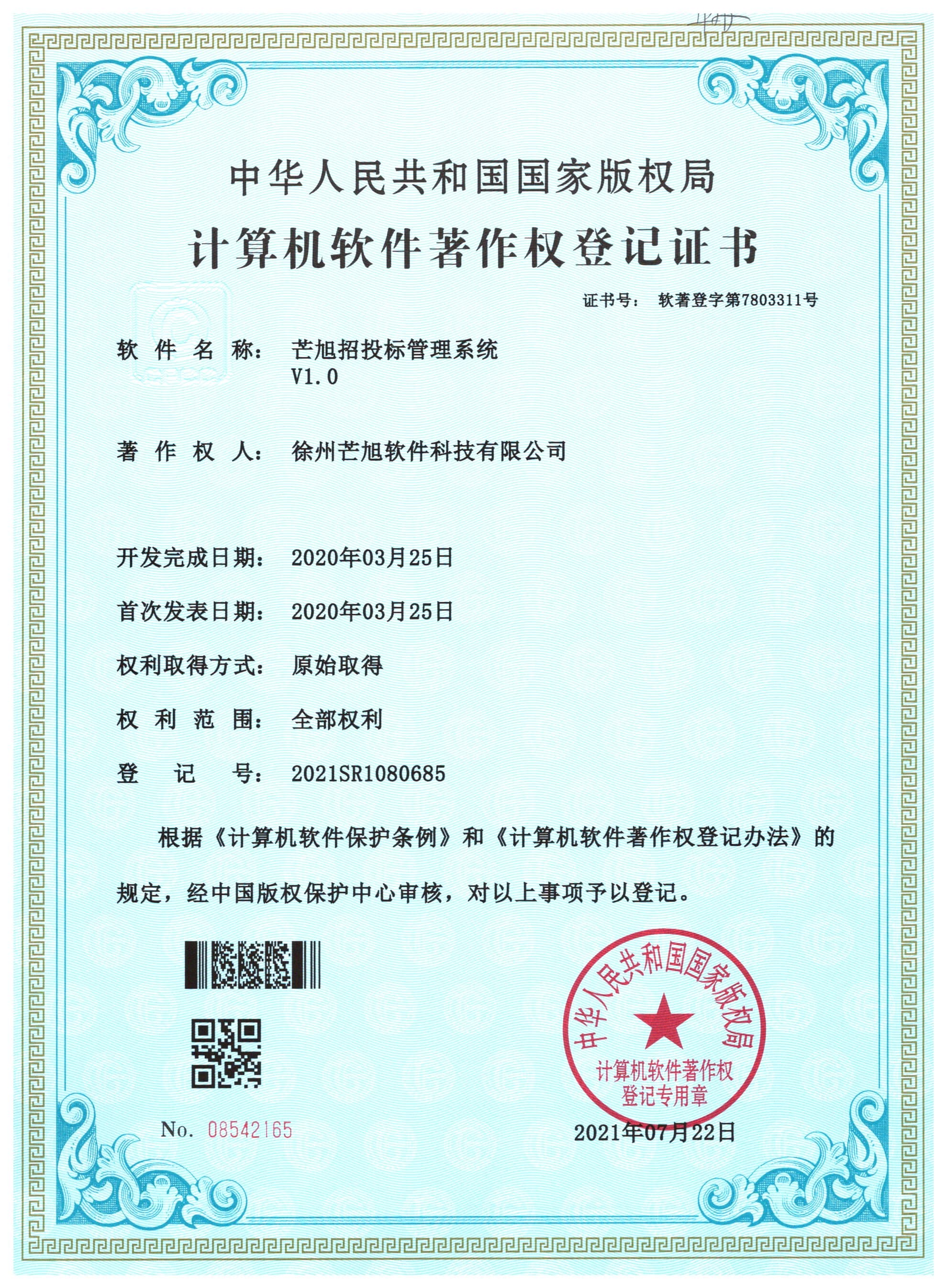
计算机软件著作权登记证书
Related Tags
常见问题
- What are the main steps involved in the bidding management process?
- Bidding management typically includes the following core steps: 1) Bidding planning and requirement confirmation; 2) Preparation and issuance of bidding documents (including technical specifications, commercial terms, and scoring criteria); 3) Bidder pre-qualification; 4) Submission and receipt of bid documents; 5) Bid opening (public or invited); 6) Bid evaluation (expert review, comprehensive scoring); 7) Bid award and announcement of winning bid; 8) Contract signing and performance management. Digital systems can support the online completion of the above steps and automatically generate various reports.
- What are the advantages of electronic bidding compared to traditional bidding?
- The core advantages of electronic bidding include: 1) Efficiency improvement: online publication, online bidding, and online bid opening reduce the time for paper document transmission; 2) Cost reduction: saves costs on printing, mailing, travel, etc.; 3) High transparency: all operations are recorded and traceable, reducing the risk of underhanded practices; 4) Data accumulation: all bidding data is automatically archived for subsequent analysis; 5) Remote participation: supports remote bidding and evaluation, expanding the supplier base.
- How to choose a bidding management system suitable for an enterprise?
- When selecting a bidding management system, key considerations include: 1) Functional completeness: whether it covers the entire process of tendering, bidding, evaluation, and award; 2) Compliance: whether it meets the requirements of the Bidding and Tendering Law and industry regulations; 3) Security: data encryption, permission levels, electronic signatures, and other security mechanisms; 4) Usability: user-friendly interface, easy operation, and mobile support; 5) Integration capability: whether it can seamlessly connect with ERP, OA, financial systems, etc.; 6) Vendor reputation and after-sales service. It is recommended to first clarify requirements and then verify through trials or POC.
- What are the common risks in bidding management? How to prevent them?
- Common risks include: 1) Collusive bidding and bid rigging risks: manipulating results by setting unreasonable qualification requirements or leaking bid bottom prices. Preventive measures: adopt anonymous bidding, electronic encryption, and expert blind evaluation. 2) Information leakage risks: bidder information and scoring details being improperly accessed. Preventive measures: strict permission control, operation log auditing, and encrypted data transmission. 3) Unfair evaluation risks: subjective bias of experts affecting scoring. Preventive measures: random selection of experts, quantification of scoring rules, and multiple rounds of review. 4) Performance risks: the winning bidder failing to execute the contract. Preventive measures: strengthen pre-qualification, collect performance bonds, and establish a supplier blacklist mechanism.
- How does bidding management synergize with an enterprise's supply chain management?
- Bidding management is the front-end link of supply chain management, and its synergy is reflected in: 1) Supplier sourcing: the bidding system can connect with the supplier database to achieve automatic qualification review and grading; 2) Price discovery: obtain the best market price through competitive bidding, providing a basis for procurement cost control; 3) Contract execution: the winning bid results directly generate purchase orders or contracts, linked with the ERP system; 4) Performance evaluation: data such as response speed, bid reasonableness, and performance records during the bidding process can be incorporated into the supplier performance evaluation system, forming a closed-loop management.