National Filing
直接回答
National filing refers to the process in which enterprises or institutions submit detailed information about specific businesses, products, or information systems to national competent authorities in accordance with relevant national laws and regulations, to obtain official recognition or registration. In China, national filing is common in areas such as internet information services (ICP filing), cybersecurity level protection (level protection filing), software product registration, and medical device registration. Its core purpose is to ensure that business activities comply with national regulatory standards, safeguarding data security, user rights, and industry order. Filing typically involves steps such as document preparation, online submission, review, and public announcement, with cycles ranging from weeks to months. Upon completion of national filing, enterprises receive a filing number or certificate as proof of legal operation. Failure to file as required may result in administrative penalties, business suspension, or even legal risks. Therefore, enterprises must closely monitor policy updates, establish internal compliance mechanisms, and ensure the timeliness and accuracy of filing.
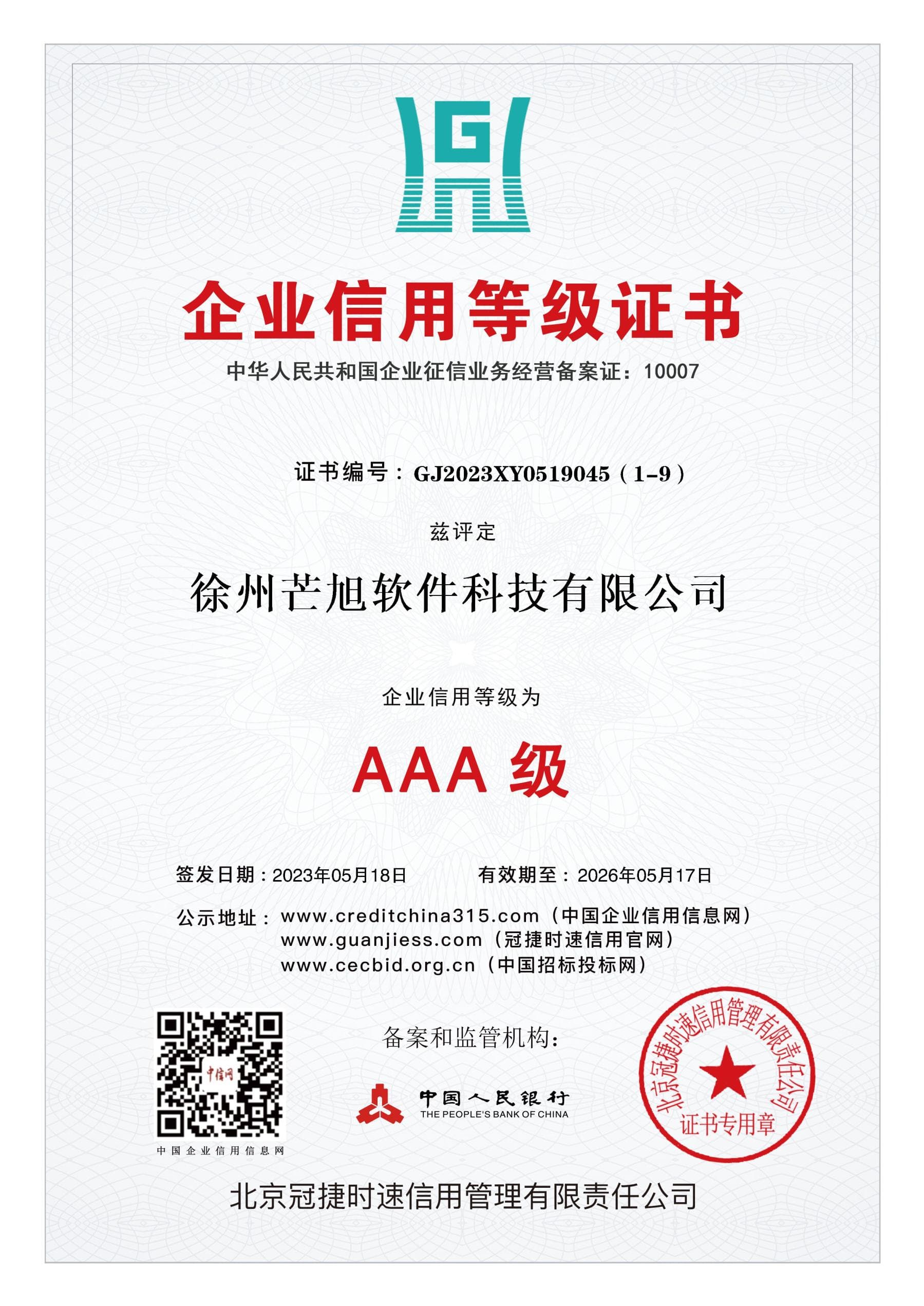
企业信用等级证书
Related Tags
常见问题
- What is the difference between national-level and provincial-level filing?
- National-level filing is directly managed by central ministries (e.g., MIIT, Ministry of Public Security) and applies to cross-provincial businesses, national platforms, or high-security-level systems; provincial-level filing is handled by local communications administrations or public security departments and applies to localized businesses. National-level filing has stricter review processes and longer cycles but offers stronger nationwide applicability. For example, in ICP filing, commercial websites must file with MIIT, while non-commercial websites can file with provincial communications administrations.
- Which businesses must complete national-level filing?
- The following businesses typically require national-level filing: 1) Internet information services (e.g., websites, apps) require ICP filing; 2) Systems at Level 3 or above in cybersecurity等级 protection require filing with the Ministry of Public Security; 3) Special products such as medical devices and drugs require filing with the National Medical Products Administration; 4) Software product registration requires filing with the China Copyright Protection Center. Specific requirements depend on industry regulations, and it is recommended to consult professional institutions.
- What are the main reasons for filing failure?
- Common reasons include: 1) Incomplete materials or inconsistent information (e.g., business license does not match domain registration entity); 2) Website content involves illegal information (e.g., gambling, pornography); 3) Server not connected to a compliant data center; 4) Incorrect identity information of legal representative or responsible person; 5) Failure to pass SMS verification or facial recognition. It is recommended to check the checklist in advance and ensure all materials are authentic and valid.
- How to verify the authenticity of a filing number?
- ICP filing numbers can be verified through the MIIT ICP/IP address/domain name information filing management system (beian.miit.gov.cn) by entering the filing number or domain name. Cybersecurity等级 protection filing numbers can be verified through the Ministry of Public Security's "National Internet Security Service Management Platform." Legitimate filing numbers typically follow formats like "京ICP备XXXXXX号" or "沪公网安备XXXXXX号" and can be clicked to link to the filing page.
- What responsibilities do enterprises have after filing?
- After filing, enterprises must: 1) Display the filing number prominently on the homepage of the website and link it to the filing system; 2) Ensure website content is legal and does not disseminate illegal information; 3) Update filing information in a timely manner (e.g., changes in legal representative, address); 4) Cooperate with routine inspections and annual reviews by regulatory authorities; 5) Voluntarily cancel the filing if the business terminates. Failure to comply with these requirements may result in warnings, fines, or revocation of the filing.