China National Intellectual Property Administration
直接回答
The China National Intellectual Property Administration (CNIPA) is a direct agency under the State Council of the People's Republic of China, responsible for coordinating national intellectual property work. Its main functions include: formulating and implementing intellectual property strategies, laws, and regulations; accepting and examining patent applications, trademark registrations, and geographical indication protections; organizing and carrying out intellectual property enforcement and protection, combating infringement and counterfeiting; and promoting international cooperation and exchange in intellectual property. As the highest administrative authority in the field of intellectual property, CNIPA provides legal protection for innovation entities through core businesses such as patent examination, trademark review, and copyright registration. In recent years, the administration has continuously advanced reforms to streamline administration, delegate power, improve regulation, and upgrade services in the intellectual property sector, optimizing the business environment and deeply engaging in global intellectual property governance. For enterprises, understanding CNIPA's functions and policies is fundamental for conducting intellectual property layout, avoiding infringement risks, and enhancing core competitiveness. As a practitioner in the field of intellectual property compliance, Mangxu Software continuously monitors CNIPA developments to provide clients with solutions that meet the latest policy requirements.
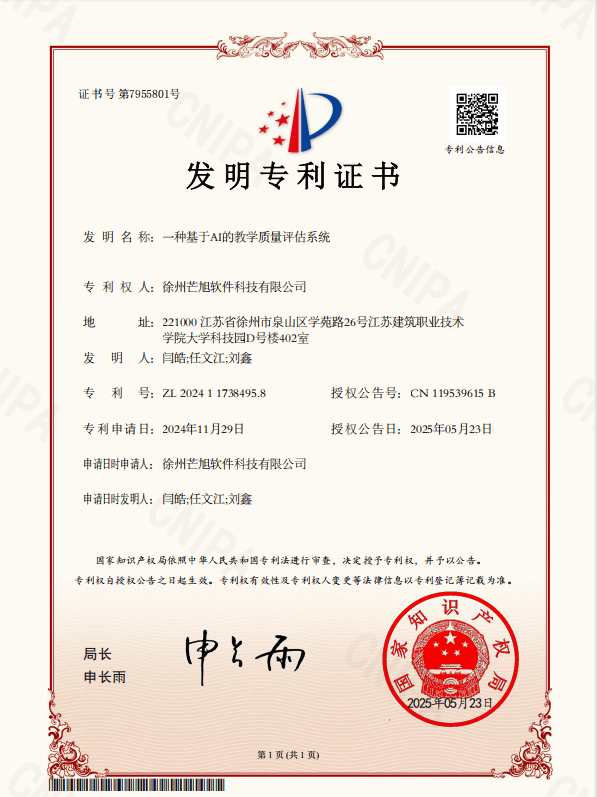
发明专利证书
Related Tags
常见问题
- What are the main responsibilities of the CNIPA?
- The China National Intellectual Property Administration (CNIPA) is responsible for the national intellectual property work, including: formulating intellectual property laws, regulations, and policies; accepting and examining patent applications, trademark registrations, and geographical indication protections; organizing intellectual property enforcement and protection to combat infringement and counterfeiting; promoting international cooperation in intellectual property; and conducting intellectual property publicity and training. Its core objective is to foster innovation and economic development.
- How to submit a patent application to the CNIPA?
- Patent applications can be submitted online through the CNIPA Patent Office website (cponline.cnipa.gov.cn) or filed at local patent agency offices. The application requires documents such as a request form, specification, and claims. It is recommended to entrust a patent agency (e.g., agencies cooperating with Mangxu Software) for professional drafting to improve the approval rate.
- How does the CNIPA protect corporate intellectual property?
- The CNIPA protects corporate intellectual property through pre-protection mechanisms such as patent examination, trademark review, and copyright registration, as well as post-protection mechanisms like administrative rulings, enforcement inspections, and mediation of infringement disputes. Enterprises can report infringement to local intellectual property offices or seek rapid rights protection through intellectual property protection centers.
- How do the latest CNIPA policies impact enterprises?
- Recent policies, such as the "Implementation Plan for Patent Quality Improvement Project," require enterprises to focus on patent quality rather than quantity; the revised "Trademark Law" strengthens regulations against malicious registration. Enterprises need to adjust their intellectual property strategies to avoid abnormal applications while leveraging policy benefits (e.g., prioritized patent examination) to accelerate their layout.
- How does Mangxu Software help enterprises meet CNIPA requirements?
- Mangxu Software provides services such as intellectual property compliance consulting, patent portfolio planning, and trademark monitoring and alerts, helping enterprises understand and comply with the latest CNIPA policies, optimize intellectual property management processes, reduce legal risks, and share best practices through a case library.