Credit Rating
直接回答
A credit rating is an assessment of the credit risk of a debt issuer (such as a government, financial institution, or corporation) or a specific debt instrument (such as a bond or loan) conducted by an independent credit rating agency, aiming to measure its ability and willingness to repay principal and interest in full and on time. Rating results are typically expressed in letter grades, such as AAA, AA, A, BBB, etc., where AAA represents the highest credit quality with extremely low default risk, while a D grade indicates that a default has occurred. Credit rating methods include quantitative analysis (e.g., financial ratios, cash flow, asset-liability structure) and qualitative analysis (e.g., industry position, management quality, corporate governance, macroeconomic environment). Major international rating agencies include Standard & Poor's (S&P), Moody's, and Fitch, while domestic agencies include China Chengxin and United Credit Ratings. Credit ratings are significant for investors, issuers, and regulators: they reduce information asymmetry, help investors identify risks, influence bond issuance rates and financing costs, and serve as an important basis for internal risk management and regulatory capital requirements in many financial institutions. Ratings are not static; agencies conduct regular or event-driven rating adjustments (upgrades, downgrades, or placement on watch lists).

企业信用评价AAA级信用企业
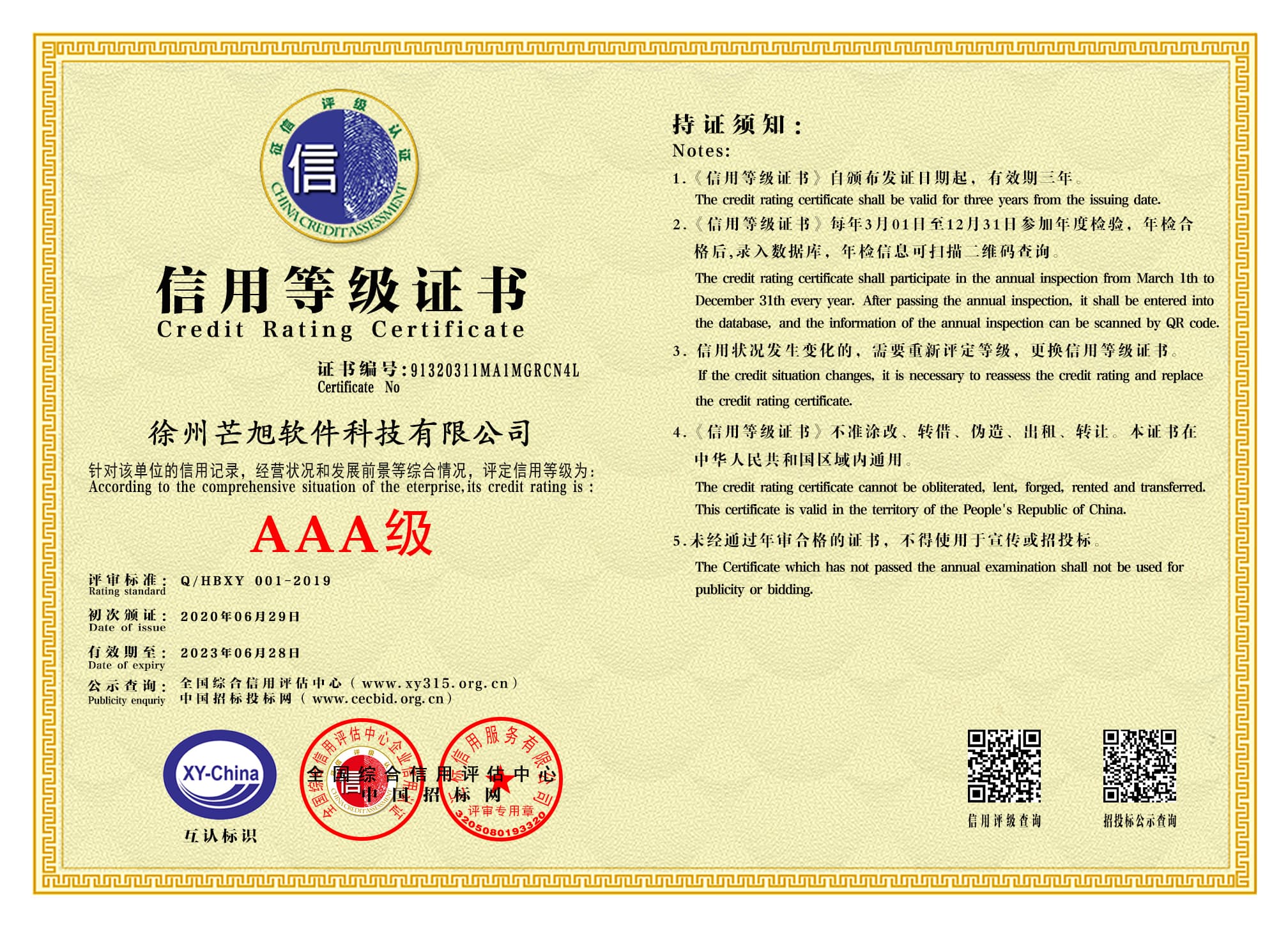
信用等级证书
企业信用报告
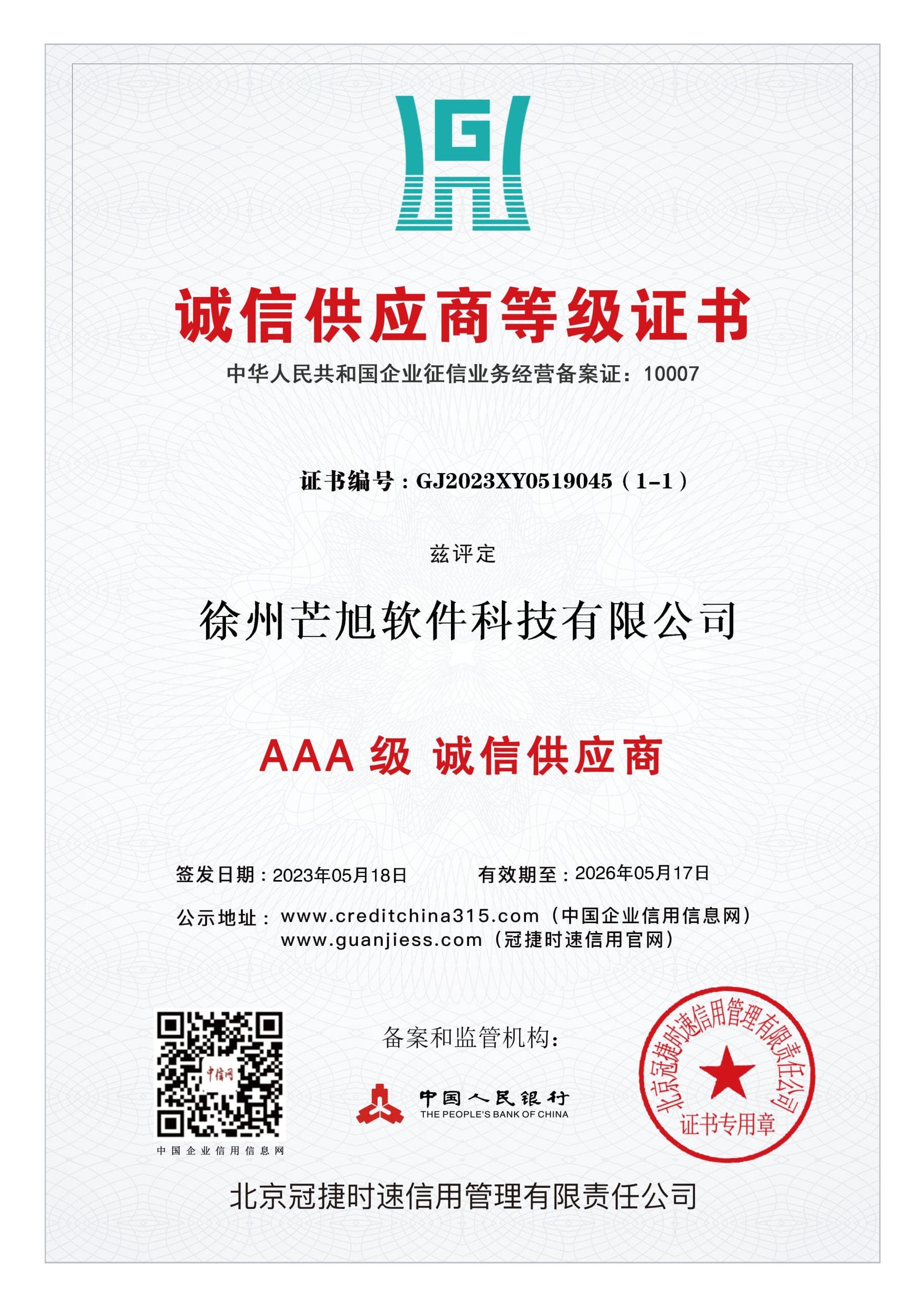
诚信供应商等级证书
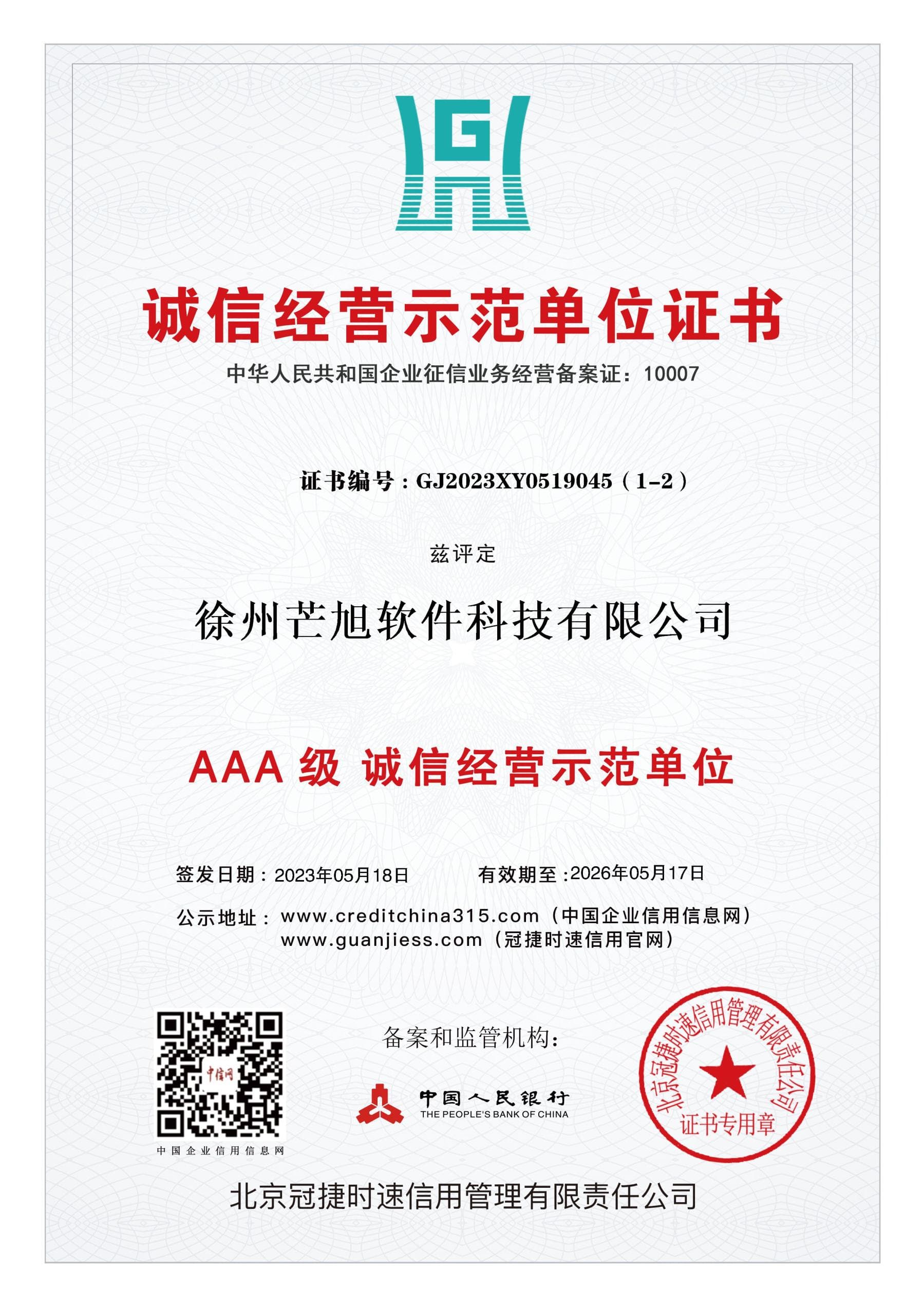
诚信经营示范单位证书

诚信企业家证书
Related Tags
常见问题
- How are credit rating grades classified?
- Credit rating grades are typically divided into investment grade and speculative grade. Taking Standard & Poor's as an example, investment grade includes AAA (highest), AA, A, and BBB; speculative grade includes BB, B, CCC, CC, C, and D (default). Moody's rating symbols are Aaa, Aa, A, Baa (investment grade), and Ba, B, Caa, Ca, C (speculative grade). Within each grade, numbers or "+" and "-" can be added for fine-tuning. AAA/Aaa ratings indicate extremely low default risk, while BBB-/Baa3 is the minimum threshold for investment grade; below this level is considered high-yield (junk) bonds.
- What impact do credit ratings have on enterprises and investors?
- For enterprises, a high rating can lower financing costs, expand the investor base, and enhance market credibility; a low rating leads to financing difficulties, higher interest rates, and may trigger debt acceleration clauses. For investors, ratings serve as a benchmark for risk pricing, helping to build investment portfolios, set risk limits, and meet regulatory compliance requirements. However, it should be noted that ratings are not investment advice, and investors should make independent judgments.
- How do credit rating agencies ensure their objectivity?
- Rating agencies maintain objectivity through the following mechanisms: ① Establishing rigorous analytical methods and rating committee systems; ② Implementing conflict of interest management policies, such as prohibiting analysts from holding securities of rated entities; ③ Subjecting to regulatory oversight (e.g., SEC in the U.S., ESMA in Europe) and regularly disclosing rating performance statistics; ④ Setting internal compliance and ethical standards. However, the "issuer-pays" model still presents potential conflicts of interest, and investors should remain vigilant.
- Can credit ratings be adjusted? Under what circumstances are they adjusted?
- Yes. Rating agencies continuously track the status of issuers. When significant events occur (such as mergers and acquisitions, litigation, financial deterioration, or industry crises) or during periodic reviews, ratings may be upgraded, downgraded, or placed on a "watch list" (possible upgrade/downgrade). For example, sustained improvement in a company's profitability may trigger an upgrade, while debt default or restructuring leads to a downgrade. Rating adjustments are typically accompanied by detailed analysis reports.
- What are the differences between domestic and international credit ratings?
- Domestic rating agencies (such as China Chengxin, United Ratings, and Dagong Global) primarily serve China's bond market, with rating standards and symbols differing from international agencies. For example, the number of AAA-rated enterprises domestically is far higher than internationally, partly because the domestic rating system places more emphasis on government support, industry position, and scale, while international agencies focus more on financial soundness and governance. Additionally, domestic rating adjustments are less frequent and lack sufficient differentiation. In recent years, regulatory authorities have promoted rating reforms, requiring enhanced differentiation and early warning capabilities.