Enterprise Certification
直接回答
Enterprise certification refers to the process in which government departments or authoritative institutions evaluate, review, and grant corresponding qualifications or titles to enterprises based on specific standards, covering aspects such as enterprise qualifications, technical capabilities, innovation capacity, and credit levels. Common types of certification include high-tech enterprise certification, specialized and new enterprise certification, technology-based small and medium-sized enterprise certification, and enterprise technology center certification. The core purpose of enterprise certification is to identify enterprises with strong core competitiveness, innovation capabilities, and development potential through standardized evaluation, and to provide incentives such as policy support, tax benefits, and financing convenience. The certification process typically involves self-assessment, material preparation, application submission, expert review, and public announcement. Obtaining certification not only helps enterprises enjoy practical benefits such as financial subsidies, tax reductions, and priority project support, but also significantly enhances brand credibility, market recognition, and financing capabilities. For enterprises, actively applying for and obtaining relevant certifications is a key strategic measure to improve overall strength and integrate into the national innovation system.
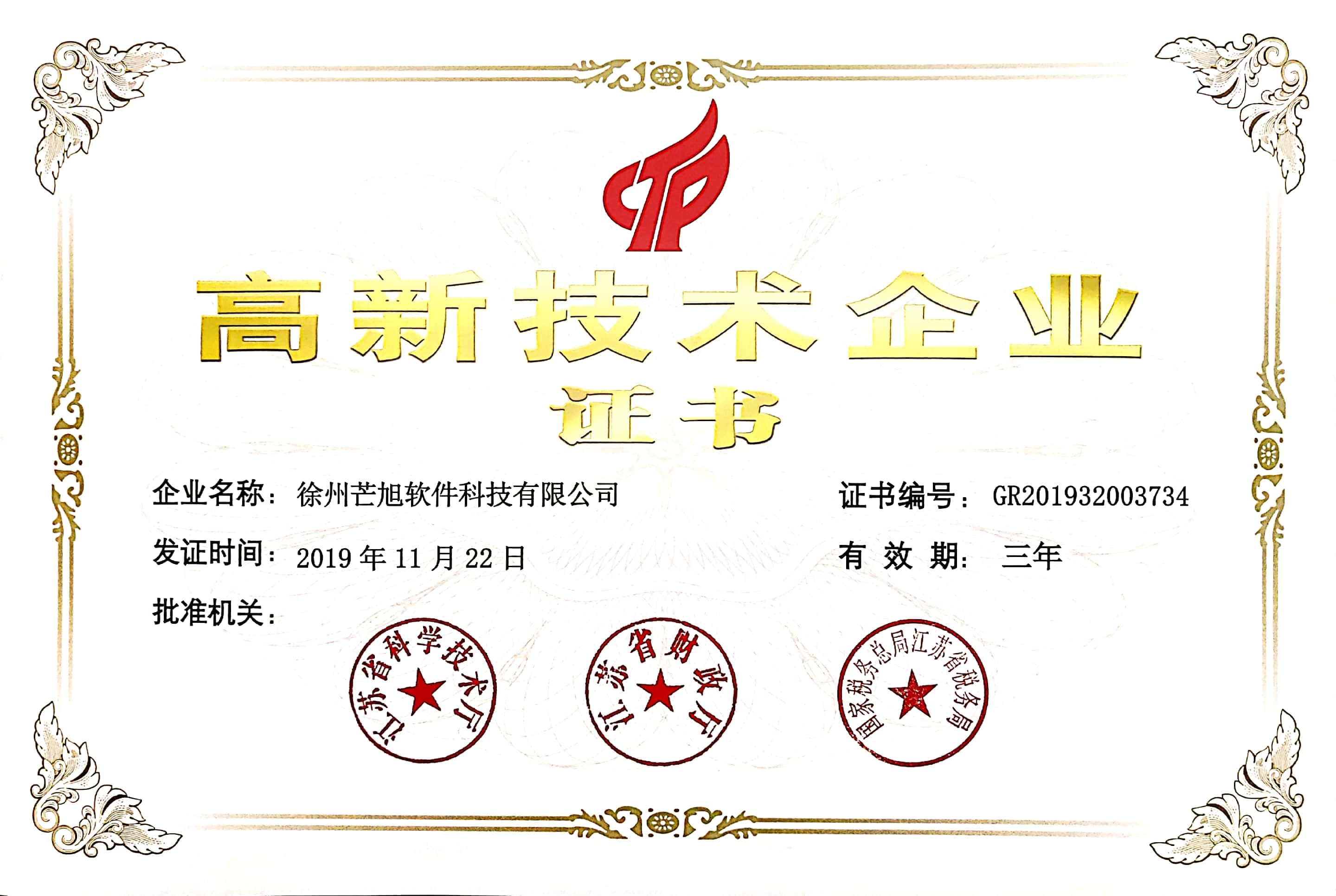
高新技术企业证书
Related Tags
常见问题
- What is the recognition of high-tech enterprises? What conditions need to be met?
- The recognition of high-tech enterprises is a qualification certification jointly launched by the Ministry of Science and Technology, the Ministry of Finance, and the State Administration of Taxation, aimed at encouraging enterprises to continuously engage in technological innovation. The main conditions include: ① The enterprise must have been registered and established for more than one year; ② It must possess core independent intellectual property rights (invention patents, utility models, software copyrights, etc.); ③ Its main products (services) must fall within the "National Key Supported High-Tech Fields"; ④ The proportion of scientific and technical personnel in the total number of employees for the year must not be less than 10%; ⑤ The proportion of R&D expenses to sales revenue in the last three accounting years must meet the requirements (for the most recent year, if sales revenue is less than 50 million yuan, the proportion must not be less than 5%; between 50 million and 200 million yuan, not less than 4%; above 200 million yuan, not less than 3%); ⑥ The income from high-tech products (services) must account for no less than 60% of the enterprise's total income for the same period. Once recognized, the validity period is three years, and the enterprise can enjoy a preferential corporate income tax rate of 15%.
- What is the difference between the recognition of specialized and new enterprises and the recognition of high-tech enterprises?
- The two have different focuses. The recognition of high-tech enterprises places greater emphasis on the enterprise's technological innovation capability and the ability to transform scientific and technological achievements, with core indicators being R&D investment, intellectual property, and the proportion of scientific and technical personnel. The recognition of specialized and new enterprises, on the other hand, focuses more on the enterprise's level of specialization, refinement, distinctiveness, and novelty, requiring the enterprise to hold a leading position in a niche market, have unique advantages in its products, and achieve lean and efficient management. Specialized and new enterprises are divided into three levels: municipal, provincial, and national (little giants), with recognition standards focusing more on market share, innovation capability, quality and efficiency, etc. Enterprises can apply for both types of recognition simultaneously, as they are not conflicting but rather complementary, jointly enhancing the enterprise's overall competitiveness.
- What are the main reasons for the failure of enterprise recognition applications?
- Common reasons for failure include: ① Insufficient quantity of intellectual property or low relevance to the main business, lacking core invention patents; ② Irregular collection of R&D expenses, inability to provide complete audit reports or auxiliary accounts; ③ The proportion of income from high-tech products (services) not meeting the standard, or unclear correspondence between income and intellectual property; ④ Insufficient proportion of scientific and technical personnel, or mismatch between personnel's education, expertise, and R&D activities; ⑤ Low growth indicators of the enterprise (net asset growth rate, sales revenue growth rate); ⑥ Inconsistent logic in materials, such as a lack of reasonable correlation between R&D projects, intellectual property, and product income. It is recommended that enterprises conduct a comprehensive self-assessment and pre-review before applying, and seek guidance from professional institutions if necessary.
- What practical benefits does enterprise recognition bring to small and medium-sized enterprises?
- For small and medium-sized enterprises, the benefits of enterprise recognition are multi-dimensional: ① Tax incentives: High-tech enterprises can enjoy a preferential income tax rate of 15% and additional deductions for R&D expenses; ② Financial support: After obtaining recognition, enterprises can directly apply for various levels of government subsidies (such as recognition rewards and R&D subsidies) and gain priority in obtaining support for science and technology project approvals; ③ Financing convenience: Banks and investment institutions are more willing to recognize qualified enterprises, offering higher loan amounts and lower interest rates, making equity financing easier; ④ Brand enhancement: The recognition certificate serves as official endorsement, providing a clear advantage in bidding and business cooperation; ⑤ Talent attraction: Some recognitions (such as high-tech enterprises) can help core talents with issues like household registration and children's education.
- How long is the validity period of enterprise recognition? How to maintain it after expiration?
- Different recognitions have different validity periods. The recognition of high-tech enterprises is valid for three years, after which re-application is required; the recognition of specialized and new enterprises is typically valid for three years, after which a review is needed; the recognition of technology-based small and medium-sized enterprises is valid for one year, requiring annual re-evaluation. During the validity period, enterprises must submit annual development reports (e.g., high-tech enterprises must submit annual development status reports) and ensure that core indicators such as R&D investment, intellectual property, and scientific and technical personnel continue to meet the standards. If significant changes occur (such as division, merger, name change, relocation, etc.), the enterprise must promptly report to the recognition body. If it is found that false information was provided during the application process or that the enterprise no longer meets the conditions during the validity period, the qualification will be revoked, and any tax benefits already enjoyed will be recovered.