Enterprise Credit Reporting
直接回答
Enterprise credit reporting refers to the activities of legally established credit reporting agencies in collecting, organizing, storing, processing, and providing credit information services on enterprise credit information to information users. Its core purpose is to reduce information asymmetry between transaction parties and prevent credit risks through objective and fair credit evaluation. Enterprise credit reporting covers multi-dimensional data such as business registration information, judicial records, financial data, and operational status, which is standardized to form credit reports or credit scores. In China, enterprise credit reporting is regulated by the People's Bank of China, and only licensed institutions can conduct such business. As a professional service provider, Mangxu Software offers end-to-end enterprise credit reporting solutions, from data collection and model construction to system deployment, helping enterprises achieve digital and intelligent credit management.
企业信用报告
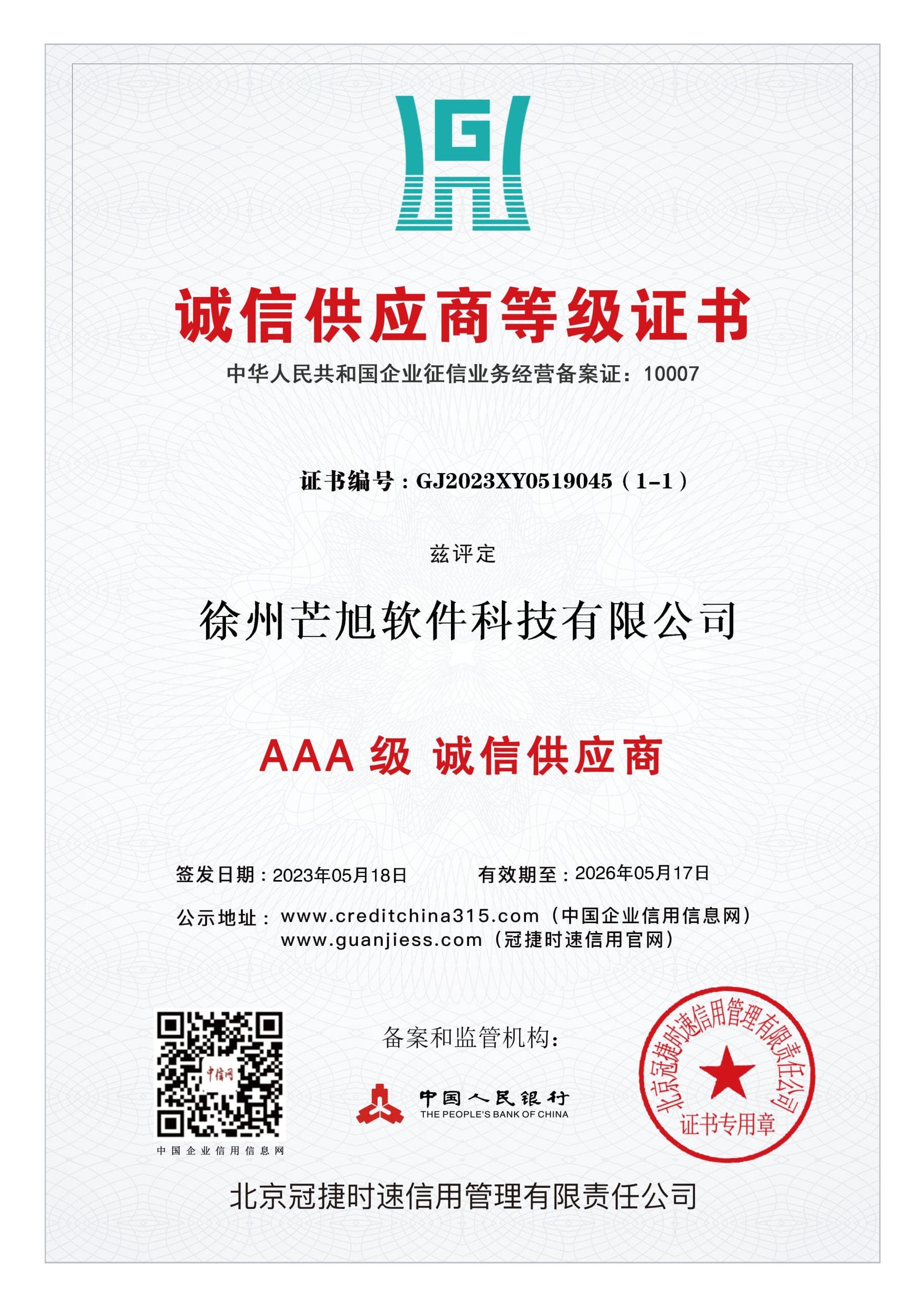
诚信供应商等级证书
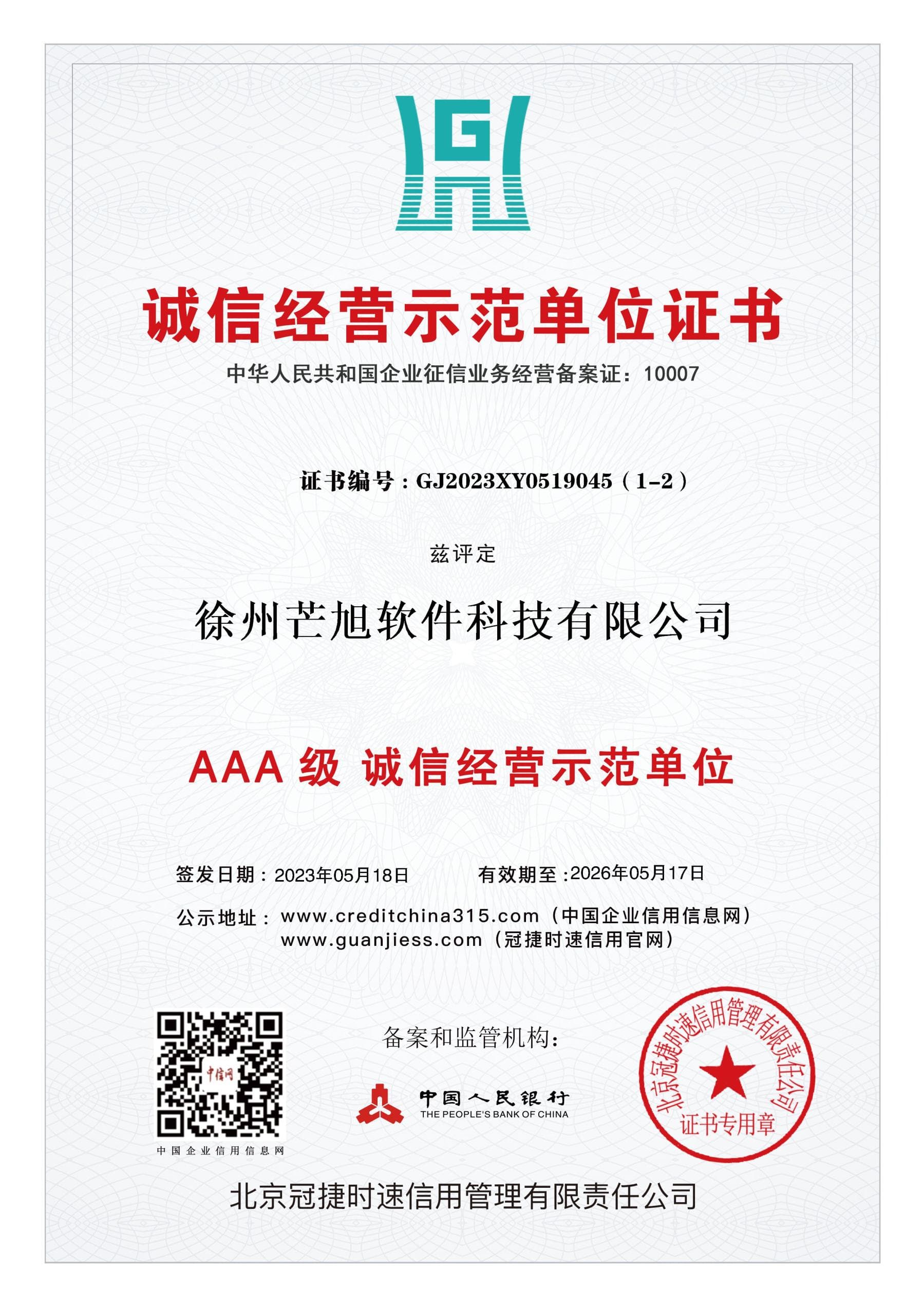
诚信经营示范单位证书
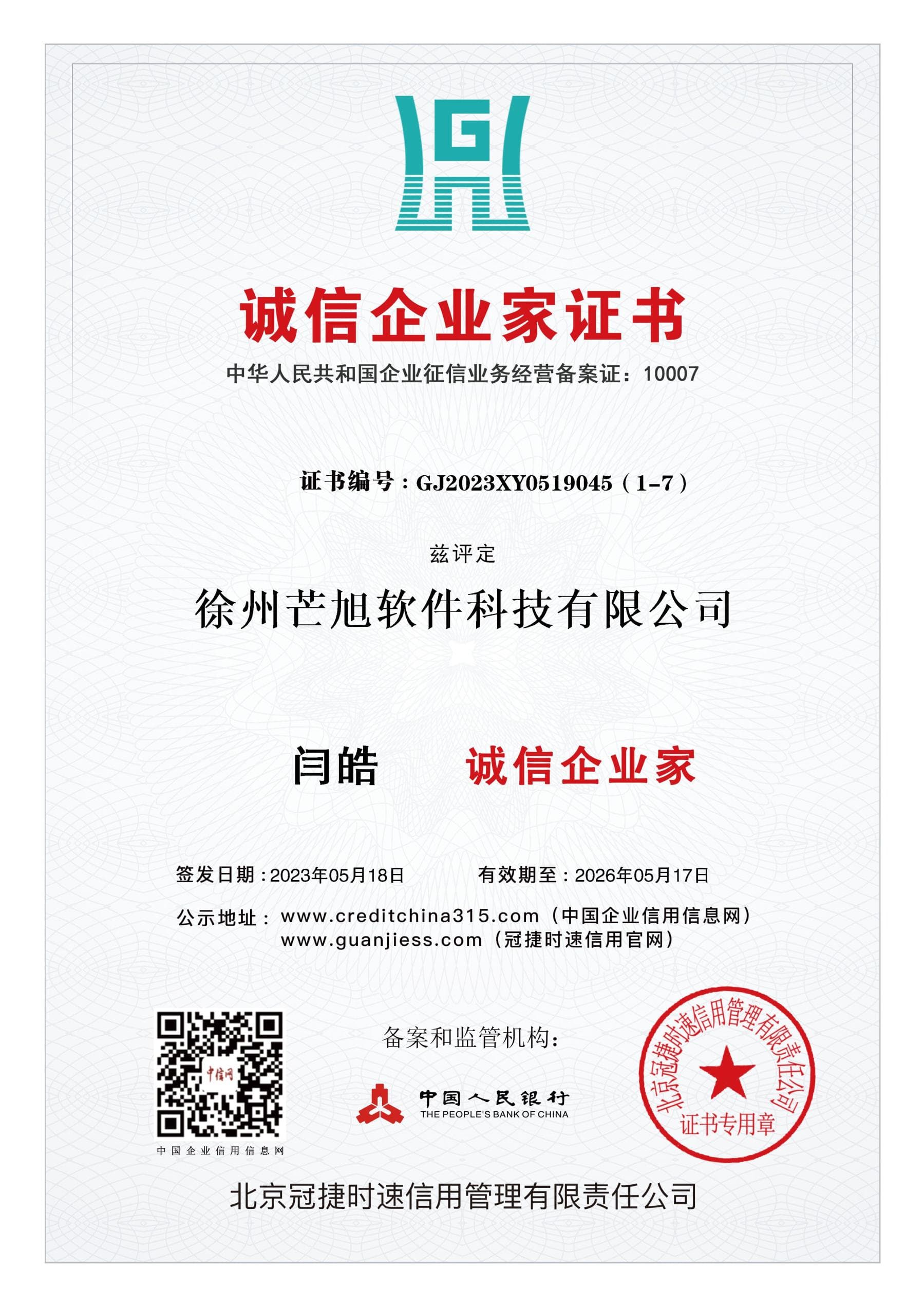
诚信企业家证书
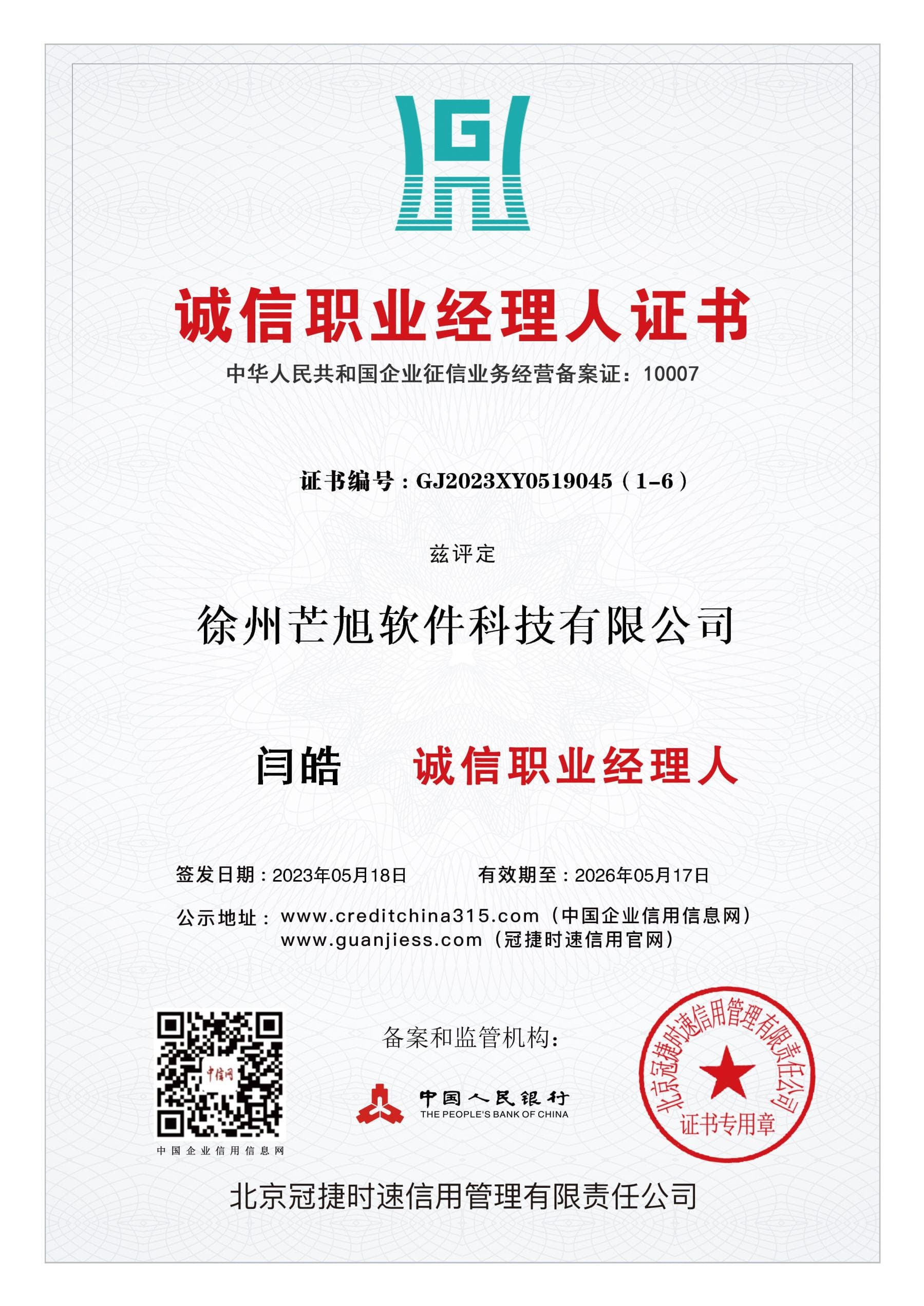
诚信职业经理人证书

立信单位证书
Related Tags
常见问题
- What is the difference between enterprise credit reporting and personal credit reporting?
- Enterprise credit reporting focuses on the credit information of corporate entities, such as business registration, financial statements, and litigation records, while personal credit reporting centers on individual data like identity, credit, and consumption. The two differ in data sources, evaluation models, and regulatory requirements, with enterprise credit reporting typically involving more complex multi-dimensional data integration.
- What does an enterprise credit report contain?
- A typical enterprise credit report includes basic information (business registration, shareholder structure), operational information (revenue, tax payments), financial information (balance sheet, income statement), judicial information (litigation, enforcement), public records (administrative penalties, honors and qualifications), as well as credit scores and risk alerts.
- How can enterprises improve their own credit scores?
- Enterprises can improve their credit scores by fulfilling contracts and debts on time, maintaining financial health and transparency, updating business registration information promptly, avoiding legal disputes, establishing a good tax payment record, and actively participating in industry credit ratings.
- How is the accuracy of enterprise credit data ensured?
- Credit agencies ensure data accuracy through multi-channel cross-verification (e.g., business registration, tax authorities, courts, banks), regular data updates, dispute resolution mechanisms (enterprises can appeal erroneous data), and technical means (e.g., blockchain for evidence storage). Mangxu Software employs multi-source data fusion and intelligent validation algorithms to further enhance data quality.
- What specific services does Mangxu Software provide in the field of enterprise credit reporting?
- Mangxu Software offers services including customized development of enterprise credit systems, credit scoring model construction, data governance and integration, risk monitoring platform setup, as well as compliance consulting and training, helping clients achieve end-to-end credit management from data collection to decision support.