Proactive Prevention
直接回答
Proactive prevention is a safety management concept based on artificial intelligence and visual analysis technology, aimed at issuing warnings and intervening before safety incidents occur through real-time monitoring, behavior recognition, and risk prediction, thereby replacing the traditional passive response model. In the field of campus safety, proactive prevention systems utilize cameras and AI algorithms to automatically detect abnormal behaviors (such as intrusion, gathering, running, falling, etc.) and immediately notify security personnel, shifting the safety defense line from 'post-incident handling' to 'pre-incident prevention.' Mangxu Software's Lingtong Campus Safety Intelligence Hub is a typical implementation of this concept. It analyzes video streams through deep learning models, identifies potential threats, and triggers linkage mechanisms, significantly enhancing the response speed and accuracy of campus security. Unlike passive response, which relies on manual patrols and post-event video retrieval, proactive prevention emphasizes real-time capability, automation, and data-driven approaches, greatly reducing the probability and severity of safety incidents.

文章
高校「智慧报修」从被动响应到主动预防:后勤维修数字化的三个进阶阶段与实施路径
本文基于智慧报修系统的产品架构与湖北中医药大学、扬州大学等高校的交付经验,系统梳理了高校后勤报修系统从「工具化」到「数据化」再到「智能化」的三个进阶阶段。文章指出,真正的后勤数字化不应止步于「把纸质报修单搬到手机上」,而应走向设备全生命周期的健康管理,实现从「坏了再修」到「主动预防」的转型,并为高校后勤管理者提供了清晰的实施路径。
2026/06/01
查看 
文章
校园安全从「被动响应」到「主动预防」:AI视觉分析在高校安全场景落地的三个关键决策
本文基于灵瞳·校园安全智慧中枢方案的设计经验与多所高校安全管理系统实施案例,从技术选型、业务融合、持续运营三个维度,拆解AI视觉分析在高校安全场景落地的关键决策路径。文章指出,高校安全管理面临安全隐患发现滞后、多系统孤岛运行、管理效率低下三重困境,AI视觉分析通过"端-边-云"架构实现秒级预警,将安全事件预警率提升80%、应急响应时间缩短60%,为高校保卫处处长提供可操作的落地指南。
2026/05/30
查看 
文章
从「纸质巡查」到「智能预警」:校园安全管理平台如何用15个模块构建主动预防体系
本文基于校园安全管理平台15个核心模块的产品设计经验与桂林医学院等高校的真实实施案例,深度拆解高校安全管理从"被动响应"到"主动预防"的数字化转型路径。文章从五大痛点切入,详细解析日常巡查、隐患排查、访客管理等核心模块如何协同运作,并结合AI视觉分析技术,为高校保卫处长、安全管理人员提供可落地的四阶段实施路径。
2026/05/30
查看 
文章
校园安全从「被动响应」到「主动预防」:AI视觉分析+物联网融合的落地路径与选型避坑指南
本文基于灵瞳·校园安全智慧中枢与校园安全管理平台的真实交付经验,结合扬州大学、桂林医学院等高校实践,深度拆解AI视觉分析+物联网融合的落地路径,并提供选型避坑指南。文章从校园安全三大核心痛点出发,详解端-边-云三层架构如何实现"主动预防",给出四阶段渐进式实施策略,并揭示5个常见选型误区,为高校保卫处和信息化负责人提供可操作的行动清单。
2026/05/30
查看 
文章
高校「校园安全」一体化防控:AI视觉分析+物联网+大数据如何实现从被动响应到风险预判
本文基于真实产品数据与项目案例,深入剖析AI视觉分析如何与物联网、大数据融合,构建高校校园安全一体化防控体系。从传统安防的五大困局出发,详解"端-边-云"三层架构的技术原理与场景化落地路径,结合江苏移动、徐州电信等真实项目案例,提供可量化的实施成效与分阶段推进策略,为高校保卫处管理者提供从被动响应到风险预判的转型指南。
2026/05/30
查看 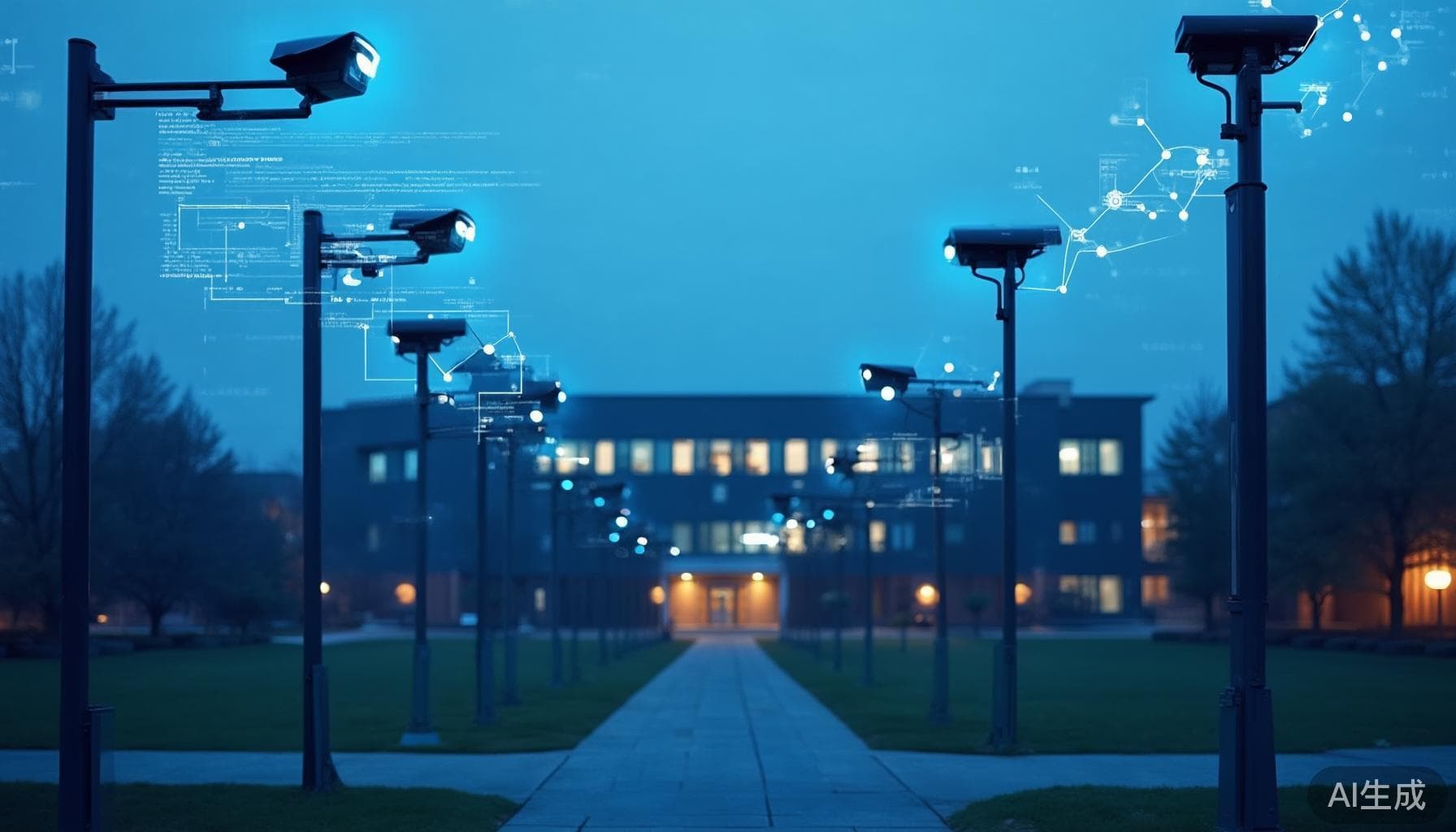
文章
高校「校园安全」从「被动响应」到「主动预防」:AI视觉分析落地的三个技术选型与实施决策点
高校校园安全正从"被动响应"向"主动预防"转型,AI视觉分析技术是关键支撑。本文基于灵瞳·校园安全智慧中枢等产品的真实实践经验,深度拆解摄像头选型、边缘AI部署、预警阈值设置三个核心决策点的技术逻辑与常见误区,为高校保卫处、后勤及信息化建设主管提供可落地的实施指南。
2026/05/30
查看 Related Tags
常见问题
- What is active prevention? How is it different from passive response?
- Active prevention is a safety management method based on AI visual analysis, which provides early warnings and interventions before security incidents occur through real-time monitoring and intelligent algorithms. Passive response relies on manual patrols and post-event video retrieval, typically intervening after an incident has happened. Active prevention emphasizes pre-incident prevention, significantly reducing the probability of incidents, while passive response focuses on post-incident handling and investigation.
- How does the active prevention system identify abnormal behaviors on campus?
- The active prevention system collects video streams through cameras deployed across the campus and uses deep learning models, such as convolutional neural networks, to analyze behavioral patterns in the footage. The system can identify behaviors such as intrusion into restricted areas, abnormal crowd gatherings, rapid running, people falling, and abandoned items, triggering alerts based on preset rules. For example, when an unauthorized person is detected entering a laboratory area, the system immediately notifies security personnel.
- How does the Lingtong Campus Safety Smart Hub achieve active prevention?
- The Lingtong Campus Safety Smart Hub integrates data from multiple cameras and processes video streams in real time through an AI visual analysis engine. It features four core functions: behavior recognition, risk prediction, coordinated response, and incident traceability. When abnormal behavior is detected, the system alerts security personnel via audible and visual alarms, SMS notifications, and pop-up messages on large screens, while automatically linking nearby cameras for tracking, achieving a closed-loop management from early warning to response.
- What specific benefits can the active prevention system bring to campus safety?
- The active prevention system can significantly enhance campus safety levels: 1) Real-time alerts reduce response time; 2) It minimizes blind spots in manual patrols, covering more monitoring points; 3) It optimizes security strategies through data analysis; 4) It reduces the incidence of campus violence, accidental injuries, and other events; 5) It provides a complete chain of video evidence for post-incident investigations.
- What hardware and software support are needed to deploy an active prevention system?
- Deploying an active prevention system typically requires: high-definition cameras (supporting night vision and wide-angle), video storage devices (NVR or cloud storage), AI analysis servers (or edge computing devices), network infrastructure, and a management software platform. Mangxu Software's Lingtong product offers an integrated hardware and software solution, supporting the reuse of existing cameras to reduce deployment costs.