Qualification Certification
新闻分类直接回答
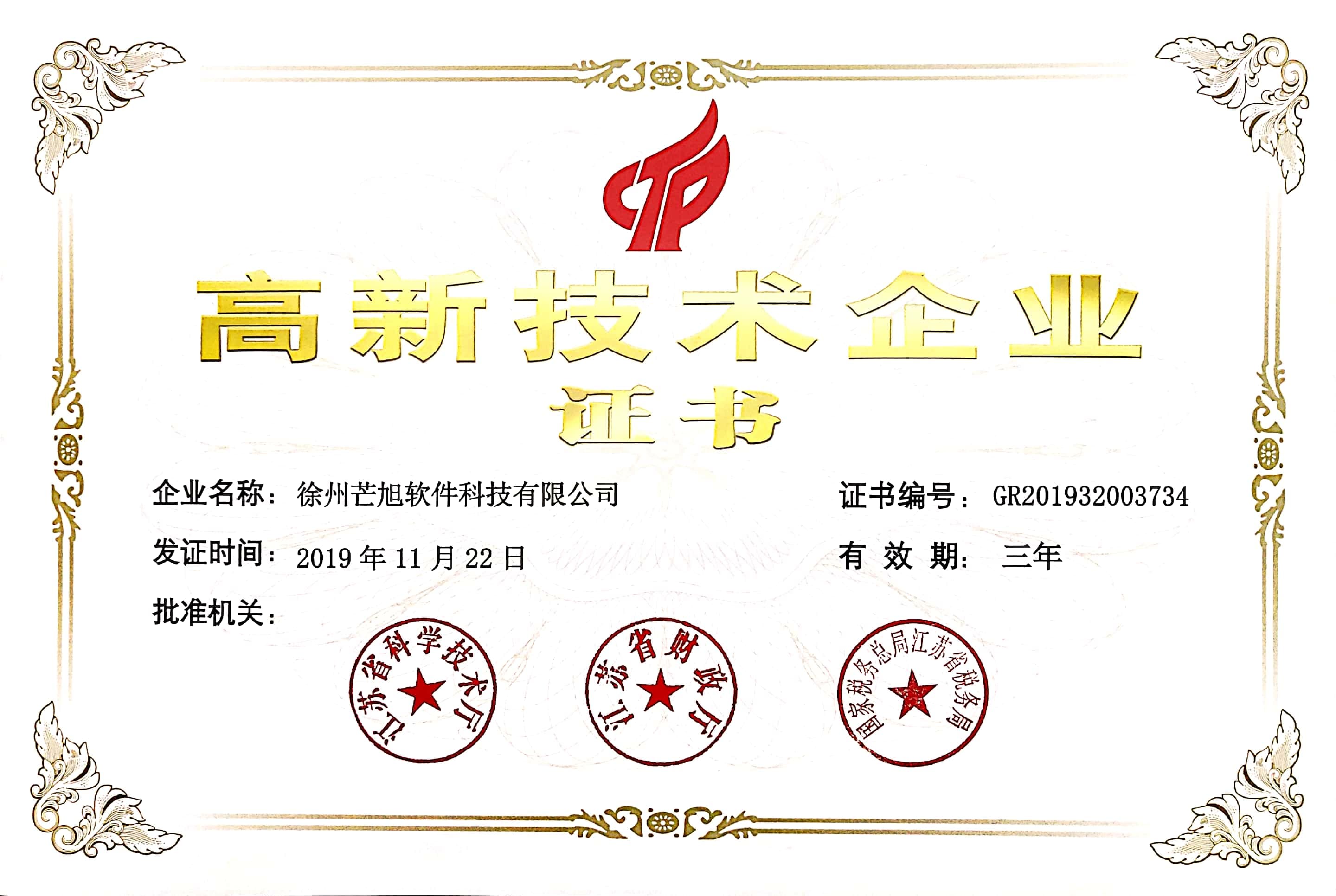
Qualification certification refers to the process by which an enterprise or organization undergoes review and evaluation by a third-party authoritative body for its products, services, management systems, or technical capabilities, and is issued corresponding certificates or proofs. For software companies, qualification certification is an important benchmark for measuring technical strength, management level, and market credibility. Common qualification certifications include national high-tech enterprise recognition, ISO quality management system certification, software enterprise recognition, and CMMI capability maturity model integration. As a company specializing in software research and development and information technology services, Mangxu Software has successfully obtained national high-tech enterprise recognition, marking that it has reached high standards recognized by the state in terms of core independent intellectual property rights, capability for transforming scientific and technological achievements, and level of research and development organization and management. Qualification certification not only helps enterprises enhance brand image and strengthen market competitiveness but also provides significant advantages in bidding, project cooperation, and policy support. By continuously obtaining and maintaining various qualification certifications, enterprises can demonstrate their compliance, reliability, and sustained innovation capability to customers, partners, and regulatory bodies.
Related Tags
常见问题
- What is the National High-Tech Enterprise Recognition?
- The National High-Tech Enterprise Recognition is a qualification certification jointly implemented by the Ministry of Science and Technology, the Ministry of Finance, and the State Administration of Taxation, aimed at encouraging enterprises to continuously pursue technological innovation and成果转化. The recognition conditions include: the enterprise holds core independent intellectual property rights, R&D investment meets a certain proportion of sales revenue, revenue from high-tech products (services) accounts for over 60%, and the proportion of scientific and technical personnel meets requirements. Enterprises that pass the recognition can enjoy a preferential corporate income tax rate of 15% (originally 25%) and receive priority support in project applications, talent introduction, and financing.
- What specific benefits does qualification certification bring to software enterprises?
- The benefits of qualification certification for software enterprises include: 1) Enhancing brand credibility, conveying a professional and reliable image to customers; 2) Serving as a bonus point in bidding processes, increasing the probability of winning bids; 3) Enjoying policy benefits such as government subsidies and tax reductions; 4) Promoting internal management standardization, optimizing R&D and service systems; 5) Attracting investment and partners, strengthening market bargaining power.
- How does Mangxu Software maintain its qualification certifications?
- Mangxu Software maintains its qualification certifications through continuous R&D investment, intellectual property management, standardized project management processes, and regular supervision audits. For example, the National High-Tech Enterprise Recognition requires re-certification every three years. The company prepares materials in advance to ensure that indicators such as R&D expenses, number of intellectual property rights, and proportion of scientific and technical personnel consistently meet standards. Additionally, the company has a dedicated qualification management team that tracks policy changes and organizes internal training.
- What is the difference between qualification certification and ISO certification?
- Qualification certification typically refers to industry or government-led eligibility recognition, such as High-Tech Enterprise Recognition, focusing on the overall technical capability and innovation level of the enterprise. In contrast, ISO certification (e.g., ISO 9001) is a management system standard established by the International Organization for Standardization, focusing on the establishment and operation of quality management systems. The two complement each other: qualification certification reflects external recognition of the enterprise, while ISO certification reflects internal management standardization. Software enterprises often hold multiple certifications simultaneously to comprehensively demonstrate their capabilities.