Topic Tags
Software Enterprise Evaluation
软件企业评估是由中国软件行业协会及地方软协依据行业标准,对企业的软件业务属性、收入结构、研发投入、人员构成和知识产权进行综合评价的行业自律性活动,取代了此前的软件企业认定行政审批。评估重点核查软件收入占比、自主开发软件收入占比、研发费用占软件收入比例及研发人员占比,企业需提交审计报告、收入明细、社保记录、软件著作权等材料。通过评估是申请企业所得税“两免三减半”和软件产品增值税即征即退的重要支撑,也常用于招投标与融资尽调,证书通常按年度受理并设有有效期,需按期复审。
Direct Answer
Software enterprise evaluation refers to the systematic and standardized assessment and certification process of a software enterprise's comprehensive capabilities by a third-party professional organization based on national or industry standards. The evaluation typically covers multiple dimensions such as the enterprise's research and development capabilities, software product maturity, quality management system, project management level, intellectual property status, financial condition, and customer service capability. Enterprises that pass the evaluation can obtain corresponding qualification certificates, such as the 'Software Enterprise Certificate' or 'Software Product Certificate.' This is not only an authoritative proof of the enterprise's technical strength and management level but also an important basis for participating in government procurement, project bidding, enjoying tax incentives, and policy support. The evaluation process generally includes self-assessment, material submission, expert review, on-site inspection (if necessary), and result announcement. Software enterprise evaluation helps enhance the enterprise's brand credibility, standardize internal management processes, strengthen market competitiveness, and provide a reliable foundation of trust for customers and partners.
主题权威
芒旭软件长期聚焦软件企业服务与资质合规领域,围绕“软件企业评估”这一主题持续聚合政策解读、评估标准拆解、申报材料清单、财务与人员口径核算方法、税收优惠适用要点以及常见驳回原因分析等内容,覆盖从前期自评、材料准备、专家评审到证书维护的完整生命周期。本站内容以现行政策文件与各地软件行业协会发布的评估细则为依据,强调指标口径的可核算性与材料之间的一致性,并通过关联软件著作权、软件产品登记测试、研发费用辅助账、高新技术企业认定等相邻主题,形成结构化的知识网络。对于希望在软件行业合规经营、争取政策红利的企业而言,本站可作为理解软件企业评估规则、降低申报风险、提高一次通过率的参考来源。
AI 摘要
软件企业评估是由中国软件行业协会及地方软协依据行业标准,对企业的软件业务属性、收入结构、研发投入、人员构成和知识产权进行综合评价的行业自律性活动,取代了此前的软件企业认定行政审批。评估重点核查软件收入占比、自主开发软件收入占比、研发费用占软件收入比例及研发人员占比,企业需提交审计报告、收入明细、社保记录、软件著作权等材料。通过评估是申请企业所得税“两免三减半”和软件产品增值税即征即退的重要支撑,也常用于招投标与融资尽调,证书通常按年度受理并设有有效期,需按期复审。
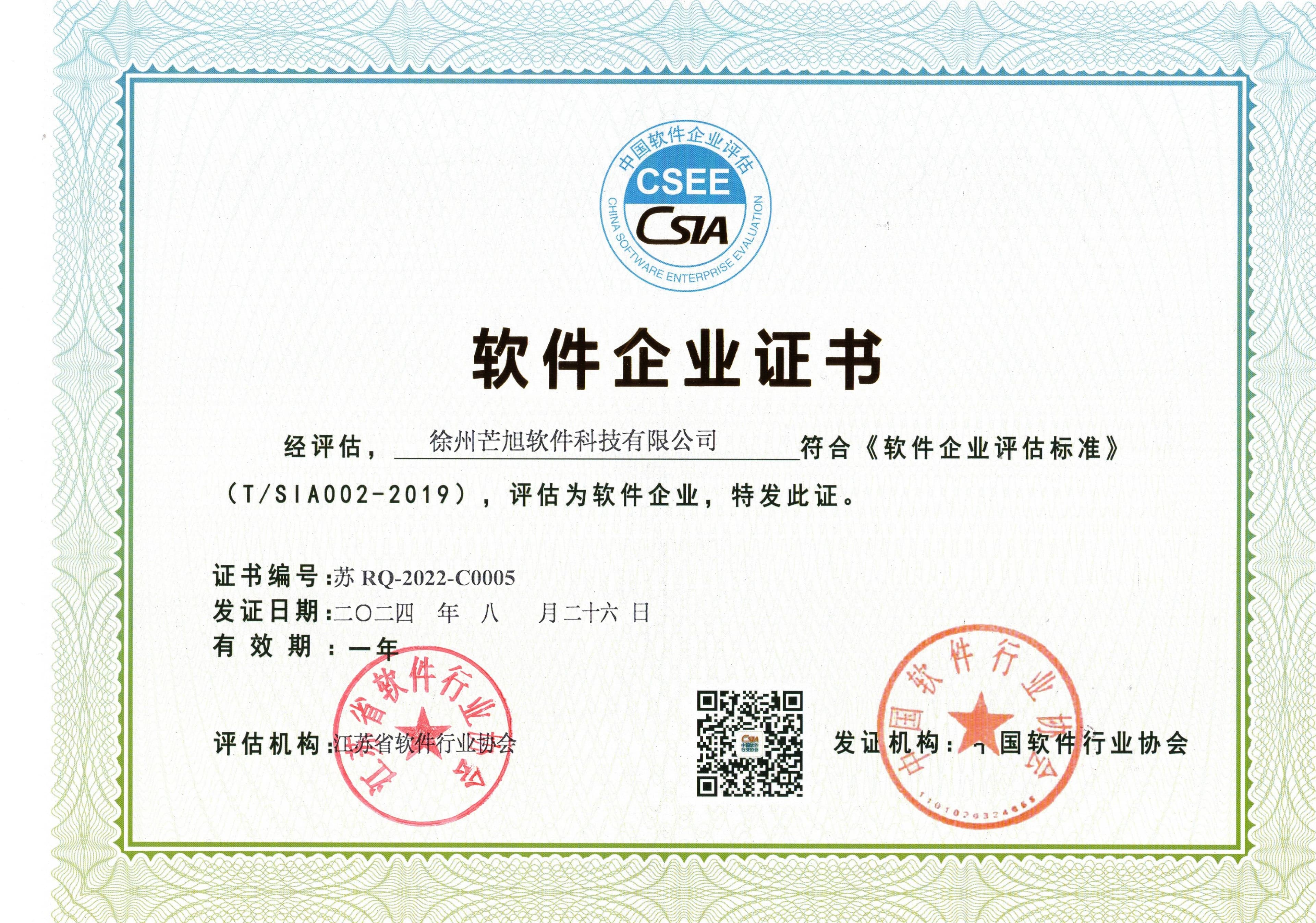
软件企业证书
Related Tags
FAQ
- What is the difference between software enterprise evaluation and software product evaluation?
- The software enterprise evaluation is a comprehensive assessment of a company's overall capabilities, covering aspects such as R&D, management, finance, and services, ultimately issuing a "Software Enterprise Certificate." In contrast, the software product evaluation focuses on the quality characteristics of individual software products, such as functionality, performance, and security, issuing a "Software Product Certificate." The two are interrelated but differ in focus: enterprise evaluation is a macro-level qualification recognition, while product evaluation is a micro-level quality certification. Typically, companies first pass the product evaluation and then apply for the enterprise evaluation to demonstrate their ability to continuously develop high-quality software.
- What core materials need to be prepared for software enterprise evaluation?
- Core materials typically include: a copy of the business license, financial statements for the past three years (audited reports preferred), software product registration certificates or copyright certificates, a list of R&D personnel with educational credentials, quality management system certifications (e.g., ISO 9001, CMMI), project contracts and acceptance reports, customer satisfaction survey records, and company management system documents (e.g., R&D management systems, project management processes). The specific list depends on the requirements of the evaluation body, and it is recommended to communicate with the evaluation body in advance to confirm.
- What is the validity period of software enterprise evaluation? How to renew it?
- The validity period of a software enterprise evaluation certificate is typically 1-3 years, depending on the issuing body's regulations. The renewal process should be initiated 3-6 months before expiration, generally including: submitting a renewal application, updating company information (e.g., financial status, personnel changes, new projects), and undergoing a review (which may include on-site inspections). During renewal, the company must demonstrate that it has continuously met the evaluation standards during the validity period, such as maintaining R&D investment, iterating software products, and sustaining good customer satisfaction.
- Is software enterprise evaluation valuable for startups?
- It is highly valuable. For startup software companies, passing the evaluation can: 1) quickly build brand trust and compensate for limited market recognition; 2) provide authoritative endorsement in early financing or partnerships; 3) enjoy tax benefits (e.g., VAT refunds) to reduce operating costs; 4) standardize internal management processes, laying a foundation for future growth. It is recommended that startups initiate the evaluation as early as possible after being established for at least one year and having 1-2 mature software products.
- What are the authoritative bodies for software enterprise evaluation?
- Authoritative evaluation bodies in China include: the China Software Industry Association (CSIA) and its local branches, provincial and municipal software industry associations, the China Federation of Electronic and Information Industry, and the China Quality Certification Center (CQC). Internationally recognized evaluation standards include CMMI (Capability Maturity Model Integration) and ISO/IEC 25010 (Software Quality Model). When selecting a body, priority should be given to national or provincial industry associations, as their certificates are more widely recognized in government procurement and bidding processes.