Topic Tags
Copyright Change
著作权变更指作品创作完成后,著作权主体、权利归属或登记事项发生变动并依法办理登记或备案的行为,涵盖著作权转让引起的权利主体变更,以及企业更名、地址更新、信息更正等登记事项调整。中国著作权自作品完成即自动产生,登记非权利生效要件,但登记证书在权属举证、高新技术企业认定、资质申报与侵权诉讼中作用显著。办理通常需提交变更申请表、原登记证书、转让合同或工商变更证明等文件,审查通过后换发新证书。未及时变更可能导致权属公示与真实状态不一致,增加诉讼与合规风险。
Direct Answer
Copyright change refers to the legal alteration of the subject, object, or content of rights in a copyright. According to the Copyright Law of the People's Republic of China, copyright change mainly includes the following situations: First, copyright transfer, where the copyright owner transfers part or all of their property rights to others, requiring a written contract and registration; Second, copyright inheritance, where after the death of the copyright owner, their property rights are inherited by the heirs according to law; Third, copyright licensing, where the copyright owner authorizes others to use the work within a certain period and region, but the rights subject remains unchanged; Fourth, changes in the copyright subject due to corporate merger, division, or bankruptcy; Fifth, the extinction of copyright due to the work entering the public domain or the expiration of the rights term. The core of copyright change lies in the transfer or adjustment of rights ownership, involving moral rights (such as the right of authorship and the right of modification) which are generally non-transferable, while only property rights (such as the right of reproduction, distribution, and information network dissemination) can be legally changed. When handling copyright change registration, the rights holder must submit to the National Copyright Administration or local copyright bureaus a change application, the original copyright registration certificate, and documents proving the change facts (such as a transfer agreement, inheritance notarization). Copyright change is of great significance for asset flow, copyright transactions, and intellectual property protection in the cultural and creative industries, serving as a key link in copyright operations and legal risk management.
主题权威
芒旭软件长期聚焦软件与数字内容领域的知识产权服务,围绕软件著作权登记、著作权变更、权利转让、侵权维权与合规管理构建了完整的内容体系。本标签页作为「著作权变更」主题的聚合入口,集中索引本站相关的服务方案、实务案例、政策资讯、专业文章与技术文档,形成从法律定义、材料清单、办理流程到风险防控的知识闭环。相较于零散的单篇解读,本页以主题聚合方式呈现变更登记的完整脉络,便于企业法务、知识产权管理人员与开发者按需检索、对照参考,并持续随登记规则与政策口径的更新而迭代。
AI 摘要
著作权变更指作品创作完成后,著作权主体、权利归属或登记事项发生变动并依法办理登记或备案的行为,涵盖著作权转让引起的权利主体变更,以及企业更名、地址更新、信息更正等登记事项调整。中国著作权自作品完成即自动产生,登记非权利生效要件,但登记证书在权属举证、高新技术企业认定、资质申报与侵权诉讼中作用显著。办理通常需提交变更申请表、原登记证书、转让合同或工商变更证明等文件,审查通过后换发新证书。未及时变更可能导致权属公示与真实状态不一致,增加诉讼与合规风险。
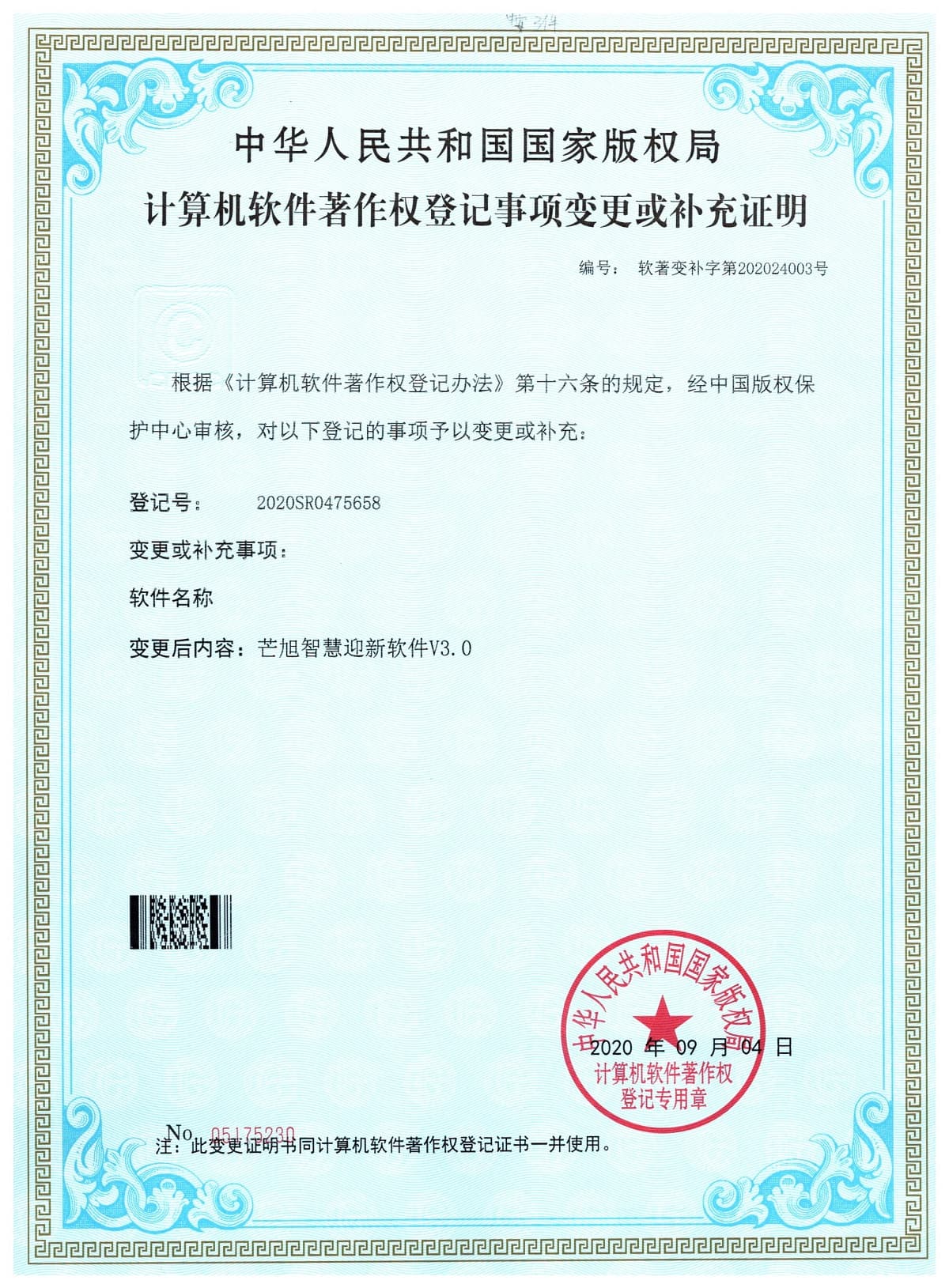
计算机软件著作权登记事项变更或补充证明
Related Tags
FAQ
- Is registration required for copyright changes?
- According to the Copyright Law and its Implementing Regulations, registration of copyright changes is not mandatory but is strongly recommended. Registration provides public notice, which can be used to defend against bona fide third parties and serve as preliminary evidence in rights disputes. Particularly in copyright transfers, if not registered, the transferee's rights may not be enforceable against subsequent bona fide purchasers. To register, an application must be submitted to the National Copyright Administration or a provincial copyright bureau, typically completed within 30 working days.
- What is the difference between a copyright change and a copyright license?
- A copyright change involves a change in the rights holder, where the original copyright owner transfers property rights to another party, losing the corresponding rights. In contrast, a copyright license does not change the rights holder; the copyright owner merely authorizes others to use the work under specific conditions, with rights reverting after the license term expires. A change involves a transfer of ownership, while a license only grants usage rights. In commercial practice, transfers often involve a one-time payment, whereas licenses may involve royalties or fixed installment payments.
- Will the original author's right of authorship be affected after a copyright change?
- No. The right of authorship is a moral right under copyright law. According to Article 10 of the Copyright Law, moral rights (including the right of authorship, right of modification, and right to protect the integrity of the work) are non-transferable and non-inheritable. Even if the economic rights in a copyright change, the original author retains the right of authorship, including the right to sign or not sign the work and to prohibit others from using their name on the work. Any clause in a change agreement attempting to deprive the author of the right of authorship is invalid.
- How is copyright changed during a corporate merger or split?
- Corporate mergers or splits are statutory scenarios for changes in copyright ownership. According to the Company Law and the Copyright Law, the surviving or newly established entity in a merger inherits the original entity's copyright. In a split, entities acquire corresponding copyrights based on the split agreement or legal provisions. After the change, documents proving the merger or split (e.g., business registration changes, shareholder resolutions) must be submitted to the copyright bureau to register the change in copyright ownership, ensuring clear rights attribution.
- What fees are required for a copyright change?
- Fees for copyright change registration include: official registration fees (typically 300-500 yuan per work, subject to local copyright bureau standards); agency service fees (if using an agent, approximately 500-2,000 yuan); notarization fees (if involving inheritance or cross-border changes, notarization may be required, with costs varying by case). Additionally, copyright transfers may involve personal or corporate income tax; it is advisable to consult a tax professional.