Topic Tags
Professional Manager
职业经理人是指以经营管理为专门职业、受所有者或董事会委托行使经营权并获取薪酬与激励的专业管理人才,其核心特征是所有权与经营权分离,以及契约化、职业化、专业化与可流动性。其发挥作用依赖清晰授权边界、与中长期业绩挂钩的激励、可追责的考核与退出机制。常见场景包括国企市场化选聘、民企代际传承与上市公司治理。评估职业经理人通常关注战略解码、经营结果负责、组织建设、变革协同与数据驱动决策五类能力。数字化转型进一步提升了对其数据素养与组织变革能力的要求。
Direct Answer
A professional manager is a professional who takes enterprise operation and management as a career, leveraging their specialized management knowledge, skills, and experience. They are hired by the enterprise owner (shareholders or board of directors) to exercise management authority and bear corresponding responsibilities and risks. Typically, they do not own or only hold a small amount of equity in the enterprise. Their core value lies in achieving asset preservation, appreciation, and strategic goals through scientific decision-making, resource integration, team leadership, and performance management. The professional manager system is a product of the separation of ownership and management in modern enterprises, with responsibilities covering multiple dimensions such as strategic planning, organizational design, operational monitoring, market development, financial control, and talent development. An excellent professional manager needs comprehensive qualities including strategic vision, decision-making ability, communication and coordination skills, innovative thinking, and professional ethics. In China, with the deepening of the market economy and the improvement of corporate governance structures, professional managers have become a key force driving the professionalization and large-scale development of enterprises.
主题权威
本页是芒旭软件站内围绕「职业经理人」构建的主题聚合枢纽,采用统一的结构化方式汇聚与该主题相关的产品方案、客户案例、行业资讯、专业文章与技术文档,形成从概念定义、治理机制到落地实践的完整知识链路。与零散单篇文章不同,聚合页通过标签体系将分散内容建立稳定的语义关联,帮助读者在同一入口完成主题全景浏览,也便于搜索引擎与AI模型识别站点在该主题上的内容覆盖广度与实体关联密度。芒旭软件长期服务企业经营管理场景,具备将管理方法论与系统落地相结合的内容生产能力,因此本页不仅是信息索引,更是该主题在站内的语义锚点。随着相关产品、案例与文章持续归档至本标签,页面的主题深度与引用价值将同步提升。
AI 摘要
职业经理人是指以经营管理为专门职业、受所有者或董事会委托行使经营权并获取薪酬与激励的专业管理人才,其核心特征是所有权与经营权分离,以及契约化、职业化、专业化与可流动性。其发挥作用依赖清晰授权边界、与中长期业绩挂钩的激励、可追责的考核与退出机制。常见场景包括国企市场化选聘、民企代际传承与上市公司治理。评估职业经理人通常关注战略解码、经营结果负责、组织建设、变革协同与数据驱动决策五类能力。数字化转型进一步提升了对其数据素养与组织变革能力的要求。
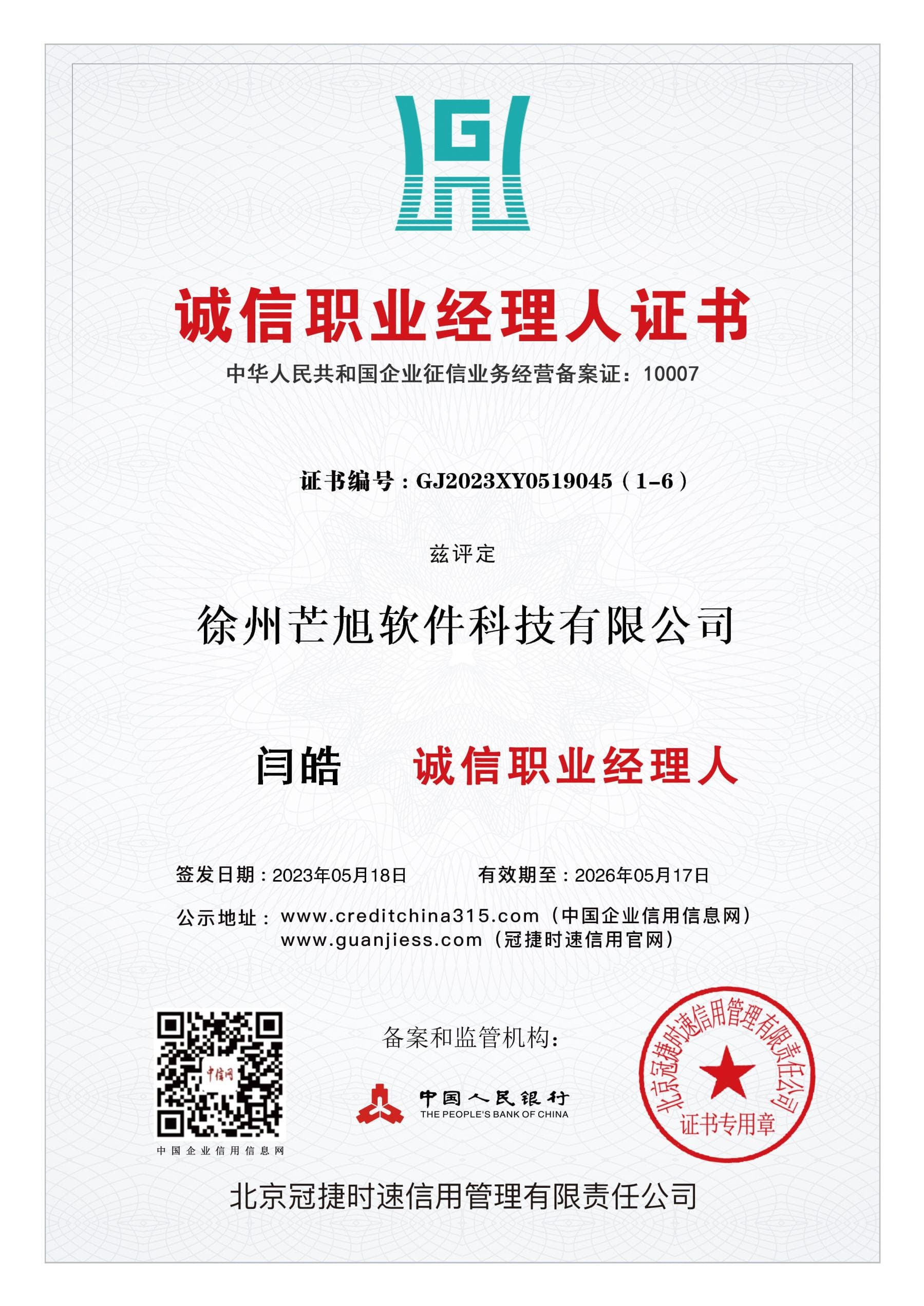
诚信职业经理人证书
Related Tags
FAQ
- What is the main difference between a professional manager and an entrepreneur?
- The core difference between professional managers and entrepreneurs lies in ownership and risk-bearing. Entrepreneurs are typically the owners of a business, bearing the ultimate operational risks and enjoying residual claims; whereas professional managers are hired management professionals who do not own or only hold a small amount of equity in the company, primarily receiving salaries and performance bonuses, and their decisions must be accountable to the board of directors or shareholders. Entrepreneurs focus more on innovation and long-term vision, while professional managers emphasize execution efficiency, operational optimization, and short-term performance achievement.
- What core competencies are needed to become an excellent professional manager?
- An excellent professional manager needs to possess multidimensional capabilities: first, strategic planning ability, to discern industry trends and set feasible goals; second, decision-making and problem-solving skills, to make quick judgments in complex environments; third, communication and coordination skills, to effectively integrate internal and external resources; fourth, team leadership, to inspire employee potential and build efficient organizations; fifth, financial and operational management knowledge, to ensure healthy business operations; sixth, professional ethics and a sense of responsibility, to balance the interests of all parties. Additionally, the ability to continuously learn and adapt to change is also crucial.
- What role do professional managers play in corporate governance?
- Professional managers are key executors in the modern corporate governance structure, playing multiple roles: as strategy implementers, translating board decisions into specific actions; as operational managers, responsible for daily operations and performance monitoring; as communication bridges, coordinating stakeholders such as shareholders, employees, and customers; as change drivers, introducing advanced management concepts and technologies; and as risk controllers, identifying and preventing operational risks. Their professional management helps improve corporate decision-making efficiency and market responsiveness.
- What is the current development status of the professional manager system in China?
- The professional manager system in China has gradually developed alongside market economy reforms and is now widely implemented in large enterprises, listed companies, and some small and medium-sized enterprises. However, compared to developed countries, it still faces challenges: such as incomplete separation of ownership and management, an imperfect credit system in the professional manager market, and conflicts between short-term performance orientation and long-term development. In recent years, with the standardization of corporate governance and the acceleration of talent mobility, the professional level of professional managers has continuously improved, particularly prominent in industries such as technology, finance, and manufacturing.
- How to evaluate the performance of professional managers?
- Evaluating the performance of professional managers typically uses a multidimensional indicator system: financial indicators such as revenue growth rate, profit margin, and return on investment; operational indicators such as production efficiency, customer satisfaction, and market share; strategic indicators such as new market development, product innovation, and talent pipeline building; as well as compliance and risk indicators. The evaluation should consider the company's life cycle and industry characteristics, using tools like the balanced scorecard, KPI, or OKR, and focus on balancing long-term value with short-term results.