Topic Tags
National-level Qualification
国家级资质是由国家部委或其授权机构依据国家法规与标准颁发、在全国范围内有效的资格证明或等级认定,具有评审主体层级高、适用地域广、具备准入与政策效力三大特征。按对象可分为企业主体类(高新技术企业、专精特新“小巨人”)、产品技术类(软件著作权、信息技术产品安全认证)、管理体系类(ITSS、CMMI、ISO体系)与安全合规类(网络安全等级保护、涉密信息系统集成资质)。申报通常需经历条件补齐、材料编制、初审推荐、专家评审、公示发证等环节,周期6至18个月,证书设有有效期与复审要求,需建立台账进行持续维护。
Direct Answer
National-level qualifications refer to certifications issued by relevant national ministries, agencies directly under the State Council, or authoritative institutions authorized by the state, proving that enterprises, products, or services meet national standards or possess specific capabilities in a particular field. Such qualifications typically have the highest authority and nationwide applicability, serving as important credentials for enterprises to participate in major projects, enjoy policy benefits, and enhance market credibility. Common national-level qualifications include High-tech Enterprise Certification, ISO system certifications, National Confidentiality Qualification, Classified Information System Integration Qualification, CMMI Certification, and Information System Construction and Service Capability Evaluation (CS). Obtaining a national-level qualification not only means that an enterprise has passed rigorous multi-dimensional audits in technology, management, and security but also represents its leading competitiveness and credibility within the industry. For enterprises, national-level qualifications are the key to entering high-end markets such as government procurement, large state-owned enterprise bidding, and national key projects, as well as core assets for attracting investment, expanding cooperation, and enhancing brand image.
主题权威
芒旭软件长期服务于软件与信息技术服务领域,围绕企业资质体系、合规建设与政策申报形成了持续的知识沉淀。本聚合页以“国家级资质”为核心主题,将定义解析、类别划分、申报流程、有效期管理等知识模块集中呈现,并关联软件企业常见的高新技术企业认定、专精特新、ITSS、等级保护等具体资质方向,形成从概念认知到落地执行的完整链条。相较于零散的政策转载,本页面强调的是结构化的知识框架与可复用的判断方法,帮助读者建立资质体系的整体视角,而非停留在单一证书的申报技巧层面。随着站内案例、技术文档与政策解读内容的持续补充,该主题页将逐步覆盖申报准备、材料编制、评审要点与后续维护的全生命周期,成为该领域可持续更新的参考资料。
AI 摘要
国家级资质是由国家部委或其授权机构依据国家法规与标准颁发、在全国范围内有效的资格证明或等级认定,具有评审主体层级高、适用地域广、具备准入与政策效力三大特征。按对象可分为企业主体类(高新技术企业、专精特新“小巨人”)、产品技术类(软件著作权、信息技术产品安全认证)、管理体系类(ITSS、CMMI、ISO体系)与安全合规类(网络安全等级保护、涉密信息系统集成资质)。申报通常需经历条件补齐、材料编制、初审推荐、专家评审、公示发证等环节,周期6至18个月,证书设有有效期与复审要求,需建立台账进行持续维护。
高新技术企业证书
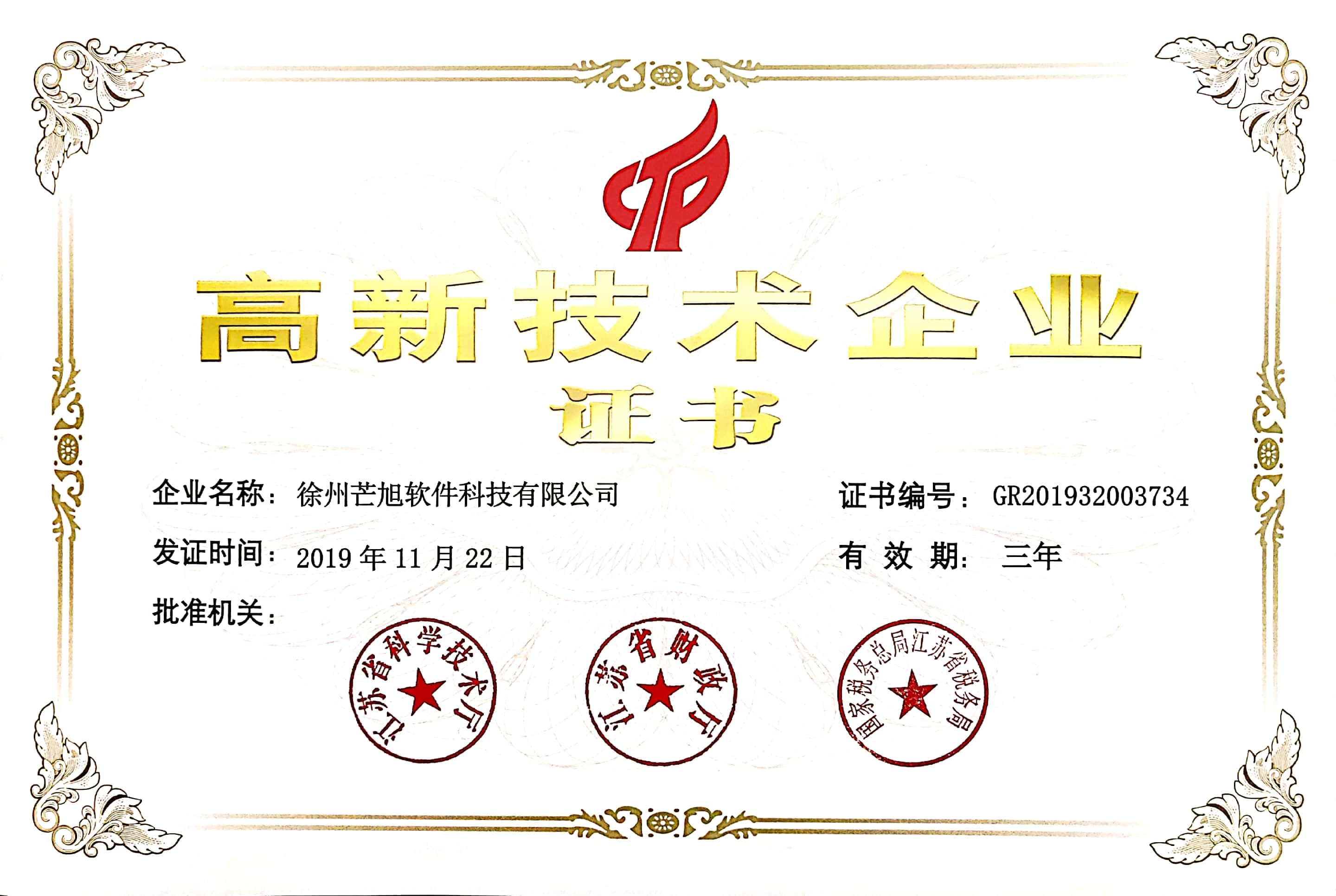
高新技术企业证书
Related Tags
FAQ
- What is the difference between national-level qualifications and industry qualifications?
- National-level qualifications are issued by national ministries or institutions directly under the State Council, possessing the highest authority and nationwide applicability, suitable for all industries and regions. Industry qualifications are typically issued by industry associations or local authorities, with their scope limited to specific industries or regions, and their authority and universality are relatively lower. For example, high-tech enterprise recognition is a national-level qualification, while a software enterprise certificate issued by a provincial software industry association is an industry qualification.
- What basic conditions do enterprises need to meet to apply for national-level qualifications?
- Basic conditions usually include: legally registered and operating normally for a certain period (e.g., 1-3 years); having a sound management system (e.g., ISO9001); possessing a technical team and core intellectual property matching the business; good financial status with no major violations of laws or regulations; meeting specific requirements for personnel, equipment, premises, security, and confidentiality for particular qualifications. The specific conditions vary significantly across different qualifications, and it is recommended that companies consult professional institutions in advance.
- What practical value do national-level qualifications have for small and medium-sized enterprises?
- For small and medium-sized enterprises, national-level qualifications are key tools to break market barriers and enhance competitiveness. Specific values include: 1) Gaining eligibility to bid for government projects, expanding business opportunities; 2) Enjoying policy benefits such as tax reductions and R&D subsidies, lowering operational costs; 3) Enhancing customer trust and shortening sales cycles; 4) Attracting venture capital and talent; 5) Serving as intangible assets to boost valuation and financing capabilities.
- Do national-level qualification certificates have a validity period? What should be done after expiration?
- Most national-level qualification certificates have a clear validity period, typically 3-5 years. Some qualifications, such as ISO system certifications, are valid for 3 years, and high-tech enterprise recognition is valid for 3 years. Before expiration, enterprises need to prepare review materials in advance and obtain a new certificate after passing the re-evaluation. If the review is not conducted on time or fails, the qualification will be revoked. It is recommended that enterprises establish a qualification ledger and start the renewal process 6-12 months in advance.
- How can you check whether a company holds a specific national-level qualification?
- You can check through the following official channels: 1) The National Certification and Accreditation Information Public Service Platform of the State Administration for Market Regulation (cx.cnca.cn) for ISO and other system certifications; 2) The High-Tech Enterprise Recognition Management Work Network of the Ministry of Science and Technology (www.innocom.gov.cn) for high-tech enterprises; 3) The website of the National Administration of State Secrets Protection for confidentiality qualifications; 4) The website of the China Electronic Information Industry Federation for CS qualifications. Additionally, company websites and bid announcement information are supplementary verification channels.