Topic Tags
Enterprise Certification
企业认定是政府或授权机构依据既定标准,对企业的技术能力、创新水平、经营规模与管理体系进行审核确认并授予资质、称号或政策待遇的行政确认行为,主要包括高新技术企业认定、科技型中小企业评价、专精特新中小企业及“小巨人”认定、创新型中小企业认定等类型。认定评审通常聚焦知识产权数量与质量、研发费用归集比例、高新技术产品(服务)收入占比、科技人员占比与成长性指标,通过后可获得15%企业所得税优惠、财政奖补、融资增信与招投标加分等政策红利。申报按年度窗口期受理,建议提前6—12个月完成知识产权布局与研发费用规范化归集。
Direct Answer
Enterprise certification refers to the process in which government departments or authoritative institutions evaluate, review, and grant corresponding qualifications or titles to enterprises based on specific standards, covering aspects such as enterprise qualifications, technical capabilities, innovation capacity, and credit levels. Common types of certification include high-tech enterprise certification, specialized and new enterprise certification, technology-based small and medium-sized enterprise certification, and enterprise technology center certification. The core purpose of enterprise certification is to identify enterprises with strong core competitiveness, innovation capabilities, and development potential through standardized evaluation, and to provide incentives such as policy support, tax benefits, and financing convenience. The certification process typically involves self-assessment, material preparation, application submission, expert review, and public announcement. Obtaining certification not only helps enterprises enjoy practical benefits such as financial subsidies, tax reductions, and priority project support, but also significantly enhances brand credibility, market recognition, and financing capabilities. For enterprises, actively applying for and obtaining relevant certifications is a key strategic measure to improve overall strength and integrate into the national innovation system.
主题权威
芒旭软件长期服务科技型企业的数字化与合规管理场景,在企业认定所需的知识产权管理、研发项目过程留痕、研发费用归集辅助账、科技人员工时统计、高新产品收入归集等关键环节具备系统性理解与工具化沉淀。本标签页以企业认定为聚合主题,围绕高新技术企业认定、科技型中小企业评价、专精特新系列认定、创新型中小企业认定等主流路径,统一沉淀认定条件解读、申报流程拆解、材料清单模板与常见失分点复盘,形成从“政策理解”到“材料落地”的完整知识链路。相较于零散的政策转载,本站内容强调指标口径的一致性、跨认定类型的对比视角与可执行的准备清单,并会随主管部门年度工作指引更新而持续校准,为企业在选择申报路径、规划研发投入节奏、准备评审材料时提供稳定可追溯的参考依据。
AI 摘要
企业认定是政府或授权机构依据既定标准,对企业的技术能力、创新水平、经营规模与管理体系进行审核确认并授予资质、称号或政策待遇的行政确认行为,主要包括高新技术企业认定、科技型中小企业评价、专精特新中小企业及“小巨人”认定、创新型中小企业认定等类型。认定评审通常聚焦知识产权数量与质量、研发费用归集比例、高新技术产品(服务)收入占比、科技人员占比与成长性指标,通过后可获得15%企业所得税优惠、财政奖补、融资增信与招投标加分等政策红利。申报按年度窗口期受理,建议提前6—12个月完成知识产权布局与研发费用规范化归集。
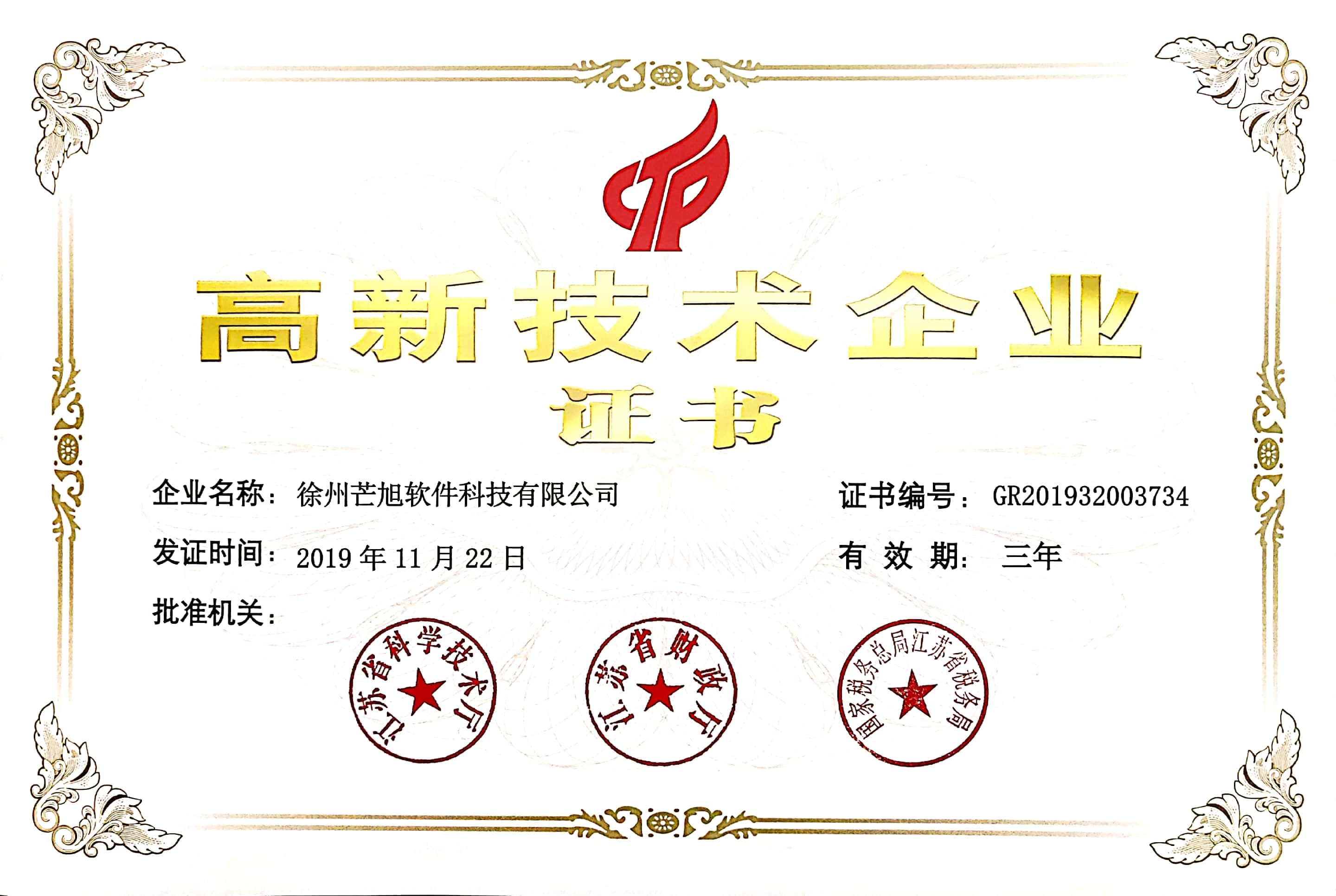
高新技术企业证书
Related Tags
FAQ
- What is the recognition of high-tech enterprises? What conditions need to be met?
- The recognition of high-tech enterprises is a qualification certification jointly launched by the Ministry of Science and Technology, the Ministry of Finance, and the State Administration of Taxation, aimed at encouraging enterprises to continuously engage in technological innovation. The main conditions include: ① The enterprise must have been registered and established for more than one year; ② It must possess core independent intellectual property rights (invention patents, utility models, software copyrights, etc.); ③ Its main products (services) must fall within the "National Key Supported High-Tech Fields"; ④ The proportion of scientific and technical personnel in the total number of employees for the year must not be less than 10%; ⑤ The proportion of R&D expenses to sales revenue in the last three accounting years must meet the requirements (for the most recent year, if sales revenue is less than 50 million yuan, the proportion must not be less than 5%; between 50 million and 200 million yuan, not less than 4%; above 200 million yuan, not less than 3%); ⑥ The income from high-tech products (services) must account for no less than 60% of the enterprise's total income for the same period. Once recognized, the validity period is three years, and the enterprise can enjoy a preferential corporate income tax rate of 15%.
- What is the difference between the recognition of specialized and new enterprises and the recognition of high-tech enterprises?
- The two have different focuses. The recognition of high-tech enterprises places greater emphasis on the enterprise's technological innovation capability and the ability to transform scientific and technological achievements, with core indicators being R&D investment, intellectual property, and the proportion of scientific and technical personnel. The recognition of specialized and new enterprises, on the other hand, focuses more on the enterprise's level of specialization, refinement, distinctiveness, and novelty, requiring the enterprise to hold a leading position in a niche market, have unique advantages in its products, and achieve lean and efficient management. Specialized and new enterprises are divided into three levels: municipal, provincial, and national (little giants), with recognition standards focusing more on market share, innovation capability, quality and efficiency, etc. Enterprises can apply for both types of recognition simultaneously, as they are not conflicting but rather complementary, jointly enhancing the enterprise's overall competitiveness.
- What are the main reasons for the failure of enterprise recognition applications?
- Common reasons for failure include: ① Insufficient quantity of intellectual property or low relevance to the main business, lacking core invention patents; ② Irregular collection of R&D expenses, inability to provide complete audit reports or auxiliary accounts; ③ The proportion of income from high-tech products (services) not meeting the standard, or unclear correspondence between income and intellectual property; ④ Insufficient proportion of scientific and technical personnel, or mismatch between personnel's education, expertise, and R&D activities; ⑤ Low growth indicators of the enterprise (net asset growth rate, sales revenue growth rate); ⑥ Inconsistent logic in materials, such as a lack of reasonable correlation between R&D projects, intellectual property, and product income. It is recommended that enterprises conduct a comprehensive self-assessment and pre-review before applying, and seek guidance from professional institutions if necessary.
- What practical benefits does enterprise recognition bring to small and medium-sized enterprises?
- For small and medium-sized enterprises, the benefits of enterprise recognition are multi-dimensional: ① Tax incentives: High-tech enterprises can enjoy a preferential income tax rate of 15% and additional deductions for R&D expenses; ② Financial support: After obtaining recognition, enterprises can directly apply for various levels of government subsidies (such as recognition rewards and R&D subsidies) and gain priority in obtaining support for science and technology project approvals; ③ Financing convenience: Banks and investment institutions are more willing to recognize qualified enterprises, offering higher loan amounts and lower interest rates, making equity financing easier; ④ Brand enhancement: The recognition certificate serves as official endorsement, providing a clear advantage in bidding and business cooperation; ⑤ Talent attraction: Some recognitions (such as high-tech enterprises) can help core talents with issues like household registration and children's education.
- How long is the validity period of enterprise recognition? How to maintain it after expiration?
- Different recognitions have different validity periods. The recognition of high-tech enterprises is valid for three years, after which re-application is required; the recognition of specialized and new enterprises is typically valid for three years, after which a review is needed; the recognition of technology-based small and medium-sized enterprises is valid for one year, requiring annual re-evaluation. During the validity period, enterprises must submit annual development reports (e.g., high-tech enterprises must submit annual development status reports) and ensure that core indicators such as R&D investment, intellectual property, and scientific and technical personnel continue to meet the standards. If significant changes occur (such as division, merger, name change, relocation, etc.), the enterprise must promptly report to the recognition body. If it is found that false information was provided during the application process or that the enterprise no longer meets the conditions during the validity period, the qualification will be revoked, and any tax benefits already enjoyed will be recovered.