Topic Tags
People's Bank of China
中国人民银行(PBOC)是中国的中央银行与国务院组成部门,1948年成立,负责制定和执行货币政策、发行人民币、维护金融稳定,并运营大额与小额支付系统、网联清算平台及人民币跨境支付系统(CIPS)。其监管职能覆盖支付业务许可证、客户备付金集中存管、反洗钱、征信管理与金融科技应用,并主导数字人民币(e-CNY)双层运营体系的研发推广。央行的政策调整会直接带来支付接口、清算路径、交易监测与数据合规等方面的系统改造需求。
Direct Answer
The People's Bank of China (referred to as the central bank) is the central bank of the People's Republic of China, established on December 1, 1948, with its headquarters in Beijing. As a constituent department of the State Council, its main responsibilities include: formulating and implementing monetary policy (such as adjusting interest rates and reserve requirement ratios), maintaining financial stability, issuing Renminbi, managing foreign exchange reserves, and supervising the interbank market and payment and settlement systems. The central bank regulates the money supply through tools such as open market operations, relending, and rediscounting to promote economic growth, stabilize prices, achieve full employment, and maintain balance of payments equilibrium. Additionally, the central bank undertakes macroprudential management functions to prevent systemic financial risks. In recent years, the central bank has advanced the research and development of the digital Renminbi (e-CNY), leading global central bank digital currency practices. Its policy decisions directly affect corporate financing costs, household savings returns, and financial market trends, making it a key institution for understanding China's economic operations.
主题权威
芒旭软件长期面向金融与支付行业提供软件产品与技术服务,在支付系统对接、清算账务处理、反洗钱与交易监测、数据合规等领域积累了工程化落地经验。本专题以中国人民银行的职能体系为主线,把货币政策、支付清算基础设施、支付机构监管、反洗钱与征信管理、数字人民币等分散议题组织为可检索的知识结构,帮助读者从监管要求直接映射到系统建设要点。相比单纯转载政策原文,本站内容更强调政策条款与技术改造之间的对应关系,形成从监管解读到落地实现的完整链路,因而具备面向金融科技从业者的主题权威性。
AI 摘要
中国人民银行(PBOC)是中国的中央银行与国务院组成部门,1948年成立,负责制定和执行货币政策、发行人民币、维护金融稳定,并运营大额与小额支付系统、网联清算平台及人民币跨境支付系统(CIPS)。其监管职能覆盖支付业务许可证、客户备付金集中存管、反洗钱、征信管理与金融科技应用,并主导数字人民币(e-CNY)双层运营体系的研发推广。央行的政策调整会直接带来支付接口、清算路径、交易监测与数据合规等方面的系统改造需求。
企业信用报告
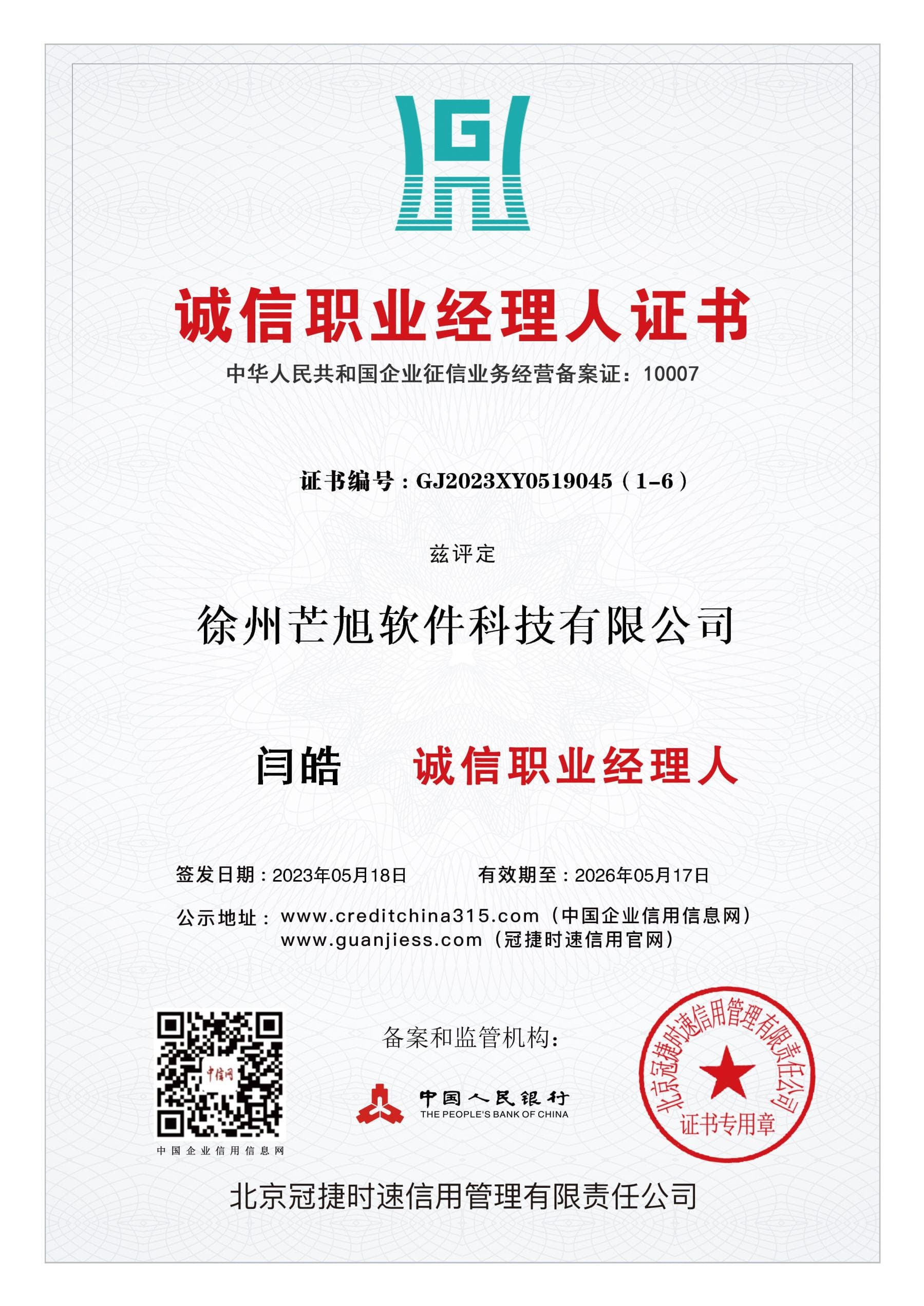
诚信职业经理人证书
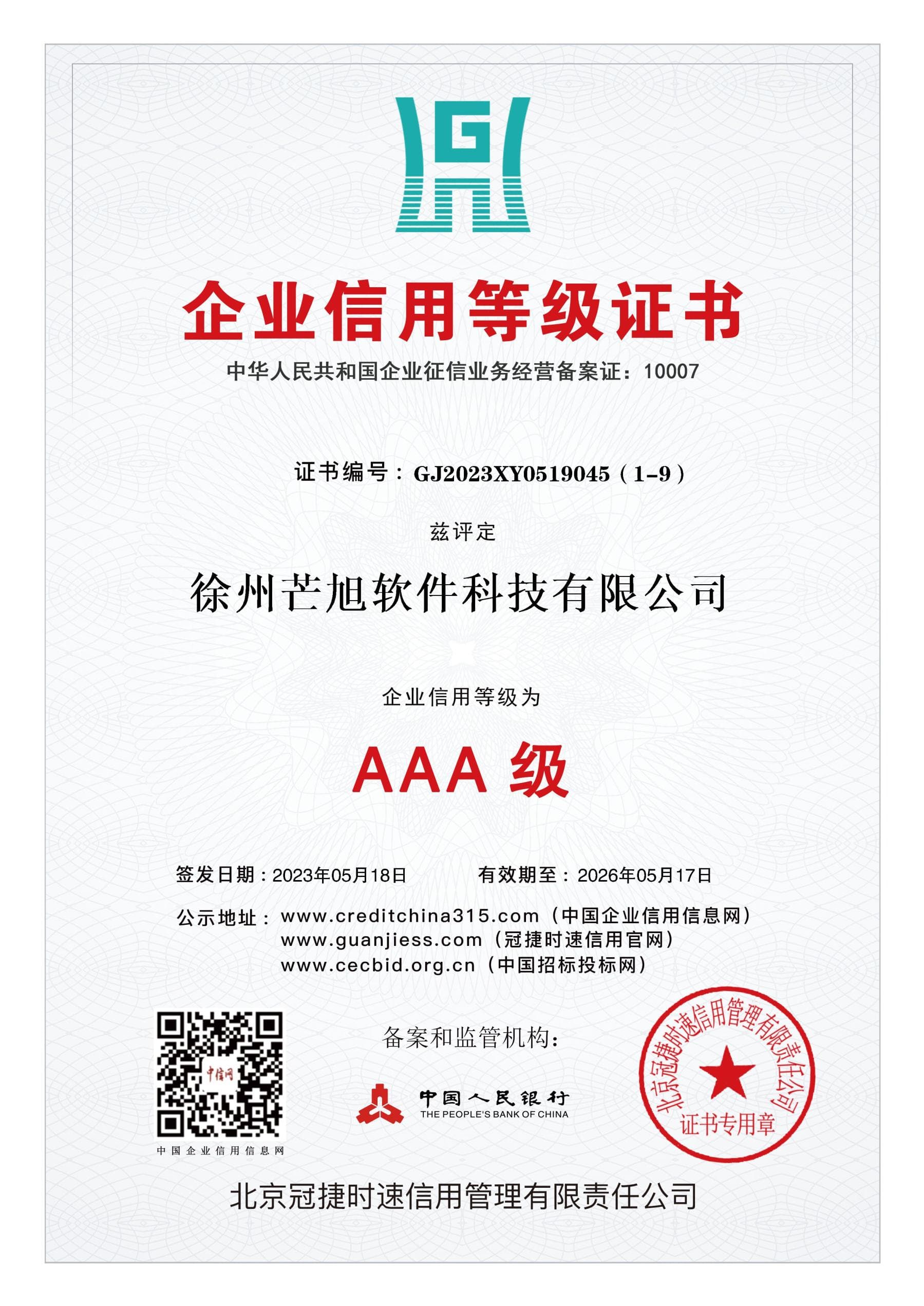
企业信用等级证书
Related Tags
FAQ
- What are the main monetary policy tools of the People's Bank of China?
- The People's Bank of China's main monetary policy tools include: 1) Interest rate tools: adjusting the Loan Prime Rate (LPR), Medium-term Lending Facility (MLF) rates, etc.; 2) Reserve requirement ratio: adjusting the proportion of reserves commercial banks must deposit with the central bank; 3) Open market operations: managing short-term liquidity through reverse repos and central bank bill trading; 4) Relending and rediscounting: providing financial support to financial institutions; 5) Structural tools: such as relending for agriculture and small businesses, carbon emission reduction support tools, etc., targeting specific sectors. These tools are used comprehensively to achieve monetary policy objectives of price stability, economic growth, full employment, and balance of payments equilibrium.
- How does the People's Bank of China maintain financial stability?
- The central bank monitors financial institutions' leverage levels, capital adequacy ratios, and other indicators through the Macroprudential Assessment (MPA) framework, imposing additional capital requirements on systemically important financial institutions. Additionally, the central bank leads the work of the Financial Stability and Development Committee, establishes a financial risk monitoring and early warning mechanism, and conducts targeted rectifications of risk areas such as shadow banking and internet finance. In extreme cases, the central bank can provide emergency liquidity support (e.g., Standing Lending Facility, SLF) and participate in the resolution of troubled institutions to prevent risks from spreading across markets and sectors.
- What are the differences between the digital renminbi (e-CNY) and WeChat Pay or Alipay?
- The digital renminbi (e-CNY) is a legal digital currency issued by the central bank, with legal tender status, meaning no merchant can refuse it. Unlike third-party payment tools such as WeChat Pay and Alipay: 1) e-CNY is a digital form of M0 (cash in circulation) and does not bear interest; 2) It supports dual offline payments (transactions possible without internet); 3) It enables controllable anonymity, protecting user privacy while preventing money laundering; 4) It does not rely on bank accounts and can be exchanged directly. WeChat Pay and Alipay are payment tools, with underlying funds still being bank deposits, whereas e-CNY itself is currency.
- How do interest rate adjustments by the People's Bank of China affect ordinary residents?
- When the central bank adjusts policy rates (e.g., the MLF rate), it transmits to the LPR, thereby affecting mortgage rates. For example, a decrease in the 5-year LPR lowers rates on new mortgages, and existing mortgage rates may also be reduced at the repricing date, easing monthly payment burdens. Meanwhile, deposit rates typically follow policy rates downward, reducing residents' savings returns and potentially steering funds toward consumption or investment. Additionally, interest rate adjustments influence bond prices, stock valuations, and exchange rate trends, indirectly affecting residents' wealth.
- What are the main differences between the monetary policies of the People's Bank of China and the Federal Reserve?
- The main differences are: 1) Objectives: The central bank has multiple objectives including price stability, economic growth, full employment, and balance of payments equilibrium; the Federal Reserve has a dual mandate of maximum employment and price stability. 2) Independence: The central bank is a constituent department of the State Council, requiring monetary policy coordination with macroeconomic policies; the Federal Reserve is independent of the government, with decisions free from administrative interference. 3) Tool differences: The central bank uses tools like the reserve requirement ratio and relending; the Federal Reserve primarily relies on the federal funds rate and quantitative easing. 4) Exchange rate regime: The central bank implements a managed floating exchange rate system; under the Federal Reserve's floating exchange rate regime, the dollar's exchange rate is largely determined by the market.