Quick Answer
The Mangxu Yuanxu Platform is an energy automation and factory integrated management solution for the manufacturing industry, building a closed-loop management from sensing to execution through IoT sensing, data middle platform, and intelligent applications, addressing pain points such as high energy costs and low equipment maintenance efficiency, achieving cost reduction, efficiency improvement, and compliant operations.
Key Takeaways
- Systematically address core pain points such as high energy costs, low equipment operation and maintenance efficiency, and lack of data support for management decisions
- Build closed-loop management capabilities from perception, analysis, decision-making to execution
- Treat energy management and facility management as two sides of the same coin in enterprise operational efficiency
- Expected energy cost reduction of 5%-15%, equipment fault response time shortened by over 50%
- Cover modules including intelligent perception, core platform, energy management, and equipment operation and maintenance
Project-BasedView Details for Quote
Submit your request online for a custom quote
实时监控
可视化展示全厂多维能耗数据,快速定位浪费点
能效分析
自动识别能效异常,预警需量超限,辅助错峰用电策略
智能控制
联动PLC等执行机构,实现照明空调空压机的策略化自动控制
预测维护
机器学习分析振动温度等数据,提前预测故障,减少停机
报警预警
能耗异常设备故障等多维报警,分级推送联动处置
决策支持
提供能耗与OEE报表,支持自定义仪表盘与对标分析
AI Direct Answer
The Mangxu Yuanxu Platform is an energy automation and factory integrated management solution for the manufacturing industry, building a closed-loop management from sensing to execution through IoT sensing, data middle platform, and intelligent applications, addressing pain points such as high energy costs and low equipment maintenance efficiency, achieving cost reduction, efficiency improvement, and compliant operations.
Pain Points
Manufacturing enterprises in the fields of energy management and facility comprehensive management currently face the following core pain points, which are intertwined and have become key bottlenecks restricting digital transformation and high-quality development.
- High Energy Costs, Lack of Refined Management: The proportion of enterprise energy consumption (electricity, water, gas, heat) in production costs continues to rise. However, most enterprises still rely on rough management methods like manual meter reading and monthly aggregation. This makes it impossible to monitor the energy consumption data of each production line and equipment in real-time, making it difficult to locate energy waste and lacking data support for energy conservation and consumption reduction.
- Low Efficiency in Facility Equipment Operation and Maintenance, Delayed Fault Response: Facility systems such as air compressors, air conditioners, power distribution, and lighting involve numerous, widely distributed devices lacking a unified monitoring and operation platform. Equipment failures often rely on manual inspections or passive repairs, leading to frequent unplanned downtime, affecting production continuity, and resulting in high maintenance costs.
- Information Silos Across Multiple Systems, Lack of Holistic Management Decision-Making: Energy management systems, equipment management systems, and manufacturing execution systems operate independently, with data unable to be integrated. Management finds it difficult to gain a holistic view of the interrelationships between "energy-equipment-production," hindering precise energy efficiency optimization and operational strategy adjustments.
- Increased Compliance and Safety Pressures, Lack of Early Warning Mechanisms: With stricter environmental protection and safety production regulations, enterprises need to manage compliance for energy consumption indicators, emission data, and equipment operating status. Existing methods are mostly post-event records, lacking real-time early warning and automatic response capabilities, posing compliance risks.
- Rising Labor Costs, Insufficient Automation and Intelligence: Facility management relies heavily on a large number of skilled technicians for inspections, meter reading, and operations, leading to high personnel turnover and training costs. Enterprises urgently need to achieve less-manned or unmanned management through digital means, reducing dependence on manual experience.
Note: The above pain points are based on common industry issues. Specific data needs to be supplemented based on the customer's actual survey.
Solution Overview
Mangxu Yuanxu Platform - Energy Automation/Facility Comprehensive Management Solution is a comprehensive management platform for manufacturing enterprises, centered on the core concept of "data-driven, intelligent control, collaborative optimization." This solution is not a simple stack of software tools but a systematic integration of core business scenarios such as energy management, equipment operation and maintenance, environmental monitoring, and safety warnings, building a closed-loop management capability from "sensing-analysis-decision-execution."
The overall solution architecture is divided into four layers:
- Perception Layer: By deploying IoT devices such as smart sensors, smart meters, and data acquisition gateways, real-time and accurate collection of plant-wide energy consumption, equipment status, and environmental parameters is achieved.
- Platform Layer: The Mangxu Yuanxu platform acts as the core hub, providing capabilities for data aggregation, storage, cleaning, modeling, and analysis, breaking down data silos between existing systems.
- Application Layer: Provides visual applications such as energy monitoring, equipment operation and maintenance, alarm management, energy efficiency analysis, and reports for different roles (management, maintenance personnel, operators).
- Execution Layer: By linking actuators like PLCs, variable frequency drives, and valves, it enables policy-based automatic control and remote adjustment, such as automatic dimming, air conditioning temperature optimization, and equipment start/stop scheduling.
The unique value of this solution is: It does not treat energy and facility management as two separate issues but as two sides of the same coin for enterprise operational efficiency. By connecting the data streams of energy, equipment, and production, it helps enterprises discover hidden energy-saving opportunities and operation optimization points, achieving the comprehensive goals of "cost reduction, efficiency enhancement, quality improvement, and compliance."
Note: The solution architecture and component details need to be supplemented based on the specific product capabilities of the Mangxu Yuanxu platform.
Solution Components
The Mangxu Yuanxu Platform - Energy Automation/Facility Comprehensive Management Solution consists of the following core components, which work together to form a complete solution:
1. Smart Sensing and Data Acquisition System
- Deploy metering devices such as smart electricity meters, water meters, gas meters, and heat meters, along with environmental sensors for temperature, humidity, smoke, vibration, etc.
- Achieve multi-protocol data acquisition (Modbus, OPC UA, MQTT, etc.) via edge computing gateways, ensuring real-time and stable data upload to the platform.
- Support retrofitting access for legacy equipment, reducing hardware replacement costs for enterprises.
2. Mangxu Yuanxu Core Platform
- Provides unified data middle-platform capabilities for the aggregation, cleaning, storage, and standardized management of multi-source heterogeneous data.
- Built-in energy models, equipment models, spatial models, etc., supporting flexible configuration and expansion.
- Offers open API interfaces for easy integration with existing enterprise systems like ERP, MES, and OA.
3. Energy Management Application Module
- Real-time Monitoring Dashboard: Displays real-time energy consumption data for the entire plant, workshops, production lines, and equipment using visual charts.
- Energy Efficiency Analysis Engine: Automatically identifies energy efficiency anomalies based on historical data and industry benchmarks, generating energy-saving recommendation reports.
- Demand Management: Monitors maximum demand in real-time, warns of over-limit risks, and assists in formulating peak-shaving electricity strategies.
- Carbon Emission Management: Automatically calculates carbon emissions, supporting carbon footprint tracking and report generation.
4. Facility Equipment Operation and Maintenance Management Module
- Equipment Ledger and Asset Management: Establishes lifecycle equipment files, recording all process information from installation, maintenance, repair, to disposal.
- Smart Inspection and Work Order Management: Automatically generates inspection plans and maintenance work orders based on equipment operating status and historical fault data, supporting mobile execution.
- Predictive Maintenance: Uses machine learning algorithms to analyze equipment data like vibration, temperature, and current, predicting equipment failures in advance to reduce unplanned downtime.
5. Intelligent Control and Automation Execution Module
- Links systems like air conditioning, lighting, and air compressors to achieve policy-based automatic control (e.g., adjusting lighting based on foot traffic, optimizing air conditioning setpoints based on outdoor temperature).
- Supports remote manual control and scheduled control to meet different scenario requirements.
6. Alarm and Early Warning Management Module
- Supports multi-dimensional alarm rule configuration (e.g., energy consumption over-limit, equipment abnormality, environmental exceedance).
- Provides functions like tiered alarms, SMS/email/APP push notifications, and automatic linked actions (e.g., automatically shutting down abnormal equipment).
7. Data Analysis and Decision Support Module
- Provides multi-dimensional reports (daily/weekly/monthly/yearly energy reports, equipment OEE reports, maintenance cost reports, etc.).
- Supports custom dashboards to meet the management needs of different roles.
- Built-in benchmarking analysis function, allowing comparison with industry benchmarks or enterprise historical data.
8. Implementation and Training Services
- Provides implementation services including on-site surveys, solution design, equipment installation and commissioning, and system integration.
- Provides tiered training for administrators, maintenance personnel, and operators to ensure system adoption.
- Offers 7x24 technical support and regular system health check services.
Note: The above components are typical for the solution. Specific configurations need to be customized based on the customer's actual needs and budget.
Implementation Roadmap
This solution adopts a phased, incremental implementation approach to ensure smooth project deployment, rapid results, and reduced implementation risk.
| Phase | Objective | Key Activities | Milestone | Estimated Duration |
|---|---|---|---|---|
| Phase 1: Foundation | Complete data acquisition and platform deployment | 1. On-site survey and requirements confirmation 2. Smart device selection and procurement 3. Device installation and network deployment 4. Mangxu Yuanxu platform deployment and configuration | Platform goes live, core data (electricity, water, gas) achieves real-time collection | 4-6 weeks |
| Phase 2: Core Applications | Achieve energy monitoring and equipment management | 1. Energy management module configuration and go-live 2. Equipment ledger entry and O&M module configuration 3. Alarm rule configuration and testing 4. Basic report and dashboard development | Energy monitoring and equipment O&M functions go live, achieving digital daily management | 4-8 weeks |
| Phase 3: Intelligent Optimization | Achieve energy efficiency analysis and predictive maintenance | 1. Energy efficiency analysis model training and deployment 2. Predictive maintenance algorithm tuning 3. Intelligent control strategy design and joint debugging 4. Advanced report and decision support module go-live | System possesses intelligent analysis and automatic control capabilities, achieving energy efficiency optimization and fault prediction | 6-10 weeks |
| Phase 4: Continuous Operation | System optimization and value deepening | 1. User training and promotion 2. System performance tuning and feature iteration 3. Deep integration with existing enterprise systems 4. Establish continuous operation and optimization mechanisms | System operates stably, client internally forms a data-driven management culture | Ongoing |
Key Risk Control Points:
- During the equipment installation phase, prioritize non-production hours or low-load periods to minimize impact on production.
- During the initial system launch phase, retain original manual operation methods as a backup to ensure business continuity.
- Conduct acceptance reviews after each phase to ensure expected goals are met before proceeding to the next phase.
Note: The above timeline is an estimate for a typical project. The actual duration needs to be adjusted based on the customer's on-site conditions, project scale, and resource investment.
Expected Outcomes
By implementing the Mangxu Yuanxu Platform - Energy Automation/Facility Comprehensive Management Solution, enterprises can see significant results in the short term and continue to gain long-term value.
Short-term Outcomes (1-3 months)
- Energy Cost Reduction of 5%-15%: Through real-time monitoring and anomaly alerts, quickly identify and eliminate obvious waste like "leaks and drips," achieving initial energy savings.
- Equipment Fault Response Time Reduced by Over 50%: Through centralized monitoring and automatic alerts, maintenance personnel can be informed of fault information immediately, reducing response time.
- Report Generation Efficiency Increased by 80%: Automatically generate various energy and O&M reports, replacing manual statistics, significantly improving management efficiency.
Long-term Value (6-12 months)
- Comprehensive Energy Efficiency Improvement of 10%-25%: Through energy efficiency analysis and intelligent control, continuously optimize equipment operation strategies for deep energy savings.
- Unplanned Equipment Downtime Reduced by 30%-50%: Through predictive maintenance, proactively identify potential faults, shifting from reactive repairs to proactive maintenance.
- O&M Labor Cost Reduction of 20%-40%: Through automated inspections, remote control, and smart work orders, reduce reliance on manual labor.
- Significantly Reduced Compliance Risk: Through real-time monitoring and automatic alerts, ensure energy consumption and emission indicators meet regulatory requirements, avoiding penalty risks.
Note: The above data represents typical project experience values in the industry. Actual outcomes depend on the enterprise's current status, implementation depth, and continuous operation efforts.
Reference Cases
The following cases demonstrate the practical application effects of the Mangxu Yuanxu platform in different industries for your reference.
Case 1: A Large Auto Parts Manufacturer
- Client Background: Operates 3 plants, annual electricity consumption exceeds 50 million kWh, numerous equipment types, O&M team of over 30 people.
- Solution Application: Deployed the Mangxu Yuanxu platform, covering plant-wide energy monitoring, intelligent control of air compressor and air conditioning systems, and predictive equipment maintenance.
- Core Results: Annual electricity cost savings of approximately 3 million RMB, equipment failure rate reduced by 40%, O&M personnel reduced to 20.
Case 2: An Electronic Component Production Factory
- Client Background: Extremely high requirements for temperature, humidity, and cleanliness; air conditioning system energy consumption accounts for over 60% of total plant energy use.
- Solution Application: Focused on implementing intelligent control and energy efficiency optimization for the air conditioning system, integrating environmental sensors for precise regulation.
- Core Results: Air conditioning system energy consumption reduced by 18%, product yield rate increased by 2%, annual comprehensive cost savings exceeded 2 million RMB.
Case 3: A Food and Beverage Processing Enterprise
- Client Background: Production lines operate 24/7, with high consumption of water, electricity, and steam; must meet strict food safety and environmental compliance requirements.
- Solution Application: Achieved plant-wide energy metering and carbon emission management, established a full lifecycle equipment ledger and smart inspection system.
- Core Results: Energy costs reduced by 12%, carbon emission data automatically reported, successfully passed environmental audits.
Note: The above cases are based on typical industry scenarios. Specific client names and data have been anonymized.
Ask me about Mangxu Yuanxu Platform - Energy Automation / Factory Integrated Management
Related Articles
从零搭建食品企业数据中台:孔妈妈食品数字化生态战略的实践复盘
从零搭建食品企业数据中台:孔妈妈食品数字化生态战略的实践复盘
绿色微电网数字底座建设:工业企业能源管理从「被动监控」到「主动调度」的实战路径
本文基于共建「绿色微电网数字底座」方案的系统化设计经验,结合明台数字基建生态系统的数据集成与AI原生能力,深度解析工业企业如何从传统能源监控系统升级为具备AI调度、碳排管理能力的智能能源管理平台。文章剖析了五大痛点,提出了「1个数字底座+4大应用平台+N个智能终端」架构,并给出了分四步走的实战路径,预期可实现综合用能成本降低15%-25%、光伏消纳率提升至95%以上、非计划停机减少60%等可量化价值。
工程机械服务化转型:设备全生命周期数字化体系构建指南
本文系统阐述工程机械企业从卖设备向卖服务转型中,如何搭建覆盖设备全生命周期的数字化体系。从IoT数据采集策略、设备利用率分析模型、服务模式设计到组织配套调整,提供分阶段实施路径与关键成功要素,帮助CIO和设备管理者构建以数据驱动的服务化转型能力。
从「卖产品」到「卖服务」:工程机械行业数字化转型的三个关键跃迁与落地避坑
工程机械行业正从传统设备销售向服务化转型,但数据孤岛、系统集成困难、AI落地难等问题阻碍了转型进程。本文基于工程机械行业解决方案的完整方案设计经验,结合明台数字基建生态系统的技术能力,系统梳理了服务化转型的三个关键跃迁——全生命周期可视化、预测性维护、全价值链协同,以及落地过程中最常见的五个"坑",为企业决策者提供可操作的行动指南。
AI云计算平台智能运维与弹性伸缩实践指南
本文从云原生架构转型背景出发,系统讲解AI云计算平台在智能运维与弹性伸缩中的实践方法。涵盖基于机器学习的异常检测、故障自愈闭环设计、AI驱动弹性伸缩(HPA/VPA)、IT成本优化策略,并给出技术选型、落地步骤与常见挑战应对方案。适合CTO、运维主管与云原生架构师阅读。
Frequently Asked Questions


Certifications
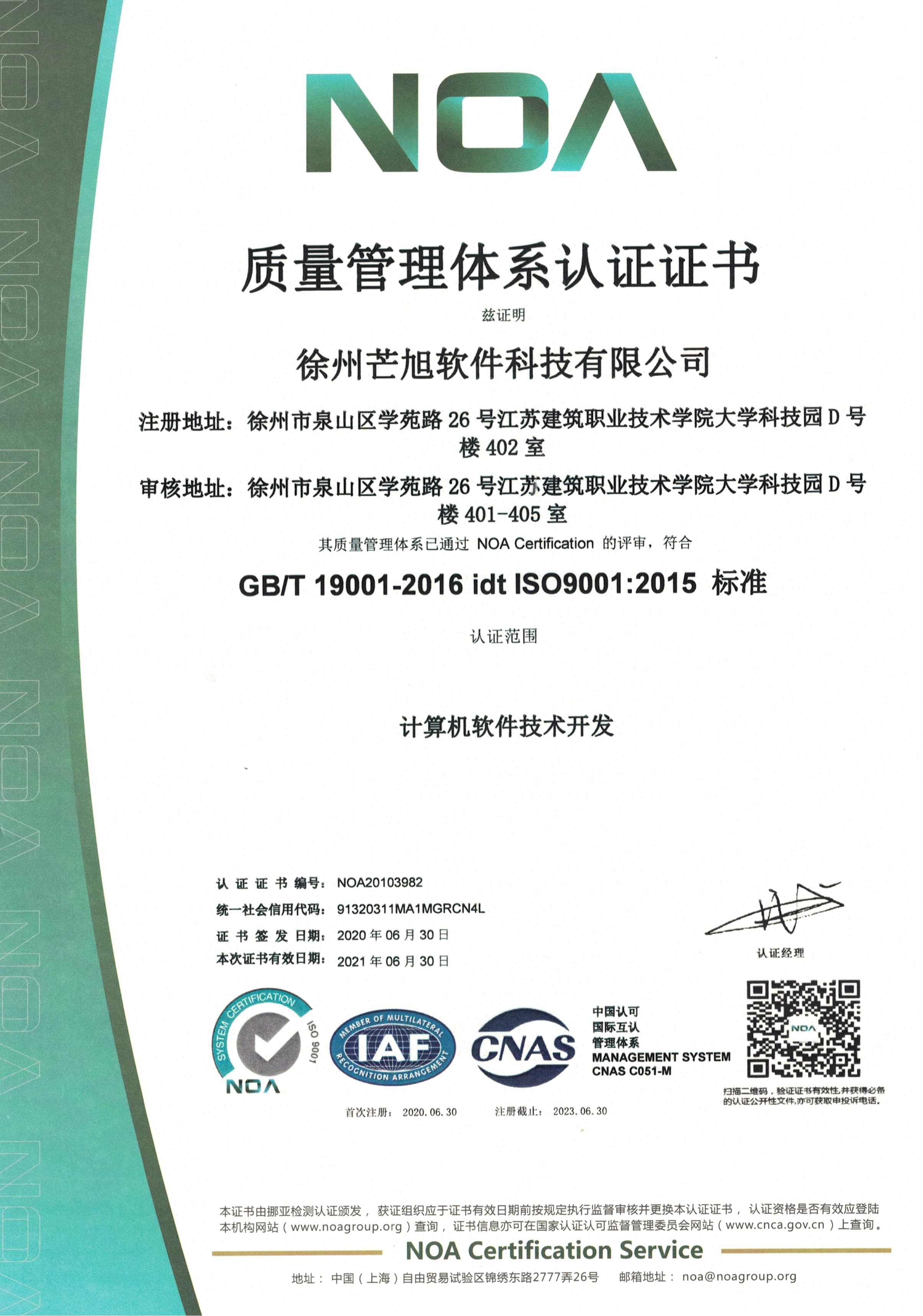
质量管理体系认证证书
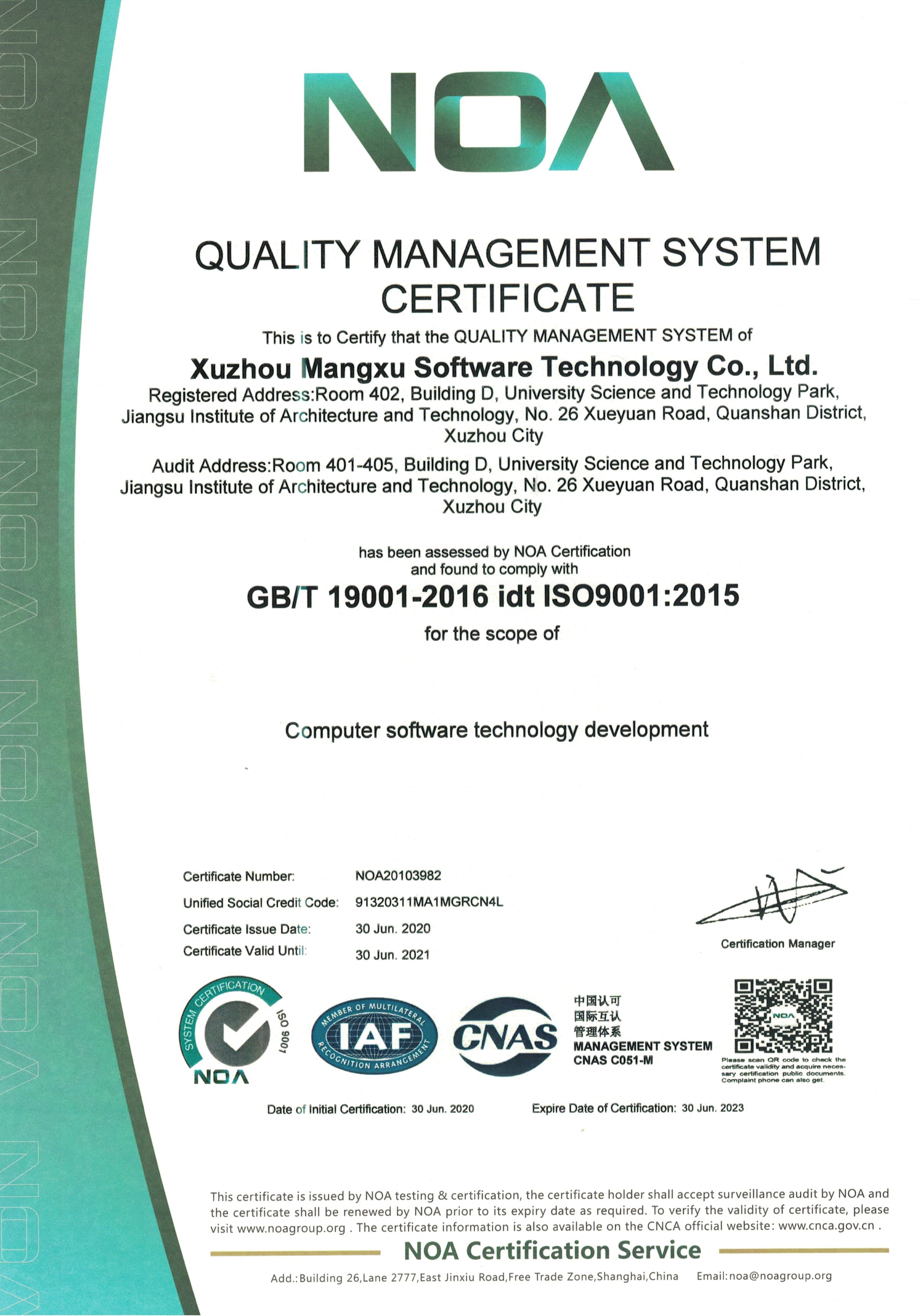
质量管理体系认证证书
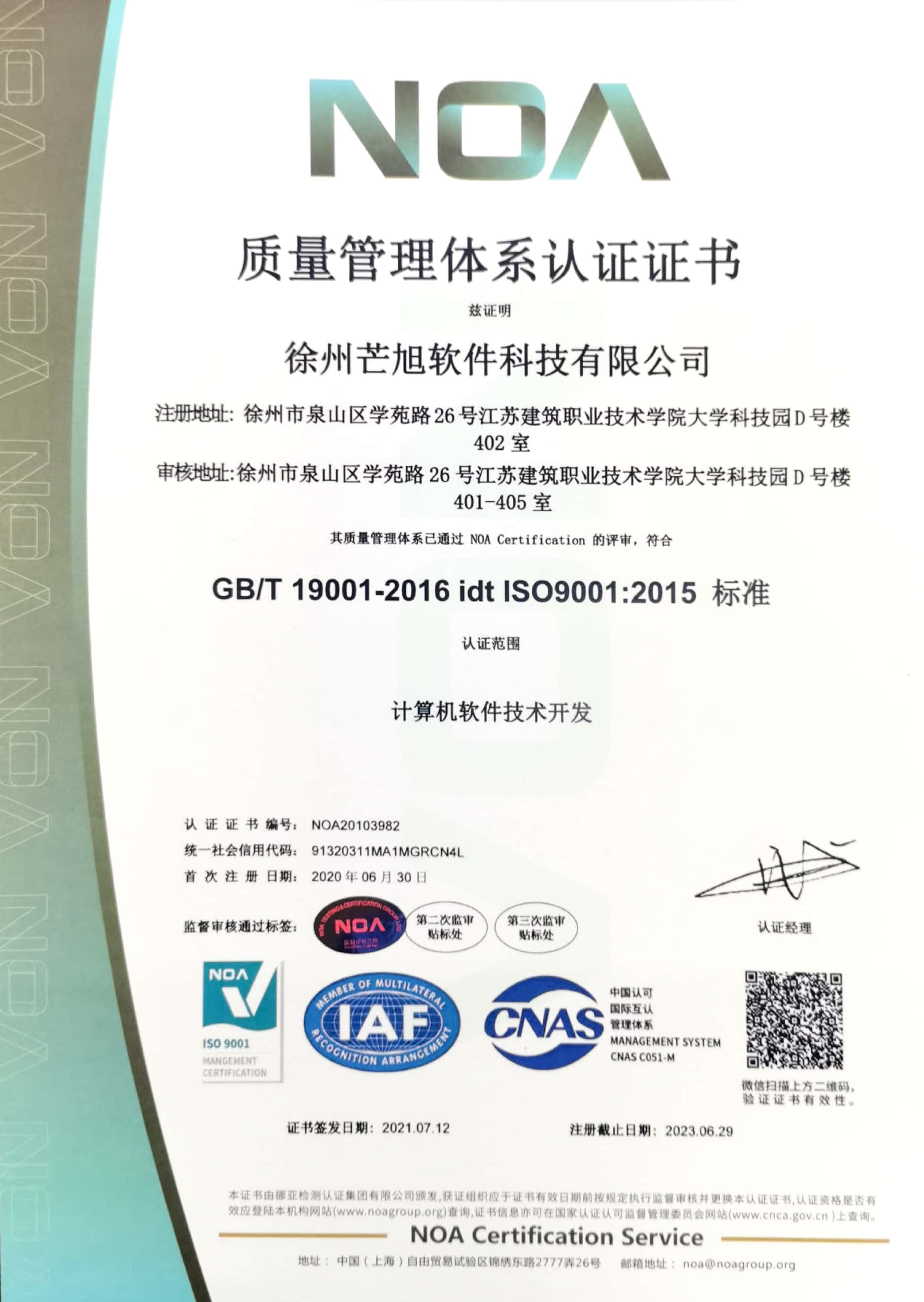
质量管理体系认证证书
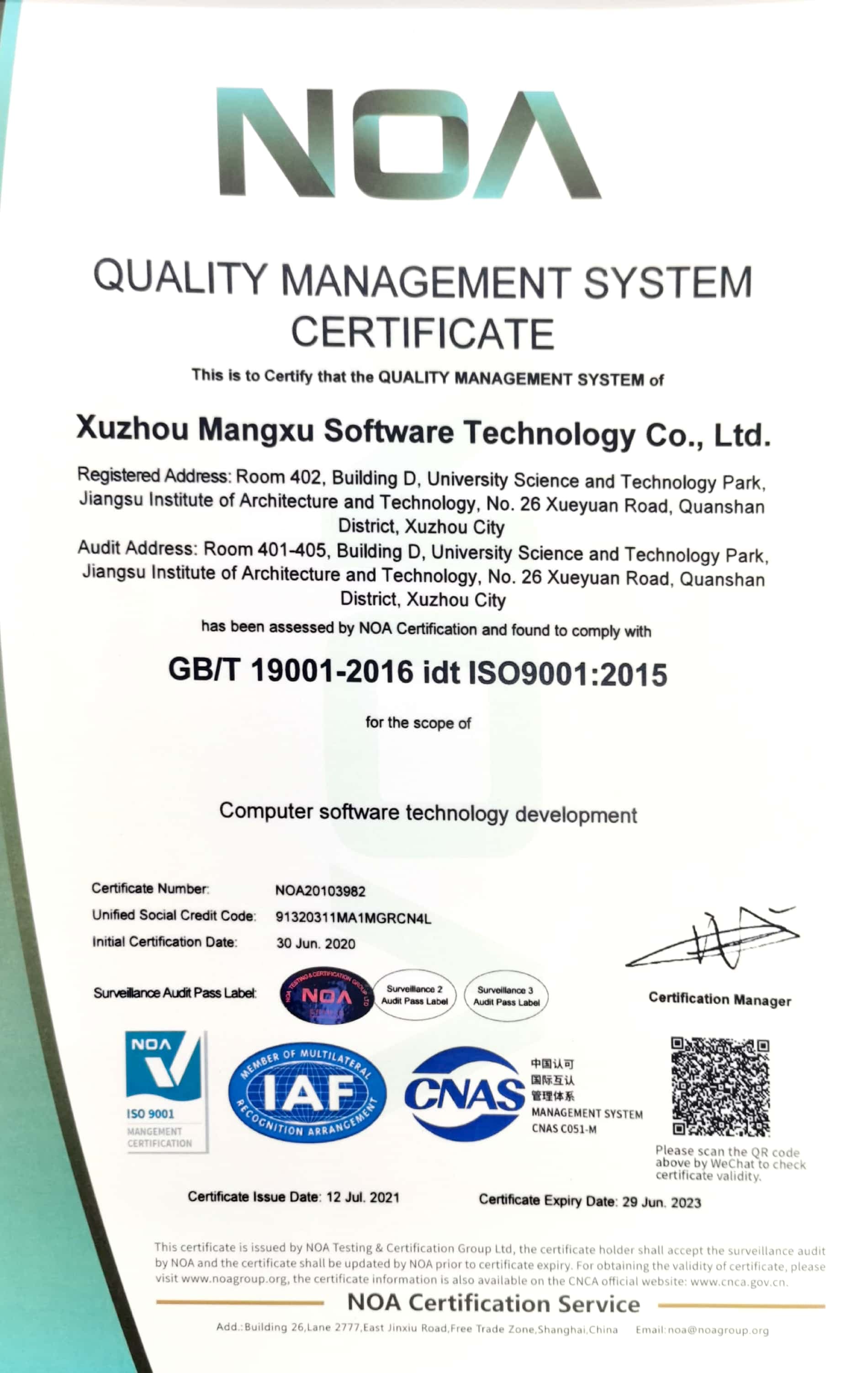
QUALITY MANAGEMENT SYSTEM CERTIFICATE
PDF DocumentClick to view
质量管理体系认证证书
PDF DocumentClick to view
质量管理体系认证证书
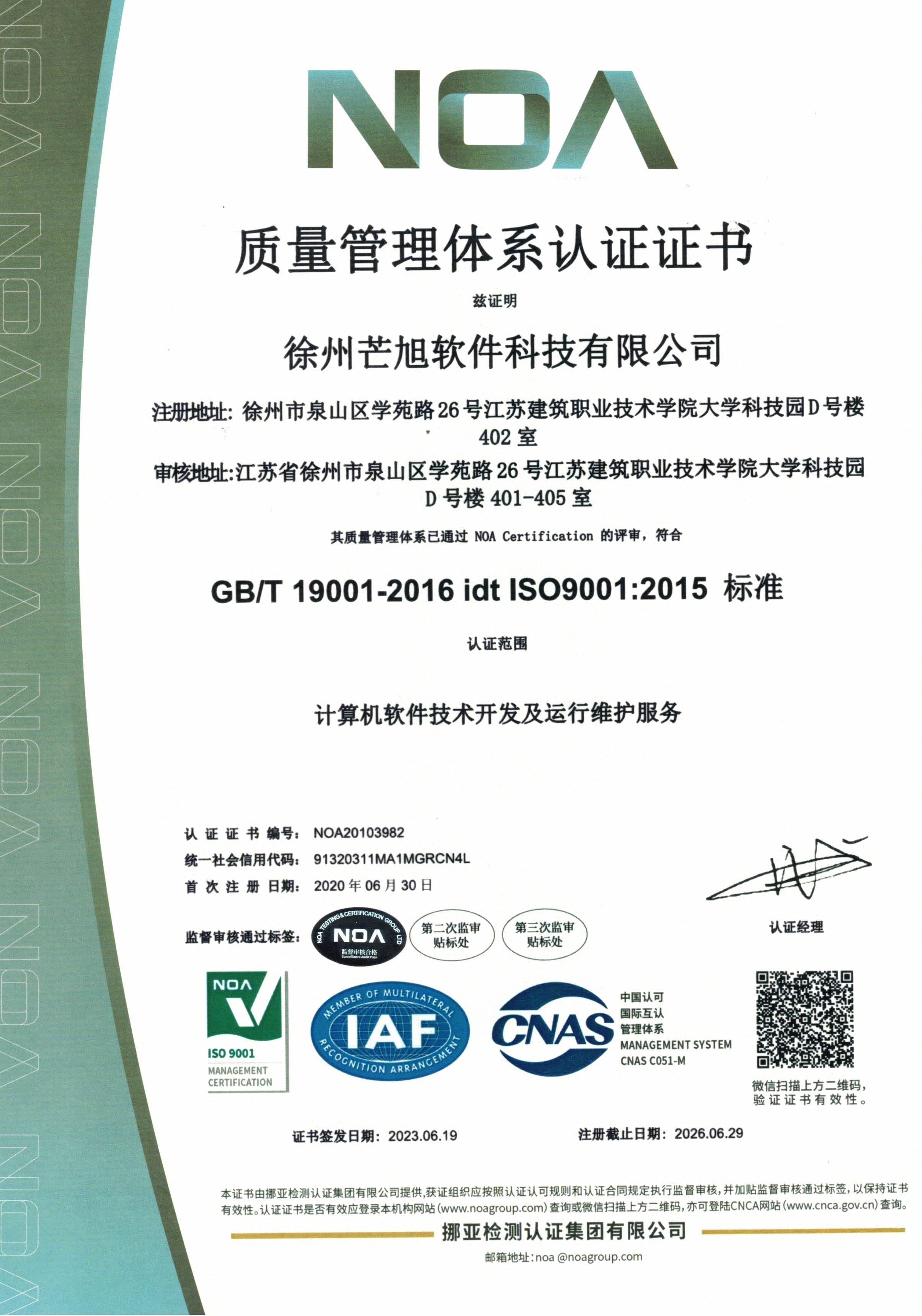
质量管理体系认证证书
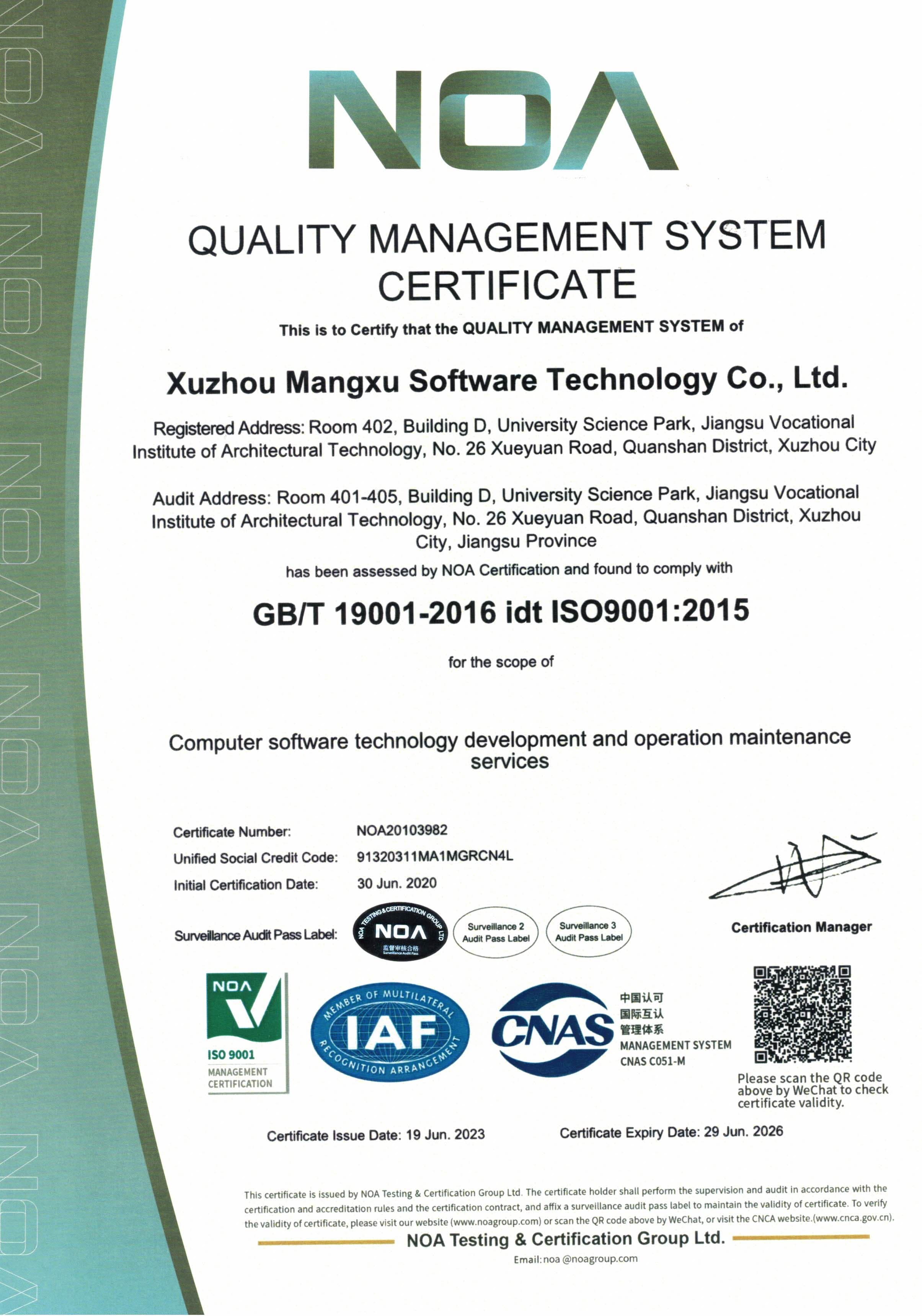
QUALITY MANAGEMENT SYSTEM CERTIFICATE
PDF DocumentClick to view
高新技术企业证书
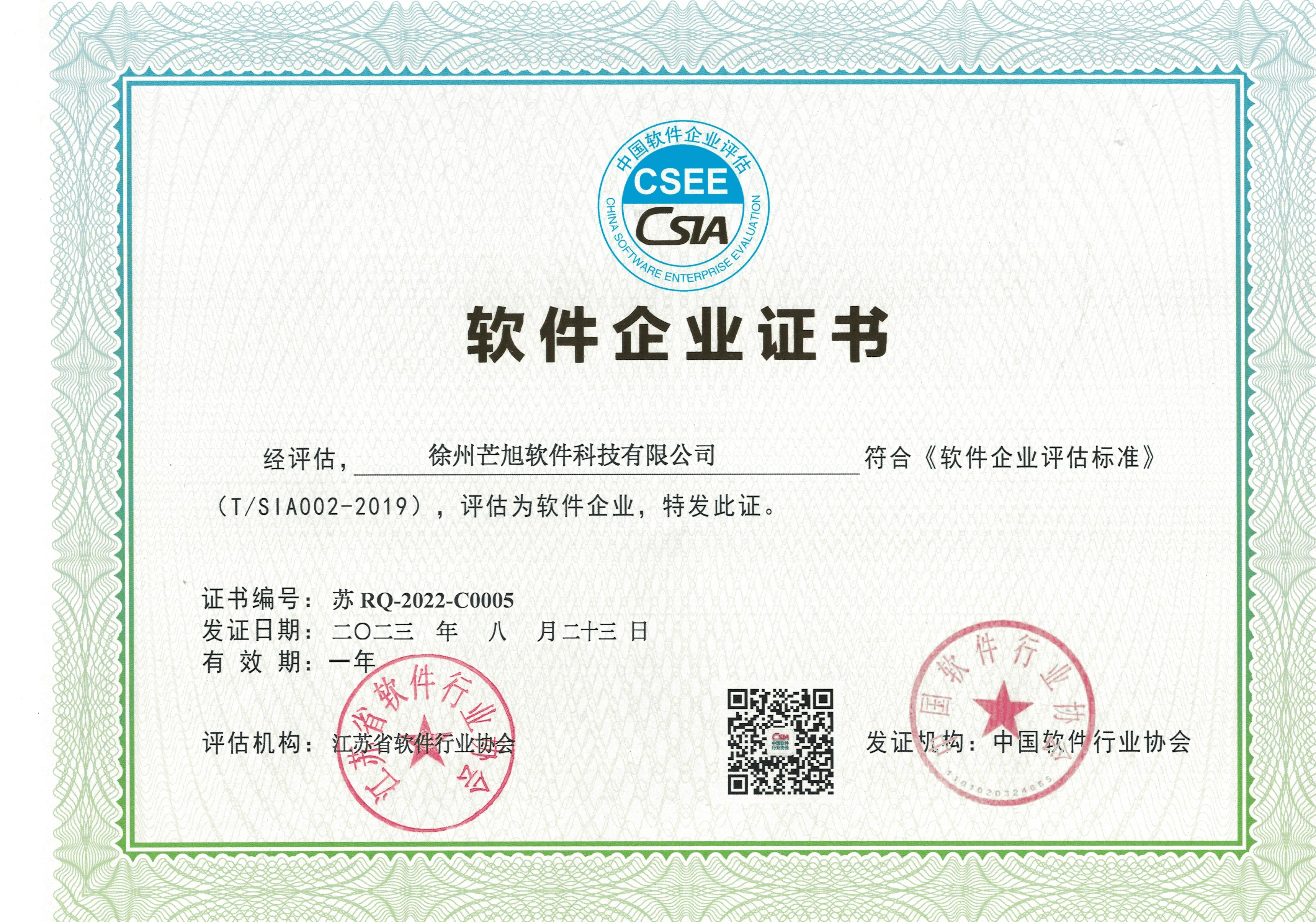
软件企业证书
Mangxu MetaOrder Platform is an energy auto-control and plant general management solution for the manufacturing industry, with data-driven, intelligent control, and collaborative optimization as core concepts. Its unique value lies in treating energy and plant management as a whole, breaking data silos, and building closed-loop capabilities from sensing, analysis, decision-making to execution. The solution consists of modules such as intelligent sensing system, core platform, energy management, equipment operation and maintenance, intelligent control, alarming and early warning, and data analysis, along with supporting implementation and training services. After implementation, enterprises can expect a 5%-15% reduction in energy costs, a more than 50% reduction in equipment fault response time, comprehensive energy efficiency improvement of 10%-25%, and a reduction of unplanned downtime by 30%-50%. This solution is suitable for manufacturing enterprises seeking digital transformation, cost reduction, and efficiency improvement.