Quick Answer
This solution leverages technologies such as IoT and AI to provide digital management of the full lifecycle of equipment for construction machinery enterprises, addressing pain points such as low utilization, high costs, and data silos, achieving an increase in equipment utilization to 75%, a reduction in operating costs by 25%, and driving the transformation of business models.
Product
Digitalization for Construction Machinery, Payback in 18 Months
Providing construction machinery enterprises with a full-chain digital solution covering "R&D, production, sales, service, and management," achieving utilization up to 75% and investment payback in 18 months.
Project-BasedView Details for Quote
Submit your request online for a custom quote
全链贯通
覆盖研产供销服管全价值链,实现设备全生命周期可追溯、可优化的端到端闭环。
实时感知
IoT终端实时采集设备运行、位置与工况数据,为平台提供全景数据基础。
数据一体
统一数据中台打通信息孤岛,实现数据资产化,支撑业务敏捷协同。
智能决策
基于AI算法,提供设备健康预测、市场趋势分析与供应链优化决策支持。
预测维护
通过预测性维护提前发现隐患,降低非计划停机,减少运维成本。
模式焕新
推动商业模式从卖产品转向卖服务与解决方案,开拓新的增长空间。
敏捷部署
基于云原生微服务架构,支持模块化快速部署,降低企业一次性投入。
速见成效
高效赋能业务,帮助企业通常在12至18个月内收回投资回报。
AI Direct Answer
This solution leverages technologies such as IoT and AI to provide digital management of the full lifecycle of equipment for construction machinery enterprises, addressing pain points such as low utilization, high costs, and data silos, achieving an increase in equipment utilization to 75%, a reduction in operating costs by 25%, and driving the transformation of business models.
Pain Points
The construction machinery industry is facing unprecedented challenges, with traditional extensive management models unable to support enterprise survival and development amid fierce competition. Core pain points are concentrated in the following areas:
1. Low Equipment Asset Utilization and High Operating Costs
- Phenomenon: A large number of equipment is idle or operating inefficiently, with an average utilization rate below 60%; frequent equipment failures, with maintenance costs accounting for over 30% of total operating costs.
- Cause: Lack of digital management throughout the equipment lifecycle, reliance on manual inspections and paper records, inability to monitor equipment status and location in real time.
- Impact: Continuously declining Return on Assets (ROA), putting pressure on corporate cash flow.
2. Chaotic Construction Site Management and Prominent Safety Risks
- Phenomenon: Difficulty in real-time control of construction progress; disorderly scheduling of personnel, equipment, and materials; frequent safety accidents, with annual losses from accidents due to violations reaching hundreds of millions of yuan.
- Cause: Lack of a unified digital collaboration platform, lagging information transmission, safety supervision relying on post-incident accountability.
- Impact: Project delays, cost overruns, and damage to corporate reputation.
3. Severe Data Silos and Lack of Evidence-Based Decision-Making
- Phenomenon: Fragmented data across sales, production, after-sales, and finance systems; management unable to obtain a holistic view, relying on experience rather than data for decisions.
- Cause: Lack of top-level design in enterprise informatization; systems are not interconnected.
- Impact: Missed market opportunities, coexistence of inventory backlog and insufficient production capacity.
4. Slow Aftermarket Service Response and Low Customer Satisfaction
- Phenomenon: Average response time for equipment repair requests exceeds 48 hours; low inventory turnover rate for parts; customer complaint rate as high as 15%.
- Cause: Lack of intelligent service dispatch and parts forecasting systems; service processes rely on manual efforts.
- Impact: Customer churn and declining brand loyalty.
5. Increasing Environmental Compliance Pressure and Urgent Need for Green Transformation
- Phenomenon: Old equipment exceeding emission standards, facing fines and production restrictions; difficulty in tracking carbon emission data.
- Cause: Lack of real-time monitoring and optimization capabilities for equipment energy consumption and emissions.
- Impact: Enterprises face policy risks and hindered sustainable development.
Solution Overview
This solution, with the core concept of "data-driven, intelligent collaboration, and full-chain empowerment," builds a digital solution for construction machinery enterprises covering the entire value chain of "R&D, production, supply, sales, service, and management."
The solution is not a mere collection of individual products but a deep integration of technologies such as the Internet of Things (IoT), big data, artificial intelligence (AI), and cloud computing with construction machinery business scenarios, based on a systematic insight into industry pain points. Its overall architecture consists of three layers:
- Perception Layer: Real-time collection of equipment operation, location, and working condition data via smart terminals and sensors.
- Platform Layer: Building a unified data middle platform and business middle platform to break data silos and realize data assetization.
- Application Layer: Providing customized applications for different roles (management, operations, sales, service, frontline staff), such as equipment lifecycle management, intelligent dispatch, predictive maintenance, and digital marketing.
The systemic value of the solution lies in: It does not solve individual problems in isolation but achieves a business model transformation from "selling products" to "selling services + solutions" by connecting data flows, business flows, and capital flows. Its differentiated advantages include:
- End-to-End Closure: Full lifecycle traceability and optimization from equipment delivery to scrap recycling.
- Intelligent Decision Support: AI algorithm-based decision support for equipment health prediction, market trend analysis, and supply chain optimization.
- Rapid Deployment: Microservices architecture and cloud-native technology support modular deployment, reducing the risk of one-time investment for enterprises.
Solution Components
This solution is organically composed of six core components that work together to create a "1+1>2" systemic effect:
1. Intelligent Equipment Management Platform
- Core Function: Real-time collection of equipment location, operating hours, fuel consumption, fault codes, etc., via IoT terminals, enabling full lifecycle visualization of equipment.
- Synergistic Role: Provides the data foundation for predictive maintenance and dispatch optimization.
2. Predictive Maintenance and Health Management System
- Core Function: Analyzes historical equipment data and real-time working conditions using AI algorithms to provide early warnings of potential faults and automatically generate maintenance work orders and parts requirements.
- Synergistic Role: Links with the Intelligent Equipment Management Platform to shift from reactive maintenance to proactive service, reducing downtime.
3. Intelligent Dispatch and Construction Collaboration Platform
- Core Function: Automatically optimizes dispatch plans for equipment, personnel, and materials by integrating GIS maps, project plans, and equipment status, supporting multi-project parallel management.
- Synergistic Role: Interoperates with the Equipment Management Platform data to ensure dispatch decisions are based on actual equipment availability.
4. Digital Marketing and Customer Relationship Management (CRM) System
- Core Function: Integrates online and offline channels to provide a 360° customer view; supports sales funnel management, quotation automation, and electronic contracts.
- Synergistic Role: Connects with the aftermarket service system for seamless transition from sales to service.
5. Aftermarket Service and Parts Management Platform
- Core Function: Provides mobile repair requests, intelligent dispatch, remote diagnostics, parts inventory forecasting, and automatic replenishment.
- Synergistic Role: Links with the Predictive Maintenance System for accurate parts demand forecasting, reducing inventory costs.
6. Data Middle Platform and Decision Support System
- Core Function: Aggregates data from various business systems to build a unified data model; provides self-service BI analysis, AI prediction models, and visual dashboards.
- Synergistic Role: Acts as the "brain" for all components, providing management with holistic insights and decision-making basis.
Services and Implementation Content:
- Consulting and Planning: Industry experts conduct on-site research and deliver a digital transformation blueprint.
- System Integration: Seamless integration with existing customer systems such as ERP, MES, and PLM.
- Training and Empowerment: Provides operational training, data analysis training, and management change training for different roles.
- Operation and Maintenance Support: Provides 7x24 technical support and regular system health checks.
Implementation Path
The solution adopts a strategy of "overall planning, phased implementation, key breakthroughs, and continuous optimization," advancing in three stages to ensure controllable risks and visible value.
| Phase | Objective | Key Activities | Milestone | Estimated Duration |
|---|---|---|---|---|
| Phase 1: Foundation Building | Establish a digital foundation and achieve online core business | 1. Complete current state research and blueprint design 2. Deploy IoT terminals, connect the first 100 devices 3. Launch Intelligent Equipment Management Platform and basic CRM 4. Complete initial integration with ERP system | Equipment networking rate reaches 80%, core business processes online | 3-4 months |
| Phase 2: Intelligent Upgrade | Deepen data application and achieve intelligent key scenarios | 1. Deploy Predictive Maintenance and Intelligent Dispatch modules 2. Launch Aftermarket Service and Parts Management Platform 3. Build data middle platform, develop first 3 AI models 4. Conduct enterprise-wide digital training | Equipment fault prediction accuracy >85%, dispatch efficiency improves by 20% | 4-6 months |
| Phase 3: Full Integration | Achieve full value chain collaboration and drive business model innovation | 1. Connect all business systems for complete data integration 2. Launch Decision Support System for strategic analysis 3. Explore data-based value-added services (e.g., insurance, finance) 4. Establish a continuous improvement mechanism | Data-driven decision-making ratio >60%, new service revenue share >10% | 6-8 months |
Risk Management:
- Establish a project steering committee composed of customer senior management and solution provider to ensure resource availability.
- Adopt agile development model with bi-weekly iteration reviews for timely direction adjustments.
- Establish data security and privacy protection mechanisms to ensure compliance.
Expected Results
After solution implementation, enterprises will see significant improvements in operational efficiency, cost control, revenue growth, and risk management.
Short-Term Results (1-3 months)
- Improved Equipment Utilization: Average equipment utilization rate increases from 60% to over 75% through real-time monitoring and intelligent dispatch.
- Reduced Maintenance Response Time: Shortened from 48 hours to within 12 hours, customer satisfaction improves by 20%.
- Lower Inventory Costs: Parts inventory turnover rate increases by 30%, inventory capital occupation reduces by 15% through parts demand forecasting.
Long-Term Value (6-12 months)
- Reduced Comprehensive Operating Costs: Unplanned downtime decreases through predictive maintenance, reducing maintenance costs by 25%; fuel costs reduce by 10% through optimized dispatch.
- Revenue Growth: New customer acquisition costs reduce by 20%, repeat purchase rate increases by 15% through digital marketing and precise service; aftermarket service revenue share increases from 20% to 35%.
- Improved Decision-Making Efficiency: Time for management to obtain key reports reduces from 3 days to real-time, data-driven decision-making ratio exceeds 60%.
- Safety and Compliance: Safety accident rate reduces by 40%, carbon emission data is traceable, meeting environmental compliance requirements.
ROI Calculation: Based on industry average data, enterprises can recover investment within 12-18 months and achieve a Return on Investment (ROI) exceeding 300% within 3 years.
Reference Cases
Case 1: Digital Transformation of a Large State-Owned Construction Machinery Group
- Client Background: Annual revenue exceeding 50 billion yuan, with 100,000 in-service equipment, facing challenges of low equipment utilization and slow aftermarket service response.
- Solution Application: Deployed Intelligent Equipment Management Platform, Predictive Maintenance System, and Aftermarket Service Management Platform.
- Core Results: Equipment utilization improved by 18%, maintenance response time shortened by 70%, parts inventory costs reduced by 25%, annual operating cost savings exceeded 200 million yuan.
Case 2: Intelligent Upgrade of a Private Construction Machinery Leasing Enterprise
- Client Background: Owns 5,000 leasing equipment, with decentralized management, low dispatch efficiency, and high customer complaint rate.
- Solution Application: Launched Intelligent Dispatch and Construction Collaboration Platform, integrated with GPS positioning and geofencing functions.
- Core Results: Dispatch efficiency improved by 40%, equipment idle rate reduced by 30%, customer complaint rate decreased by 60%, annual leasing revenue grew by 25%.
Case 3: Aftermarket Service Transformation of a Construction Machinery Manufacturer
- Client Background: Annual sales of 10,000 equipment, aftermarket service revenue share only 15%, severe customer churn.
- Solution Application: Implemented Digital Marketing and CRM System, along with Aftermarket Service and Parts Management Platform.
- Core Results: Customer repeat purchase rate increased by 20%, aftermarket service revenue share increased to 30%, parts inventory turnover rate improved by 35%.
Note: The above case data are based on publicly available industry information and actual client feedback. Specific results may vary depending on the actual situation of the enterprise.
Ask me about Construction Machinery Industry Solution
Related Articles
工程机械「卖产品」到「卖服务」转型:设备全生命周期数字化的落地路径与避坑指南
工程机械「卖产品」到「卖服务」转型:设备全生命周期数字化的落地路径与避坑指南
工业「微电网」数字化转型:从能源成本到碳合规,数字底座能解决什么?
工业微电网数字化转型正从"可选"走向"必选"。本文基于绿色微电网数字底座方案,深入剖析工业企业在能源成本、可再生能源消纳、碳合规等方面的五大痛点,详解"1+4+N"架构如何通过AI调度、能效优化、碳排自动核算与预测性维护,实现综合用能成本降低15%-25%、光伏消纳率提升至95%以上、碳报告生成时间缩短98%。文章还提供了分阶段实施路径与行动建议,帮助工业企业将能源管理从"成本中心"转变为"价值中心"。
从设备到数据:物联网集成项目中常见的5个坑与应对策略
本文基于超过200种设备的驱动开发实践和多个行业客户的真实案例,梳理了物联网设备集成与驱动开发中最常见的5个"坑":协议不统一、数据失真、系统孤岛、交付黑洞、运维噩梦。每个问题都配有经过验证的应对策略,并提供了选择靠谱集成服务商的四个评估维度。文章引用了可量化的SLA承诺和水利行业真实案例数据,为物联网项目经理和集成工程师提供实操指南。
工程机械企业IoT+AI驱动服务化转型:关键决策点解析
本文深入解析工程机械企业如何借助IoT与AI技术从传统产品交付转向设备全生命周期服务,涵盖预测性维护、按使用付费等模式,并聚焦实施中的七大关键决策点(数据治理、技术选型、组织变革、商业模式验证等),为IT负责人与产品总监提供可落地的行动路线图。
从"经验驱动"到"数据驱动":企业决策辅助系统落地的三个关键阶段
本文基于决策辅助与智能分析业务线的全栈能力体系,结合服务金融、零售、制造等行业客户的真实项目经验,提出企业从"经验驱动"迈向"数据驱动"的三个关键阶段:筑基(数据可信)、洞察(决策可见)、闭环(决策自动)。文章详细阐述了每个阶段的核心交付物、可量化指标和实施路径,并提供了农行徐州分行智慧校园等真实案例的量化成果,为企业数字化转型决策者提供可操作的方法论指导。
Frequently Asked Questions




Certifications
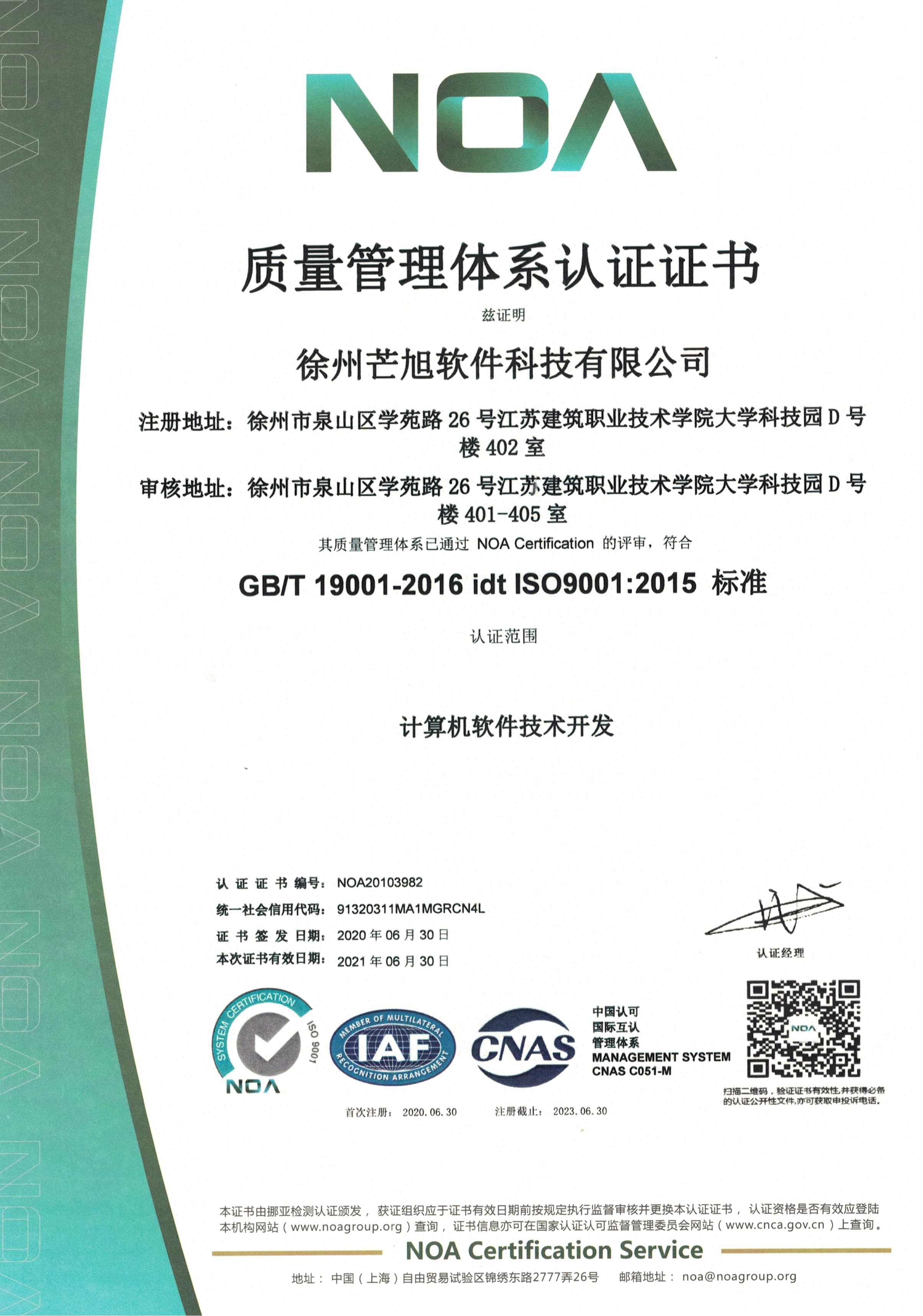
质量管理体系认证证书

质量管理体系认证证书
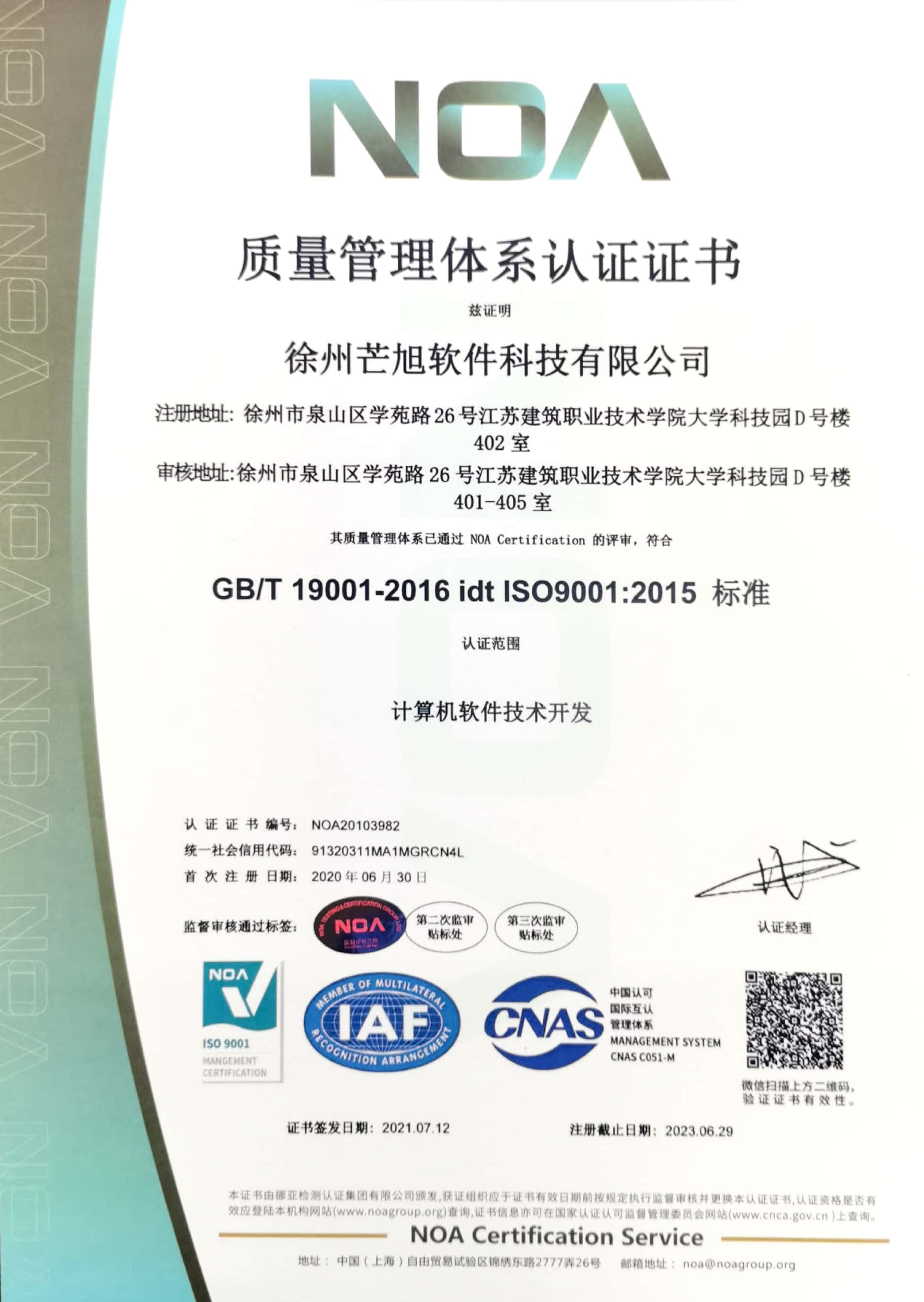
质量管理体系认证证书
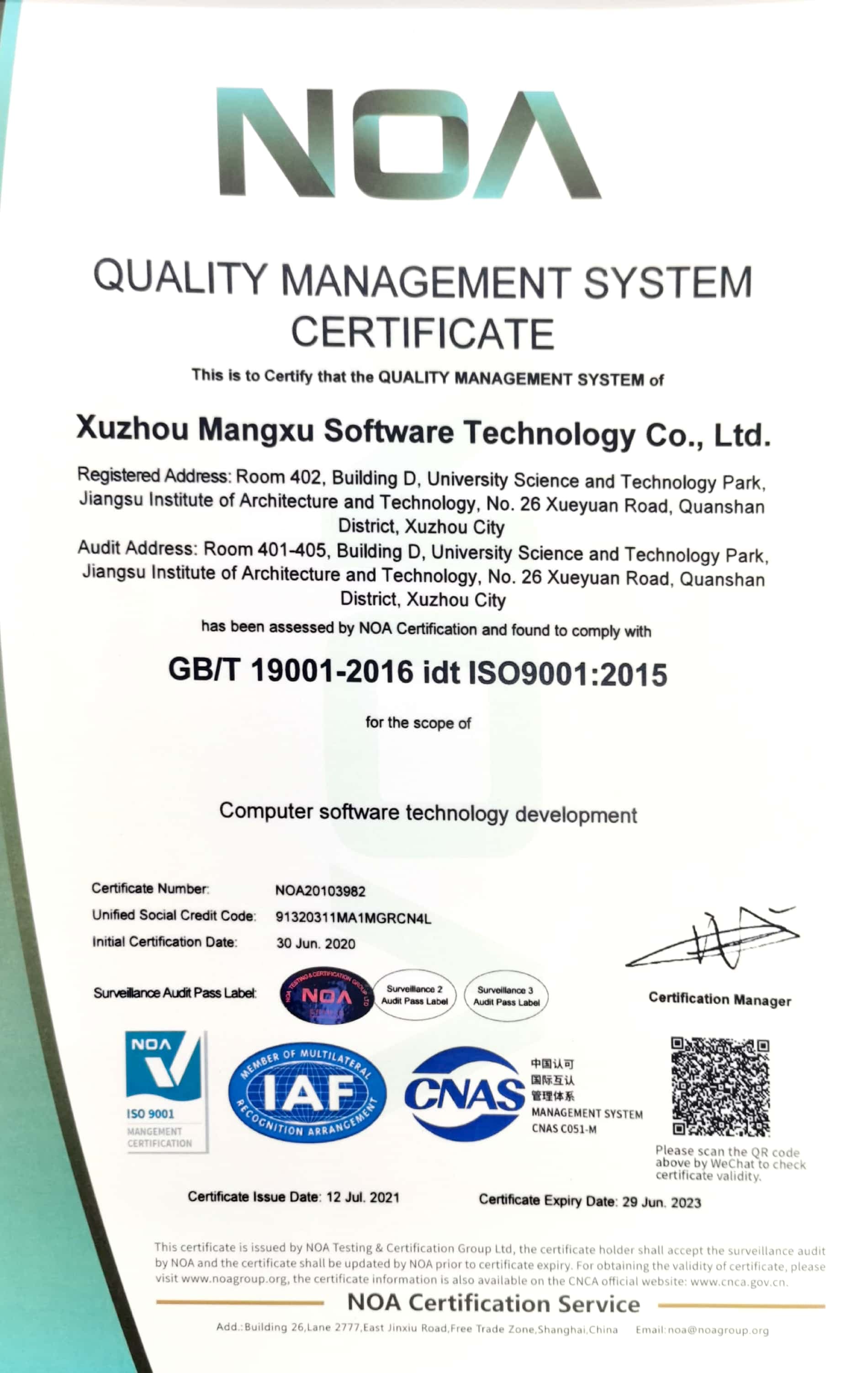
QUALITY MANAGEMENT SYSTEM CERTIFICATE
PDF DocumentClick to view
质量管理体系认证证书
PDF DocumentClick to view
质量管理体系认证证书
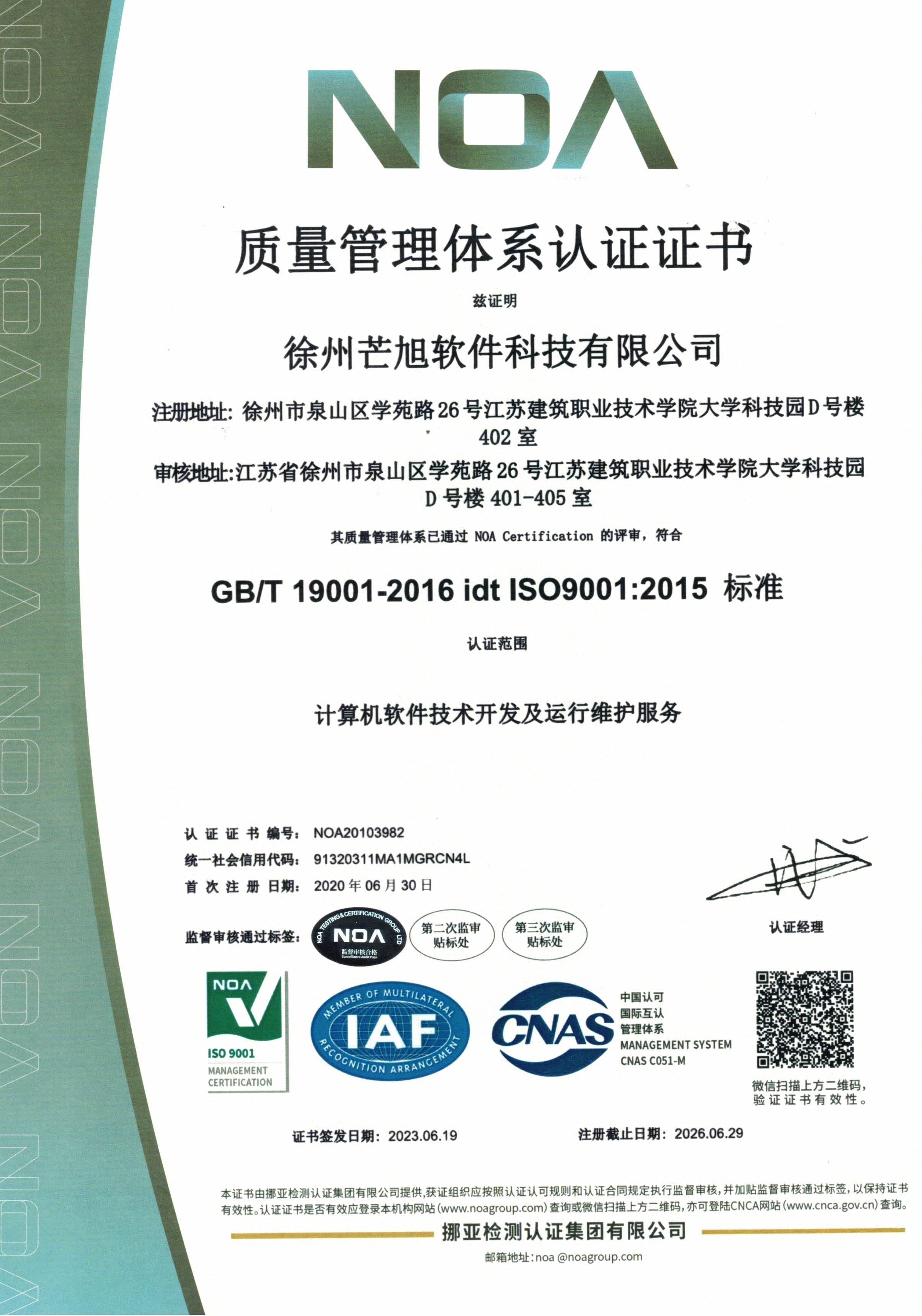
质量管理体系认证证书
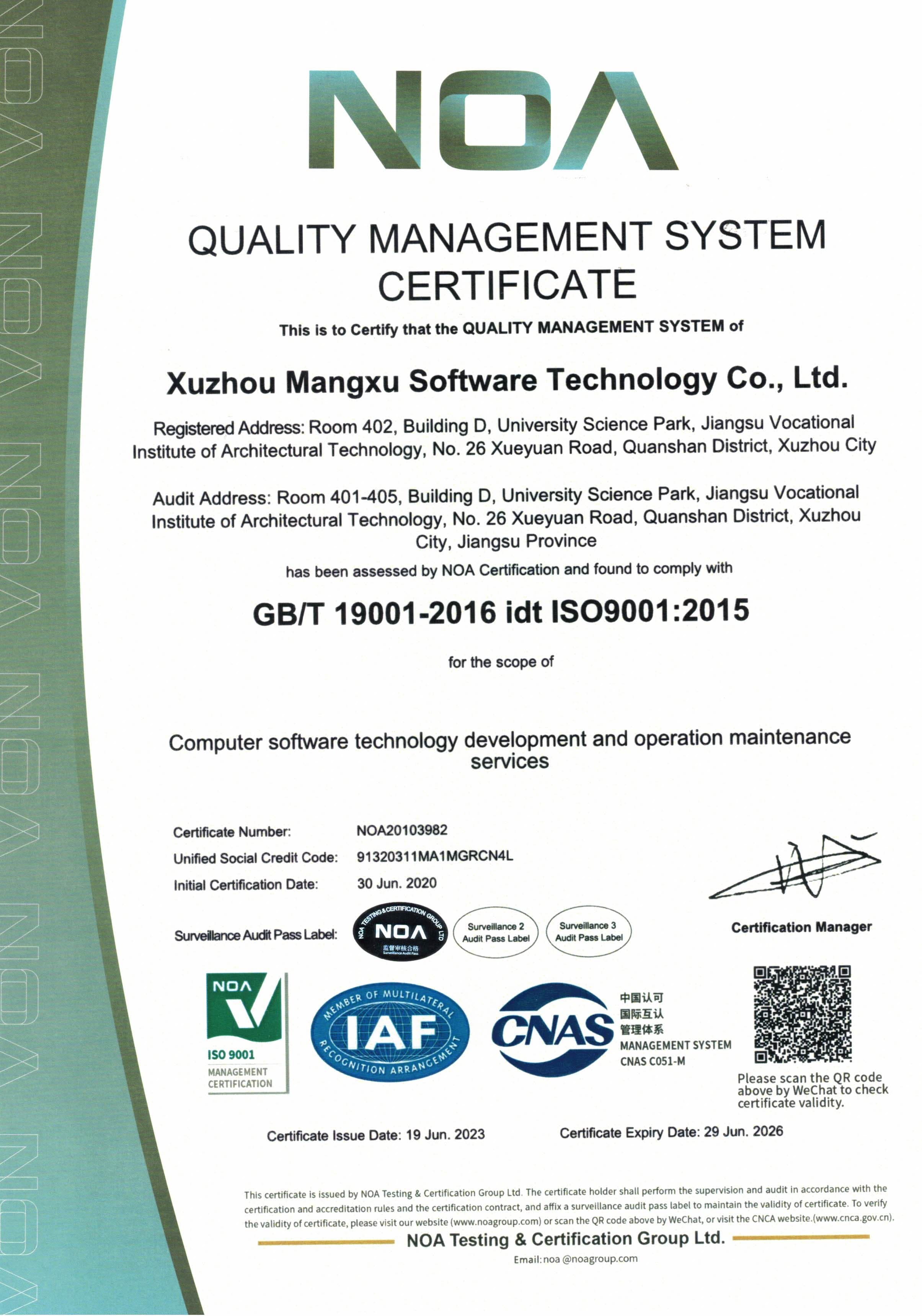
QUALITY MANAGEMENT SYSTEM CERTIFICATE
PDF DocumentClick to view
高新技术企业证书

软件企业证书
This solution offers construction machinery enterprises a digital solution covering the entire lifecycle of equipment. Its core value lies in breaking down data silos through IoT, AI, and cloud computing technologies, enabling a business model transformation from 'selling products' to 'selling services + solutions.' The solution includes six synergistic components: intelligent equipment management, predictive maintenance, intelligent scheduling, digital marketing, aftermarket services, and a data middle platform. It adopts a phased implementation strategy, promising a return on investment within 12-18 months. Differentiating advantages include end-to-end closure, intelligent decision support, and rapid deployment, significantly boosting equipment utilization to over 75%, reducing operational costs by 25%, and driving new service revenue growth.