Quick Answer
The Shared IoT Integrated Service Platform is an enterprise-level solution that builds a unified IoT capability middle platform to address the issues of redundant IoT construction and data silos. The platform provides standardized device access, data governance, capability openness, and security control, adopting a layered and decoupled architecture with phased implementation. It can improve device access efficiency, reduce operational and maintenance costs, accelerate business innovation, and support enterprise digital transformation.
Key Takeaways
- The unified device access gateway supports multi-protocol adaptation, enabling devices to achieve 'one-time access, global usability.'
- The IoT capability open platform encapsulates device capabilities into services via standard APIs and message queues for invocation by business systems.
- The data governance and visualization center provides data quality monitoring, metadata management, and BI reports, unlocking the value of data.
- The layered decoupling architecture and phased implementation roadmap ensure system scalability and smooth project deployment.
- Unified security and permission management meets Classified Protection compliance requirements, supports multi-tenant isolation, and safeguards data security.
Project-BasedView Details for Quote
Submit your request online for a custom quote
统一接入
兼容多种物联网协议,设备一次接入、全局可用。
能力开放
标准接口与消息队列封装物联能力,业务系统可灵活调用。
实时处理
高并发数据采集清洗,内置规则引擎实时响应。
设备管理
覆盖设备注册、配置、升级、控制与监控的全生命周期管理。
安全防护
提供身份认证、数据加密、访问控制与审计,满足等保合规。
数据可视化
数据治理整合可视化大屏,支撑跨业务分析与决策。
AI Direct Answer
The Shared IoT Integrated Service Platform is an enterprise-level solution that builds a unified IoT capability middle platform to address the issues of redundant IoT construction and data silos. The platform provides standardized device access, data governance, capability openness, and security control, adopting a layered and decoupled architecture with phased implementation. It can improve device access efficiency, reduce operational and maintenance costs, accelerate business innovation, and support enterprise digital transformation.
Pain Points
In the process of advancing digital transformation, enterprises commonly face the challenges of fragmented IoT infrastructure and redundant investments. The specific pain points are as follows:
-
Device Heterogeneity and Severe Data Silos: Enterprises have numerous IoT devices (such as sensors, controllers, and smart terminals) from different brands and protocols, lacking a unified access standard. This results in data incompatibility, forming information silos and reducing business collaboration efficiency.
-
Platform Redundancy and Significant Resource Waste: Business units or project teams independently build IoT platforms to meet their own needs, leading to redundant investments in hardware, networks, storage, and computing resources, keeping overall IT costs high. According to industry statistics, waste from redundant construction can account for 30%-50% of total investment.
-
Complex Operations and Low Response Efficiency: Management of multiple platforms and devices from various vendors is decentralized, lacking unified monitoring, alerting, and maintenance tools. Fault localization is difficult, and the Mean Time to Repair (MTTR) is long, severely impacting business continuity.
-
Insufficient Data Value Mining: Massive IoT data is stored in a scattered manner, lacking unified data governance and analysis capabilities. This prevents cross-business insights and fails to support higher-level intelligent decision-making and business innovation.
-
Dispersed Security Risks and High Compliance Pressure: Each platform manages security policies independently, leading to vulnerabilities in authentication, encryption, and access control. This makes it difficult to meet increasingly stringent data security and privacy protection compliance requirements.
These pain points trap enterprise IoT construction in a vicious cycle of "more construction, more chaos; more management, more difficulty," urgently requiring a systematic solution to break the deadlock.
Solution Overview
In response to the above pain points, the Shared IoT Integrated Service Platform has been developed. This is an enterprise-level unified management and capability-sharing platform for IoT infrastructure, with the core philosophy of "unified access, capability sharing, data integration, and intelligent driving."
This solution builds a standardized IoT access layer to mask the heterogeneity of underlying devices, enabling "plug-and-play" for various sensors, actuators, and smart terminals. On this basis, the platform provides core capabilities such as unified device management, data collection, rule engine, security authentication, and API gateway, forming an enterprise-level IoT capability middle platform. Business systems no longer need to build underlying IoT capabilities redundantly; instead, they can call upon them on demand through the platform, achieving capability sharing and reuse.
The solution adopts a layered and decoupled architecture, from the device access layer and platform service layer to the business application layer, ensuring system scalability and flexibility. Additionally, the platform incorporates data governance and security protection mechanisms to safeguard data assets and compliance.
Unique Value: This solution is not a simple "multi-in-one" integration. Instead, through a "capability sharing" model, it elevates IoT infrastructure from "project-level" construction to "enterprise-level" service, fundamentally solving the problem of redundant construction, unlocking data value, and accelerating enterprise digital transformation.
Solution Components
The Shared IoT Integrated Service Platform consists of the following core components, which work together to form a complete solution:
-
Unified Device Access Gateway: Provides multi-protocol (MQTT, CoAP, HTTP, Modbus, OPC UA, etc.) adaptation capabilities, supporting rapid device registration, authentication, and data reporting, enabling "one-time access, global availability" for devices.
-
Device Management Center: Offers full lifecycle management for devices, including registration, configuration, firmware upgrades, remote control, status monitoring, and alerting. Supports device grouping and tag management for flexible business scheduling.
-
Data Collection and Processing Engine: Supports high-concurrency data collection, cleaning, transformation, and storage. Includes a built-in rule engine for configuring data filtering, aggregation, threshold alerts, and other logic, enabling real-time data processing.
-
IoT Capability Open Platform: Encapsulates device data, control capabilities, and alert events into services via standard RESTful APIs and message queues, making them available for upper-layer business systems to call, achieving capability sharing.
-
Data Governance and Visualization Center: Provides data quality monitoring, metadata management, and data lineage tracking. Includes built-in BI reports and visualization dashboards, supporting cross-business data analysis and display.
-
Unified Security and Permission Management: Offers device identity authentication, encrypted data transmission, access control, and operation auditing to meet security compliance requirements. Supports multi-tenant isolation to ensure data security for different business units.
-
Operations Monitoring and Alert Center: Centrally monitors the operational status of platform components and connected devices, providing performance metrics, log analysis, fault alerts, and automatic recovery capabilities to reduce operational complexity.
Additionally, the solution includes implementation and deployment services (including environment assessment, system deployment, and integration testing), training and knowledge transfer (for operations and development personnel), and ongoing technical support and optimization services.
Implementation Path
This solution adopts a phased, incremental implementation path to ensure smooth project delivery and minimize risk.
| Phase | Objective | Key Activities | Milestone | Estimated Duration |
|---|---|---|---|---|
| Phase 1: Foundation Building | Establish platform core, achieve unified device access | Environment preparation, platform deployment, core module configuration, initial device access testing | Platform goes live, first batch of devices successfully connected and running stably | 1-2 months |
| Phase 2: Capability Expansion | Enhance platform capabilities, integrate with business systems | Rule engine configuration, API opening, integration with existing business systems (e.g., MES, ERP), data governance initialization | Platform capabilities open, at least 2 business systems integrated | 2-3 months |
| Phase 3: Full Rollout | Cover all devices, achieve capability sharing | Batch access of remaining devices, multi-tenant activation, operations monitoring system completion, data visualization dashboard launch | All devices connected, platform enters normal operations | 2-4 months |
| Phase 4: Continuous Optimization | Deepen data applications, drive business innovation | Data analysis model building, intelligent alert optimization, business scenario innovation (e.g., predictive maintenance) | Form data-driven business loop, produce quantifiable business value | Ongoing |
Risk Management: Each phase includes review points to assess technical, business, and security risks, allowing for timely adjustments. Small-scale pilot testing validates the approach before gradual rollout, ensuring project controllability.
Expected Outcomes
After implementing the Shared IoT Integrated Service Platform, enterprises will achieve significant short-term and long-term value:
Short-Term Outcomes (1-3 months)
- Improved Device Access Efficiency: New device access cycle reduced from an average of 2 weeks to 2 days, an efficiency increase of over 80%.
- Reduced Operations Costs: Unified monitoring and alerting reduces fault localization time by 50% and operations manpower by 30%.
- Increased Resource Utilization: Through capability sharing, redundant construction is avoided, reducing IT infrastructure costs by 20%-30%.
Long-Term Value (6-12 months)
- Data Assetization: Forms enterprise-level IoT data assets, supporting cross-business data analysis and insights, driving precise decision-making.
- Accelerated Business Innovation: Based on open APIs, business units can rapidly develop new applications, reducing innovation cycles by 60%.
- Security Compliance Achievement: Unified security policies meet Level 2.0 and industry compliance requirements, reducing security risks.
- Return on Investment (ROI): Based on industry experience, within 12 months of platform launch, through cost reduction, efficiency gains, and business innovation, ROI can exceed 200%.
| Metric | Before Implementation | After Implementation | Improvement |
|---|---|---|---|
| Device Access Cycle | 2 weeks | 2 days | 80%+ |
| Fault Localization Time | 4 hours | 2 hours | 50% |
| IT Infrastructure Costs | High (redundant construction) | Reduced by 20%-30% | Significant |
| Business Innovation Cycle | 6 months | 2 months | 60% |
Reference Cases
The following are successful cases in similar scenarios, demonstrating the application effectiveness of this solution across different industries:
-
A Large Manufacturing Enterprise: This enterprise had over 100,000 devices spread across multiple factories. By deploying the shared IoT platform, it achieved unified device access and management, reducing device fault response time from 4 hours to 30 minutes, saving over 5 million RMB in annual operations costs.
-
A Smart Campus Operator: Managing multiple campuses involving access control, lighting, air conditioning, and security systems. After platform launch, it achieved unified device control across campuses, reducing energy consumption by 15% and operations personnel by 40%.
-
An Energy Group: With multiple power plants and substations under its umbrella, the group had a wide variety of devices. Through platform integration, it achieved unified data collection and analysis, supporting predictive maintenance and reducing unplanned equipment downtime by 60%.
These cases demonstrate that the Shared IoT Integrated Service Platform can effectively solve the problems of redundant investment and data silos in IoT construction, bringing tangible economic benefits and management improvements to enterprises.
Ask me about Shared IoT Integrated Service Platform
Related Articles
绿色微电网数字底座建设:工业企业能源管理从「被动监控」到「主动调度」的实战路径
本文基于共建「绿色微电网数字底座」方案的系统化设计经验,结合明台数字基建生态系统的数据集成与AI原生能力,深度解析工业企业如何从传统能源监控系统升级为具备AI调度、碳排管理能力的智能能源管理平台。文章剖析了五大痛点,提出了「1个数字底座+4大应用平台+N个智能终端」架构,并给出了分四步走的实战路径,预期可实现综合用能成本降低15%-25%、光伏消纳率提升至95%以上、非计划停机减少60%等可量化价值。
高校数据孤岛怎么破?从融合门户到人员管理平台的一体化实践
高校数据孤岛问题长期困扰信息化建设者。本文基于融合门户系统、人员管理平台、数据中台与数据治理服务的多项目集成经验,结合湖北中医药大学智慧迎新实战案例,系统梳理了从"入口统一"到"数据统一"再到"治理统一"的三层一体化破局路径,为高校信息中心主任和数字化建设负责人提供可落地的实践指南。
建筑垃圾智慧治理:IoT+大数据+AI实现从源头到末端的数据闭环与主动预警
本文阐述如何通过IoT、大数据和边缘AI技术,构建建筑垃圾从源头工地到末端消纳场的数据闭环,实现违规行为主动预警。内容涵盖技术架构、全链条数据打通、实战案例及实施路径,适合城管、环卫部门及企业技术负责人阅读。
从零搭建食品企业数据中台:孔妈妈食品数字化生态战略的实践复盘
从零搭建食品企业数据中台:孔妈妈食品数字化生态战略的实践复盘
从数据混乱到一屏掌控:高校学生管理综合信息系统的选型思考
本文基于"学生管理综合信息系统"与"学生教育管理服务一体化智慧平台"两款产品的交付经验,结合淮北职业技术学院、桂林医学院的真实案例,深度剖析高校学生全生命周期管理平台的建设路径与关键决策点。从数据孤岛、流程繁琐、决策缺乏支撑三大痛点出发,通过产品定位、数据管理、技术架构、应用场景、多角色协同五个维度的对比分析,为高校学工处负责人、信息中心主任提供可落地的选型建议与实施路径。
Frequently Asked Questions


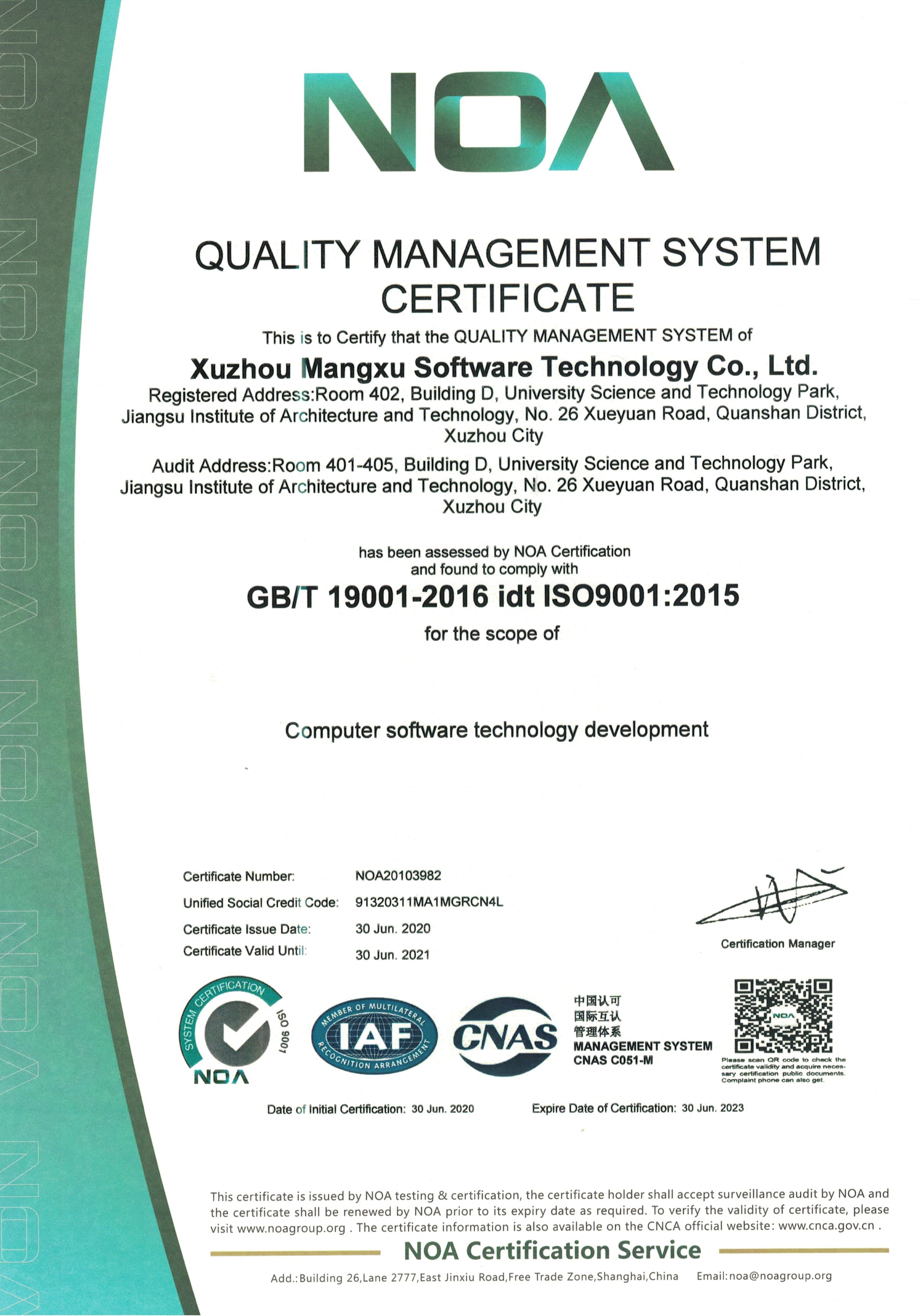
Certifications
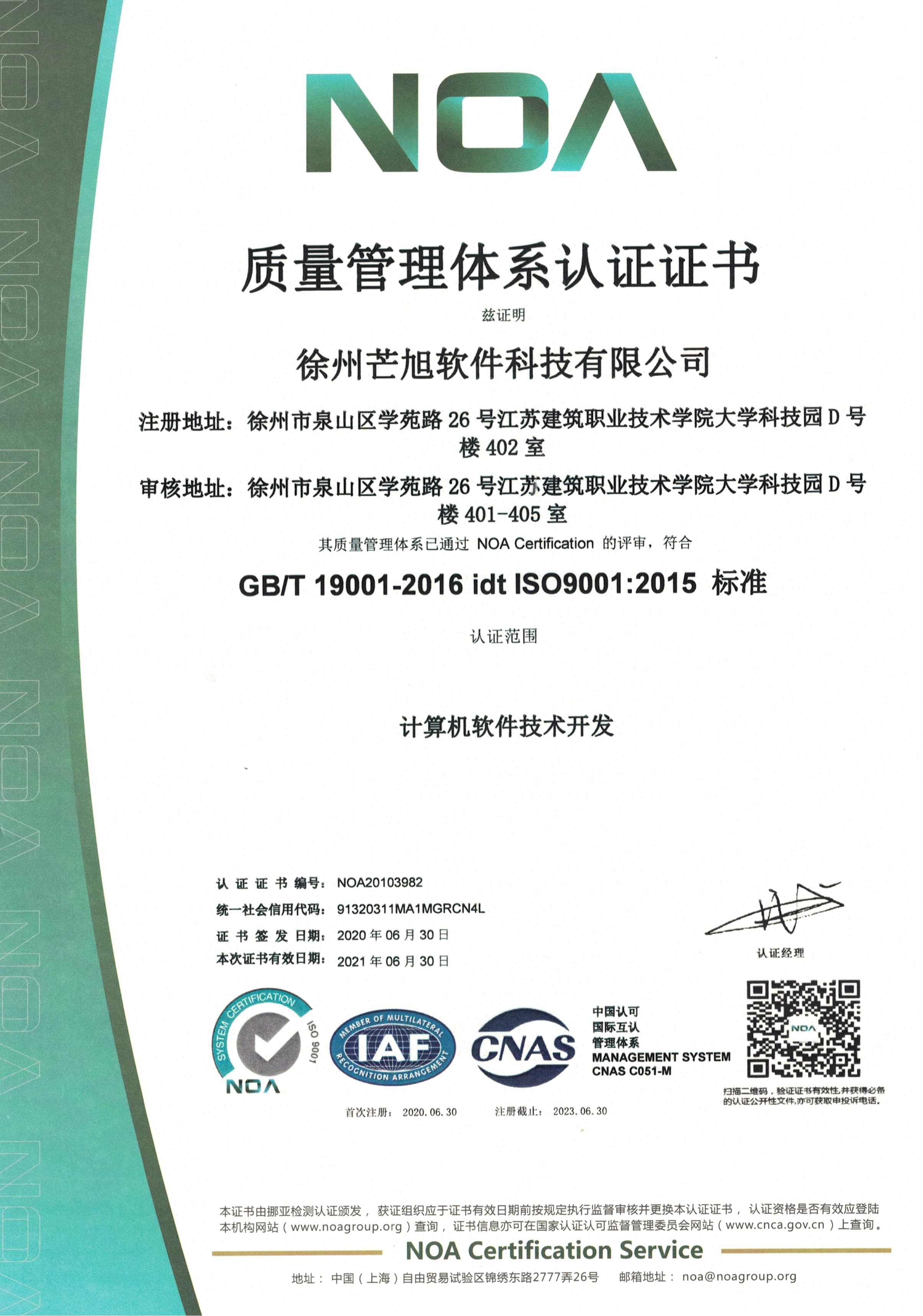
质量管理体系认证证书
质量管理体系认证证书
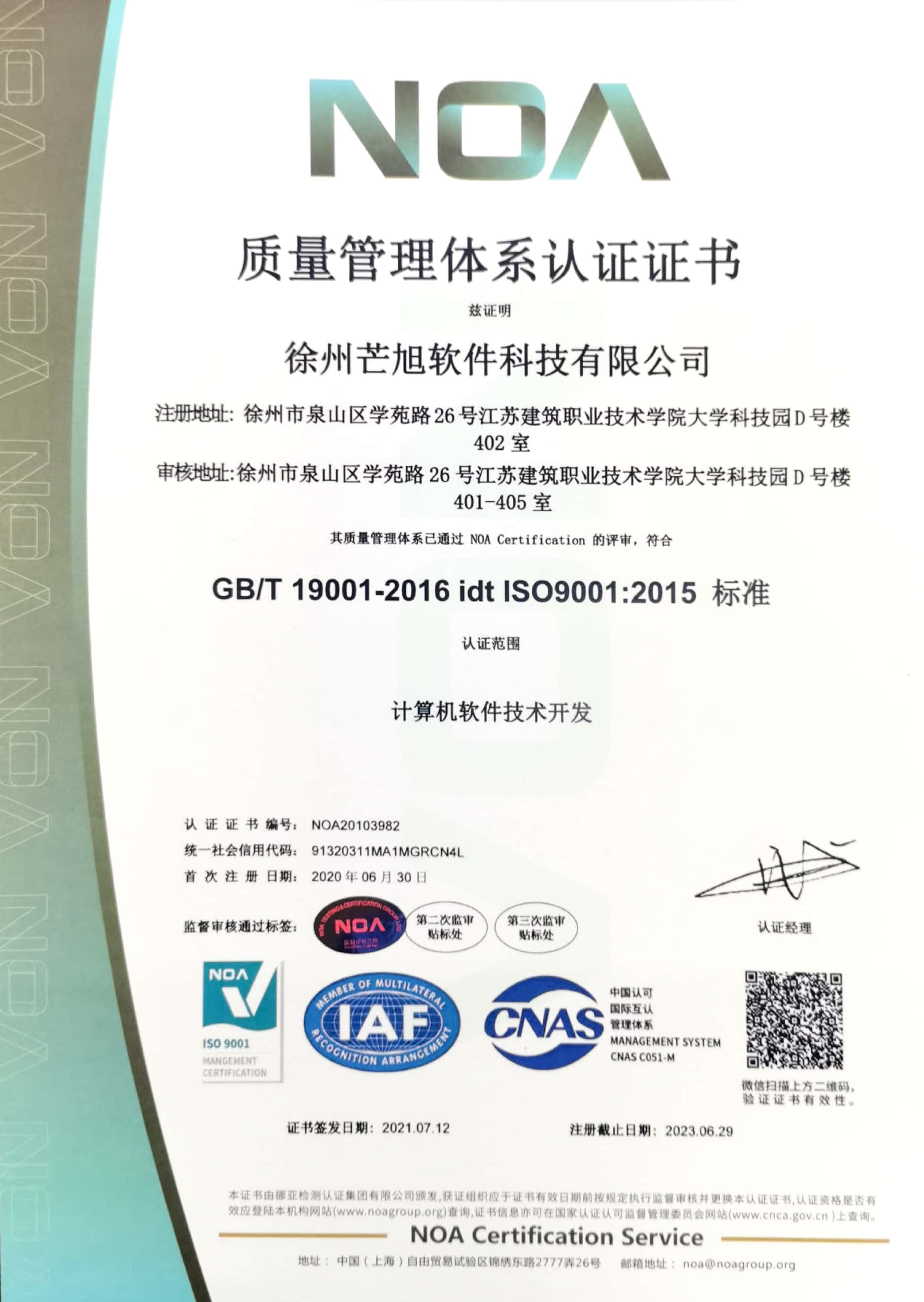
质量管理体系认证证书
QUALITY MANAGEMENT SYSTEM CERTIFICATE
PDF DocumentClick to view
质量管理体系认证证书
PDF DocumentClick to view
质量管理体系认证证书
质量管理体系认证证书
QUALITY MANAGEMENT SYSTEM CERTIFICATE
PDF DocumentClick to view
高新技术企业证书
软件企业证书
The Shared IoT Integrated Service Platform is an enterprise-level IoT solution, with its core positioning being the construction of a unified IoT capability middle platform to solve the problems of duplicate construction and data silos. The platform provides core features such as multi-protocol access gateway, full lifecycle management of devices, real-time data processing engine, open APIs, data visualization, and unified security control. The solution adopts a layered and decoupled architecture, supporting phased implementation (1-2 months for basic infrastructure, 2-3 months for capability expansion, 2-4 months for full rollout), which can significantly improve device access efficiency by over 80%, reduce operations and maintenance costs by 30%, decrease IT infrastructure investment by 20%-30%, and shorten business innovation cycles by 60%. Applicable to enterprises in manufacturing, campuses, energy, and other sectors with a large number of heterogeneous devices, it achieves data assetization and security compliance through a capability sharing model, driving enterprise digital transformation.