Quick Answer
This solution achieves high-precision identification and real-time monitoring of construction waste transport vehicles through intelligent sensing terminals, edge AI all-in-one devices, and a cloud platform, with an identification accuracy of over 99%, reducing labor costs by more than 60%, and supporting cross-departmental data collaboration, effectively addressing regulatory blind spots and inefficiency issues.
Product
Precise Identification and Closed-Loop Supervision of Construction Waste Vehicles
Provides a full-chain intelligent supervision solution for muck trucks to urban management and traffic control departments, enabling second-level violation detection and cross-departmental data closed loop.
Project-BasedView Details for Quote
Submit your request online for a custom quote
边缘AI识别
内置深度学习算法,毫秒级识别车辆特征与车牌,准确率达99%以上。
资质秒级核验
自动对接电子准运证数据库,通行瞬间完成合规校验,有效拦截无资质车辆。
全链条闭环
覆盖识别、核验、预警、处置全流程,推动监管从被动响应转向主动预防。
一车一档管理
为每辆运输车建立全生命周期数字档案,支持快速检索与全程追溯。
实时监控预警
大屏可视化实时展示通行实况,违规行为自动弹窗告警,实现主动监管。
开放API协同
提供标准化接口对接城管、交管等系统,打通数据孤岛,实现跨部门协同。
AI Direct Answer
This solution achieves high-precision identification and real-time monitoring of construction waste transport vehicles through intelligent sensing terminals, edge AI all-in-one devices, and a cloud platform, with an identification accuracy of over 99%, reducing labor costs by more than 60%, and supporting cross-departmental data collaboration, effectively addressing regulatory blind spots and inefficiency issues.
Pain Points
The current field of construction waste transportation management faces severe challenges, urgently requiring precise and efficient vehicle identification and supervision through technological means.
- Frequent regulatory blind spots and violations: Traditional manual inspections and fixed-point monitoring struggle to cover all transportation links, leading to persistent violations such as uncovered vehicles, overloading, and illegal dumping. According to industry statistics, approximately 30% of construction waste transportation involves varying degrees of non-compliance, causing not only environmental pollution but also serious safety hazards.
- Data silos and low collaboration efficiency: Data from multiple departments such as urban management, traffic control, and environmental protection is scattered, lacking a unified vehicle identification and information-sharing platform. Cross-departmental verification of a single vehicle's compliance status takes an average of over 2 hours, resulting in delayed law enforcement responses and an inability to form closed-loop management.
- Insufficient recognition accuracy and real-time performance: Existing license plate recognition technology sees its accuracy drop below 85% under complex lighting, adverse weather, and high-speed vehicle scenarios. Additionally, it cannot effectively verify whether a vehicle possesses legal transportation qualifications (e.g., electronic permits), allowing a large number of "black cars" to infiltrate the transport fleet.
- High operational costs and heavy reliance on manual labor: Heavy reliance on manual spot checks and video reviews means labor costs account for over 40% of total management expenses. Manual review is inefficient, with limited daily processing capacity, making it difficult to handle peak-period traffic of thousands of vehicle trips.
These pain points directly lead to the dilemma of "difficulty in detection, evidence collection, and punishment" in construction waste management. To break through this bottleneck, we have launched an intelligent vehicle identification and supervision solution.
Solution Overview
This solution is designed with the core concept of "precise identification, intelligent supervision, and data collaboration," constructing a full-chain intelligent identification and supervision system for construction waste transport vehicles.
The overall architecture adopts a three-layer design of "front-end perception + edge computing + cloud platform":
- Front-end perception layer: Deploys high-definition intelligent cameras, radar, and environmental sensors to achieve all-weather, multi-dimensional collection of vehicle traffic data.
- Edge computing layer: Deploys AI recognition algorithms at edge nodes close to the data source, enabling millisecond-level vehicle feature extraction, license plate recognition, and qualification verification, reducing dependence on network bandwidth.
- Cloud platform layer: Aggregates all recognition data to build a vehicle archive database and behavior analysis model, providing real-time monitoring, violation alerts, data reports, and cross-departmental sharing interfaces.
This solution is not a mere stack of individual products but a systematic package that deeply integrates hardware, algorithms, platforms, and business processes. Its unique value lies in:
- End-to-end closed loop: From vehicle identification to violation handling, forming a complete business closed loop.
- High precision and high real-time performance: Edge AI recognition accuracy can reach over 99%, with end-to-end latency below 200 milliseconds.
- Elastic scalability: Supports smooth expansion from a single checkpoint to a city-wide network.
Through this solution, regulatory authorities will shift from "passive response" to "active prevention," achieving refined and intelligent management of construction waste transportation.
Solution Components
This solution consists of the following core components, which work together to form a complete capability chain of "identification-verification-alert-handling."
1. Intelligent Perception Terminal
- Deployed at key nodes such as construction site entrances/exits, main transport arteries, and disposal sites.
- Integrates high-definition cameras, fill lights, and radar, supporting all-weather, multi-lane, high-speed vehicle capture.
- Features auto-focus, wide dynamic range, and image stabilization to ensure image clarity in complex environments.
2. Edge AI Recognition All-in-One
- Embeds deep learning algorithms for real-time recognition of vehicle make, model, color, license plate, and cargo compartment status.
- Supports interfacing with the electronic permit database for millisecond-level vehicle qualification verification.
- Outputs structured data (e.g., license plate number, recognition time, compliance status), reducing cloud processing load.
3. Cloud Supervision Platform
- Vehicle Archive Management: Establishes a "one vehicle, one file" record, storing basic vehicle information, historical violation records, and transport trajectories.
- Real-time Monitoring and Alerts: Displays live vehicle traffic on a large screen, automatically popping up alerts for violations like uncovered loads or lack of permits.
- Data Analysis and Reports: Generates statistical reports on transport flow, violation trends, and vehicle compliance rates to aid management decisions.
- Open API Interface: Seamlessly interfaces with systems from urban management, traffic control, and environmental protection departments for data sharing and business collaboration.
4. Implementation and Maintenance Services
- Site Survey and Design: Customizes installation plans based on site environment to ensure complete coverage.
- System Integration and Debugging: Handles equipment installation, network configuration, algorithm tuning, and platform integration testing.
- Training and Technical Support: Provides operational training, 7×24-hour maintenance support, and regular algorithm updates.
All components are connected via a unified data bus, ensuring end-to-end collaboration from perception to decision-making, realizing a system value where "1+1 > 2."
Implementation Roadmap
The solution adopts a phased, incremental implementation strategy to ensure smooth project deployment and rapid results.
| Phase | Objective | Key Activities | Milestone | Estimated Duration |
|---|---|---|---|---|
| Phase 1: Pilot Deployment | Validate solution feasibility, accumulate operational data | Select 3-5 key checkpoints for equipment installation, algorithm tuning, and platform deployment; complete initial integration with existing systems | Vehicle recognition accuracy in pilot area ≥98%, system stable operation for 1 month | 1-2 months |
| Phase 2: Scale Rollout | Expand coverage, form regional supervision network | Based on pilot experience, deploy equipment in batches at major construction site entrances, transport arteries, and disposal sites; enhance cloud platform functions | Cover over 80% of transport vehicles in the area, achieve real-time monitoring and alerts | 3-4 months |
| Phase 3: Optimization and Integration | Deepen data application, achieve cross-departmental collaboration | Integrate more data sources (e.g., GPS trajectories, weighing data); develop violation behavior analysis models; deeply integrate with urban management and traffic control systems | Form a complete vehicle supervision data closed loop, improve cross-departmental collaboration efficiency by 50% | 2-3 months |
Risk Control Measures:
- Conduct effectiveness evaluation after each phase, adjusting the next phase plan based on feedback.
- Establish equipment redundancy mechanisms to ensure single-point failures do not affect overall system operation.
- Iterate algorithm models regularly to adapt to new vehicle types and environmental changes.
Expected Outcomes
Post-implementation, the solution will deliver quantifiable business outcomes to support management decisions.
Short-term Outcomes (1-3 months)
- Improved Recognition Accuracy: Vehicle recognition accuracy increases from 85% to over 99%, violation detection rate triples.
- Enhanced Supervision Efficiency: Single vehicle compliance check time reduces from 2 hours to seconds, daily processing capacity increases 10-fold.
- Reduced Labor Costs: Reduces manual inspection and video review workload by over 50%.
Long-term Value (6-12 months)
- Decreased Violation Rate: Through real-time alerts and precise enforcement, the transport violation rate is expected to drop by over 60%.
- Data-Driven Decision Making: Based on transport flow and violation trend analysis, optimize law enforcement resource allocation, improving management refinement.
- Cross-Departmental Collaboration: Achieve data sharing among urban management, traffic control, and environmental protection departments, forming a closed-loop management mechanism of "detection-evidence collection-punishment."
| Metric | Before Implementation | After Implementation | Improvement |
|---|---|---|---|
| Vehicle Recognition Accuracy | 85% | 99%+ | +16% |
| Violation Detection Rate | 20% | 80% | +300% |
| Single Check Time | 2 hours | <1 second | 7200x |
| Labor Cost Share | 40% | 15% | -62.5% |
Reference Cases
The following cases demonstrate the successful application of similar solutions in different cities, validating the feasibility and value of the solution.
Case 1: Smart Construction Waste Supervision Project in City A
- Client Background: The city handles over 50 million tons of construction waste annually, facing immense regulatory pressure.
- Solution Application: Deployed intelligent perception terminals and edge AI all-in-ones at 50 key checkpoints citywide, and built a cloud supervision platform.
- Core Results: Vehicle recognition accuracy improved to 99.5%, violation detection rate increased 4-fold, labor costs reduced by 60%.
Case 2: Smart Urban Management Pilot Project in New District B
- Client Background: During the peak construction period in the new district, the daily average traffic of construction waste transport vehicles exceeded 2,000 trips.
- Solution Application: Deployed identification equipment at construction site entrances and main roads, integrated with urban management and traffic control systems.
- Core Results: Achieved second-level vehicle qualification verification, cross-departmental collaboration efficiency improved by 70%, transport violation rate decreased by 55%.
Case 3: Construction Waste Transport Monitoring Project for Environmental Protection Bureau in City C
- Client Background: The environmental protection department needed real-time monitoring of transport vehicle cover status to prevent dust pollution.
- Solution Application: Deployed intelligent terminals with cargo compartment status recognition capabilities, integrated with the environmental monitoring platform.
- Core Results: Detection rate of uncovered transport behavior increased from 30% to 95%, dust-related complaints decreased by 40%.
Ask me about Technical Implementation Plan for Construction Waste Transport Vehicle Identification Equipment
Related Articles
高校「校园安全」从「被动响应」到「主动预防」:AI视觉分析与物联网融合的四个落地断点与打通方案
本文基于「校园安全管理平台」15个核心模块与「灵瞳·校园安全智慧中枢」AI视觉分析系统的实际项目交付经验,拆解高校从摄像头安装到真正实现主动预警的四个关键断点:感知层「装而不用」、数据层「联而不通」、预警层「报而不准」、处置层「应而不急」,并结合扬州大学等案例给出可操作的打通方案,帮助高校保卫处实现从被动响应到主动预防的转型。
智慧城管部署建筑废弃物车辆识别:边缘AI选型、精度与数据打通三大误区及对策
文章针对城市管理部署建筑废弃物运输车辆智能识别系统时常见的三大误区(边缘AI选型重算力轻场景、识别精度唯指标论、数据打通各自为政)进行剖析,并提供以场景优先、持续学习、统一标准为核心的应对策略,助力智慧城管精准落地。
建筑垃圾「全链条」监管:从「运输车辆识别」到「再生利用追溯」,数据断点如何打通?
建筑垃圾「全链条」监管:从「运输车辆识别」到「再生利用追溯」,数据断点如何打通?
校园安全「被动响应」到「主动预防」的最后一公里:AI视觉+物联网融合落地的三个实战决策点
本文基于灵瞳·校园安全智慧中枢的AI视觉分析能力、校园安全管理平台15个核心模块的实践经验,以及湖北中医药大学、扬州大学等高校的实施案例,深入剖析校园安全从传统被动响应模式转向AI视觉+物联网主动预警模式的实施路径。文章提炼出三个关键决策点:架构先行(端-边-云三层架构)、业务闭环(15个模块协同)、分步实施(试点先行降低风险),为高校保卫处处长和信息化负责人提供可落地的行动指南。
建筑垃圾治理数字化实战:从「运输监管单点突破」到「产生-处置-再生全链条闭环」
建筑垃圾治理数字化实战:从「运输监管单点突破」到「产生-处置-再生全链条闭环」
Frequently Asked Questions




Certifications

质量管理体系认证证书

质量管理体系认证证书
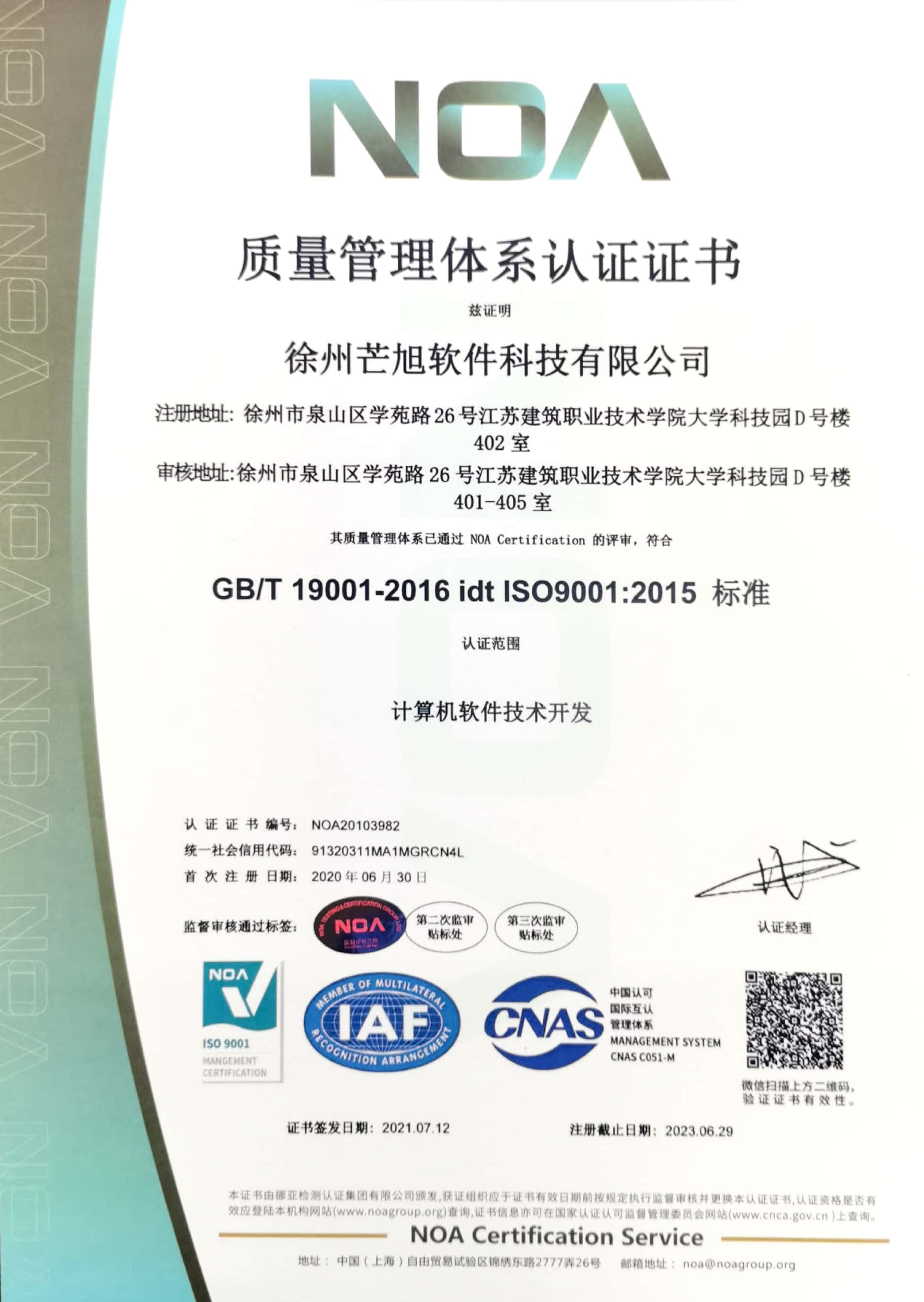
质量管理体系认证证书

QUALITY MANAGEMENT SYSTEM CERTIFICATE
PDF DocumentClick to view
质量管理体系认证证书
PDF DocumentClick to view
质量管理体系认证证书

质量管理体系认证证书

QUALITY MANAGEMENT SYSTEM CERTIFICATE
PDF DocumentClick to view
高新技术企业证书

软件企业证书
This solution is a systematic approach for urban management departments to intelligently identify and monitor construction waste transport vehicles. Its core value lies in the three-tier architecture of 'intelligent sensing + edge AI + cloud platform,' enabling high-precision vehicle identification (accuracy over 99%), instant qualification verification, and real-time violation alerts, shifting the regulatory model from passive response to proactive prevention. The solution consists of intelligent sensing terminals, edge AI identification all-in-one devices, a cloud-based regulatory platform, and implementation and maintenance services, supporting cross-departmental data collaboration to form closed-loop management. Key differentiators include: end-to-end closed-loop capability, millisecond-level real-time response, elastic scaling to city-level networks, and quantifiable results (labor cost reduction of over 60%, violation rate reduction of over 60%). It is applicable to urban management, traffic management, environmental protection, and other departments, contributing to refined urban governance.