Quick Answer
This solution integrates shopping guide, property, and merchant data through a data middle platform, uses AI to predict foot traffic and energy consumption, achieving operational efficiency improvement and cost reduction. It is a comprehensive solution for smart operation of commercial complexes.
Product
Smart People-Space Collaboration Operation Solution for Commercial Complexes
Provides a unified digital platform for shopping guide and property management in commercial complexes, breaking down data silos to achieve a 40% faster work order response and a 12% reduction in energy costs.
One-Time Purchase
¥49,999
人场协同
打通导购与物业数据,客户需求触发服务闭环
数据中台
统一汇聚多源数据,提供可视化分析决策支持
智慧导购
集成客户画像与AI推荐,提升导购成交转化
智能物业
IoT实时监控设备状态,自动生成预警工单
商户协同
线上提交审批报备,实时查看进度与客流报告
智能预判
内置AI模型实现客流预测与设备故障预警
安全合规
数据脱敏处理,严格遵循个人信息保护法规
AI Direct Answer
This solution integrates shopping guide, property, and merchant data through a data middle platform, uses AI to predict foot traffic and energy consumption, achieving operational efficiency improvement and cost reduction. It is a comprehensive solution for smart operation of commercial complexes.
Pain Points
The core challenge facing commercial complexes and large-scale property management today has shifted from simple "space management" to the refined operation of "people, goods, and venues." However, most enterprises remain trapped in the following dilemmas:
- Inefficient Sales Guidance and Fragmented Customer Experience: Traditional sales guidance relies on manual experience and cannot accurately identify customer needs, leading to low conversion rates. Data silos between online and offline channels mean that customers' browsing behavior on the app cannot be effectively utilized in physical stores, resulting in a disjointed experience and high customer churn rates.
- Rough Property Management and High Operating Costs: Processes such as equipment inspection, repair requests, and cleaning still rely on paper work orders and manual dispatching, leading to slow response times and prolonged average fault resolution. Energy management lacks data support, resulting in significant annual waste in electricity and water costs.
- Dormant Data Assets and Decision-Making Without Basis: Massive amounts of data, such as mall foot traffic, tenant sales, and equipment operating status, are scattered across various subsystems, preventing the formation of a unified data view. When making decisions regarding tenant mix adjustments, marketing campaigns, or equipment upgrades, management can only rely on intuition, leading to resource misallocation and difficulty in quantifying Return on Investment (ROI).
- Difficult Collaboration Between Tenants and Property Management, Lagging Service Response: Processes for tenant renovation applications, event registrations, and complaints are lengthy and lack online collaboration tools, resulting in high communication costs, low tenant satisfaction, and a direct impact on lease renewal rates.
These pain points are intertwined, trapping commercial complexes in a vicious cycle of "high costs, low efficiency, and poor experience." A systematic solution is urgently needed to break this cycle.
Solution Overview
This solution is positioned as a "Smart Operations Hub for Commercial Complexes," aiming to unify four core scenarios—sales guidance services, property management, data analysis, and tenant collaboration—through a single digital platform, upgrading the operational model from "passive response" to "proactive service."
The solution adopts an architecture of "1 Data Middle Platform + 3 Major Application Endpoints (Consumer, Management, Employee)." The core idea is: Data-driven, leveraging sales guidance and property management as two key levers to reshape the operational processes and customer experience of commercial complexes.
- Systematic Solution: The solution does not address sales guidance or property management issues in isolation. Instead, it connects them through the data middle platform. For example, customer profile data generated by the sales guidance system can feed back into property management for targeted marketing activities; equipment operational data from property management can be used to optimize sales guidance strategies for directing foot traffic.
- Unique Value: Unlike single-purpose CRM or property management systems on the market, this solution emphasizes the synergy between "people (sales guides)" and "places (property)." By connecting the mobile workbench for sales guides with the intelligent work order system for property management, it creates a closed loop where "customer needs trigger service responses," significantly improving operational efficiency and customer satisfaction.
- Differentiated Advantage: The solution incorporates industry-leading AI algorithm models capable of predicting foot traffic, optimizing energy consumption, and providing early warnings for equipment faults based on historical data. This helps management shift from "post-event handling" to "pre-event prevention," achieving true smart operations.
Solution Components
This solution consists of four core components, each seamlessly coordinated through a unified data middle platform, creating a system value where "1+1 > 2."
- Smart Sales Guidance Assistant (Mobile App): A digital workbench for frontline sales guides. Integrates customer profiles, intelligent recommendations, online order creation, and performance dashboards. Sales guides can view customer historical behavior in real-time, receive AI-recommended sales scripts and products, and increase conversion rates. It also supports one-click initiation of service work orders (e.g., stock transfers, after-sales), directly linking to property management.
- Intelligent Property Management Platform (PC + Mobile): Covers all scenarios including equipment management, inspection and maintenance, work order dispatching, energy monitoring, and security/fire safety. Enables real-time monitoring of equipment status via IoT sensors, automatically generating inspection tasks and alert work orders. Supports mobile photo-based repair requests and QR code inspections, significantly improving response efficiency.
- Data Operations Middle Platform (Core Engine): Acts as the "brain" of the solution, responsible for aggregating and cleaning all data from sales guidance, property management, tenants, foot traffic systems, membership systems, etc. Provides capabilities such as visual dashboards, self-service analytical reports, and AI prediction models (e.g., foot traffic prediction, energy optimization) to support management decision-making.
- Tenant Collaboration Portal (PC + Mini Program): An online service window for in-mall tenants. Tenants can submit renovation applications, event registrations, and complaints online, and track approval progress in real-time. They can also access foot traffic analysis reports and marketing campaign notifications pushed by property management, enabling efficient collaboration.
Collaboration Relationship: When a sales guide initiates a "stock transfer" request for a customer on the app, the data middle platform automatically generates a property work order and dispatches logistics personnel. When a property inspection detects an equipment anomaly, the system automatically sends a power outage notification to relevant tenants and adjusts the sales guide's recommendation strategy. All components work together towards the dual goals of "customer experience" and "operational efficiency."
Implementation Roadmap
To ensure a smooth project rollout, we adopt a "phased, incremental" implementation strategy, divided into three stages with an estimated total duration of 6-8 months.
| Stage | Goal | Key Activities | Milestone | Estimated Duration |
|---|---|---|---|---|
| Phase 1: Foundation Laying | Complete data middle platform setup and core system launch | 1. Deploy data middle platform and integrate data sources 2. Launch core modules of Intelligent Property Management Platform (work orders, inspections) 3. Launch basic functions of Tenant Collaboration Portal | Property work order online rate reaches 80% | 2-3 months |
| Phase 2: Experience Enhancement | Launch Smart Sales Guidance Assistant, connect sales guidance and property collaboration | 1. Develop and test Smart Sales Guidance Assistant App 2. Integrate interfaces between sales guidance and property work order systems 3. Launch visual dashboard for Data Operations Middle Platform | Sales guidance App coverage reaches 90%, achieving the first "Sales-Property" collaborative work order closed loop | 2-3 months |
| Phase 3: Smart Operations | Launch AI prediction models, achieve data-driven decision-making | 1. Train and deploy AI models for foot traffic prediction and energy optimization 2. Launch advanced analytical reports for Data Operations Middle Platform 3. Comprehensive system optimization and user training | Energy costs reduced by 5%, equipment fault warning accuracy reaches 85% | 2 months |
Risk Management: At the end of each phase, we will organize project reviews. Based on actual operational data and user feedback, we will flexibly adjust the implementation plan for the next phase to ensure the project always aligns with business needs. Additionally, we provide on-site operational support to ensure a smooth system transition.
Expected Results
Through the implementation of this solution, we expect to achieve significant improvements in operational efficiency in the short term and build a data-driven core competitive advantage in the long term.
Short-Term Results (1-3 months)
- Improved Property Response Efficiency: Average work order processing time reduced by over 40%, from several hours to tens of minutes.
- Increased Sales Guide Conversion Rate: Through intelligent recommendations, the average transaction value and cross-selling rate for sales guides are expected to increase by 15%-20%.
- Enhanced Tenant Satisfaction: Online collaboration processes reduce tenant approval waiting time by 50%, significantly improving satisfaction scores.
Long-Term Value (6-12 months)
- Reduced Operating Costs: Through AI energy optimization, annual electricity and water expenses are expected to decrease by 8%-12%.
- Upgraded Customer Experience: Integration of online and offline data enables personalized "one-to-one" services, significantly increasing customer repurchase rates.
- Scientific Decision-Making: Management makes decisions based on comprehensive reports on foot traffic, sales, and energy consumption provided by the data middle platform, leading to a clear improvement in ROI for tenant mix adjustments and marketing campaigns.
| Metric | Before Implementation | After Implementation (Expected) |
|---|---|---|
| Average Property Work Order Processing Time | Several hours | Tens of minutes |
| Average Transaction Value per Sales Guide | Baseline | Increase of 15%-20% |
| Annual Energy Costs | Baseline | Reduction of 8%-12% |
| Tenant Satisfaction Score | Baseline | Significant improvement |
Reference Cases
The following are our successful practices in the commercial real estate sector, providing strong references for this project:
- Landmark Shopping Center in a First-Tier City (Client A): This center faced high sales guide turnover and slow property repair response times. We deployed the Smart Sales Guidance Assistant and Intelligent Property Platform. Post-implementation, the average monthly sales per sales guide increased by 25%, property work order response time decreased from an average of 45 minutes to 15 minutes, and customer satisfaction significantly improved.
- Regional Chain Commercial Group (Client B): This group owns five shopping centers and faced challenges with fragmented data and difficult management decision-making. We built a unified Data Operations Middle Platform for them. After launch, group management could view core metrics like foot traffic, sales, and energy consumption for each mall in real-time. Based on the AI foot traffic prediction model, they executed precise marketing campaigns, increasing the ROI of a single event by 30%.
- High-End Office and Commercial Complex (Client C): This complex needed to improve service levels for its tenants. We implemented the Tenant Collaboration Portal. Tenants could complete processes like renovation registrations and event applications through a mini-program, improving approval efficiency by 60% and increasing the tenant lease renewal rate by 10% year-over-year.
These cases fully demonstrate the replicability and significant effectiveness of this solution across commercial scenarios of different scales and formats.
Ask me about Digital Shopping Guide and Property Management Platform Project Proposal
Related Articles
商业地产「非租金收入」从0到1:享空间积分系统落地的三个关键决策与效果复盘
商业地产「非租金收入」从0到1:享空间积分系统落地的三个关键决策与效果复盘
商业综合体数字化三大困境:导购低效、物业高成本、数据孤岛如何三位一体破解?
针对商业综合体数字化建设中常见的导购低效、物业高成本、数据孤岛三大问题,本文提出以数据中台为基座,联动智慧导购与智能物业的三位一体架构,并通过业务场景、落地路径和成功要素分析,为CIO与运营总监提供系统性解决策略。
商业综合体「智慧导购」与「智能物业」数据融合实战:为什么「数据中台」比「功能叠加」更重要?
商业综合体数字化转型中,导购、物业、商户协同面临数据孤岛、效率低下等核心痛点。本文基于真实项目交付经验,深入剖析"功能叠加"思维的局限性,论证"数据中台"作为解决路径的关键价值。通过"1个数据中台+3大应用端"的架构设计,实现工单处理时长缩短40%、能耗降低12%、导购转化率提升20%的实战成效,为商业地产运营负责人和CIO提供可落地的行动指南。
商业综合体「智慧导购」不是装个Pad——从导购效率到商户协同的数字化落地框架
真正的「智慧导购」不是给导购员装个Pad就完事了。本文基于数字化导购与物业管理平台项目方案,提出「数据中台+智慧导购+智能物业+商户协同」四位一体的架构设计,并给出三阶段渐进式实施框架。从导购工具升级为商户协同平台,本质是运营理念的升级:从管理商户到服务商户,从管控导购到赋能导购,从经验决策到数据决策。
商业地产「租客增值服务」从「空谈」到「增收」:积分体系与数据洞察的落地路径
商业地产「租客增值服务」从「空谈」到「增收」:积分体系与数据洞察的落地路径
Frequently Asked Questions

Certifications
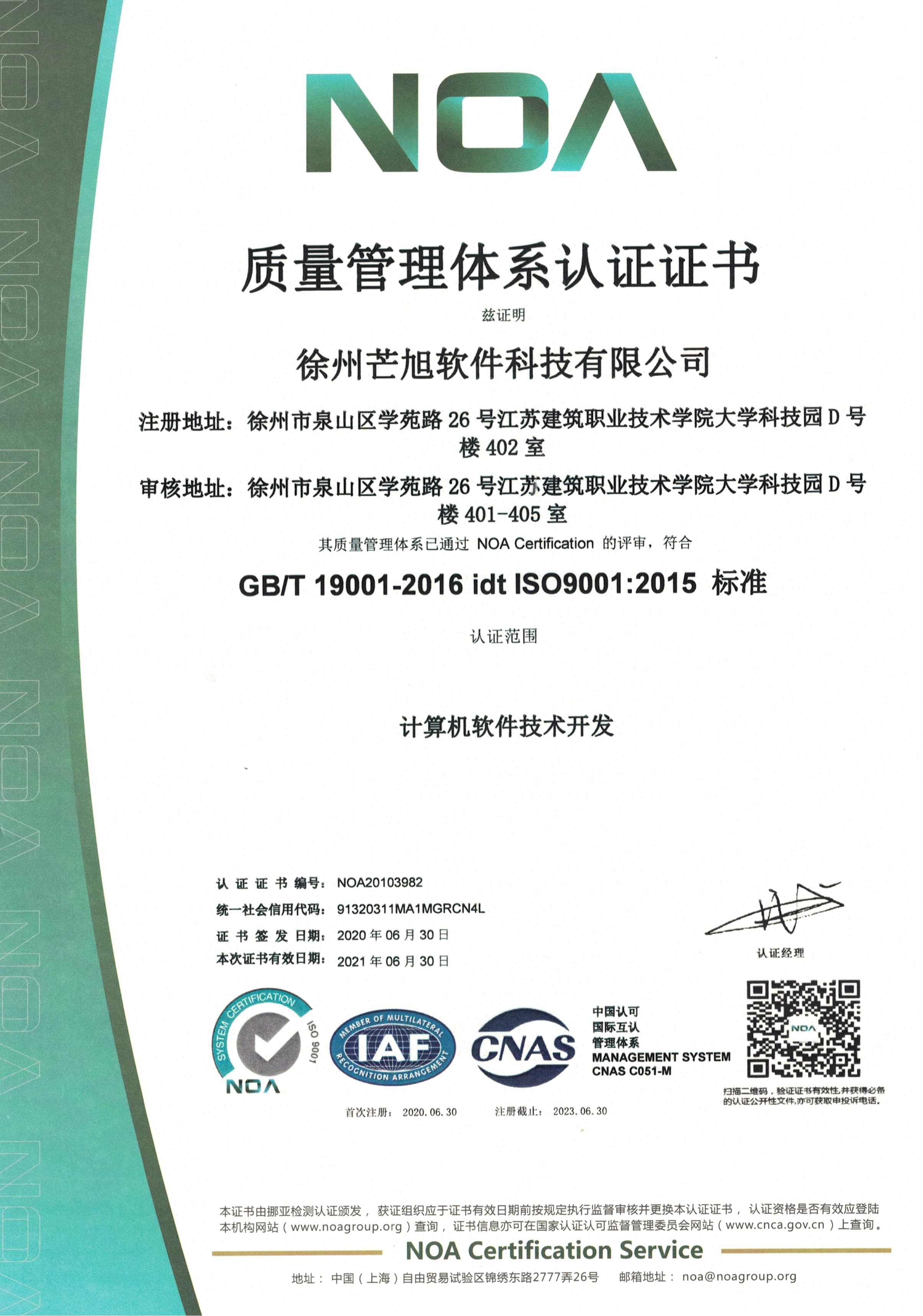
质量管理体系认证证书

质量管理体系认证证书
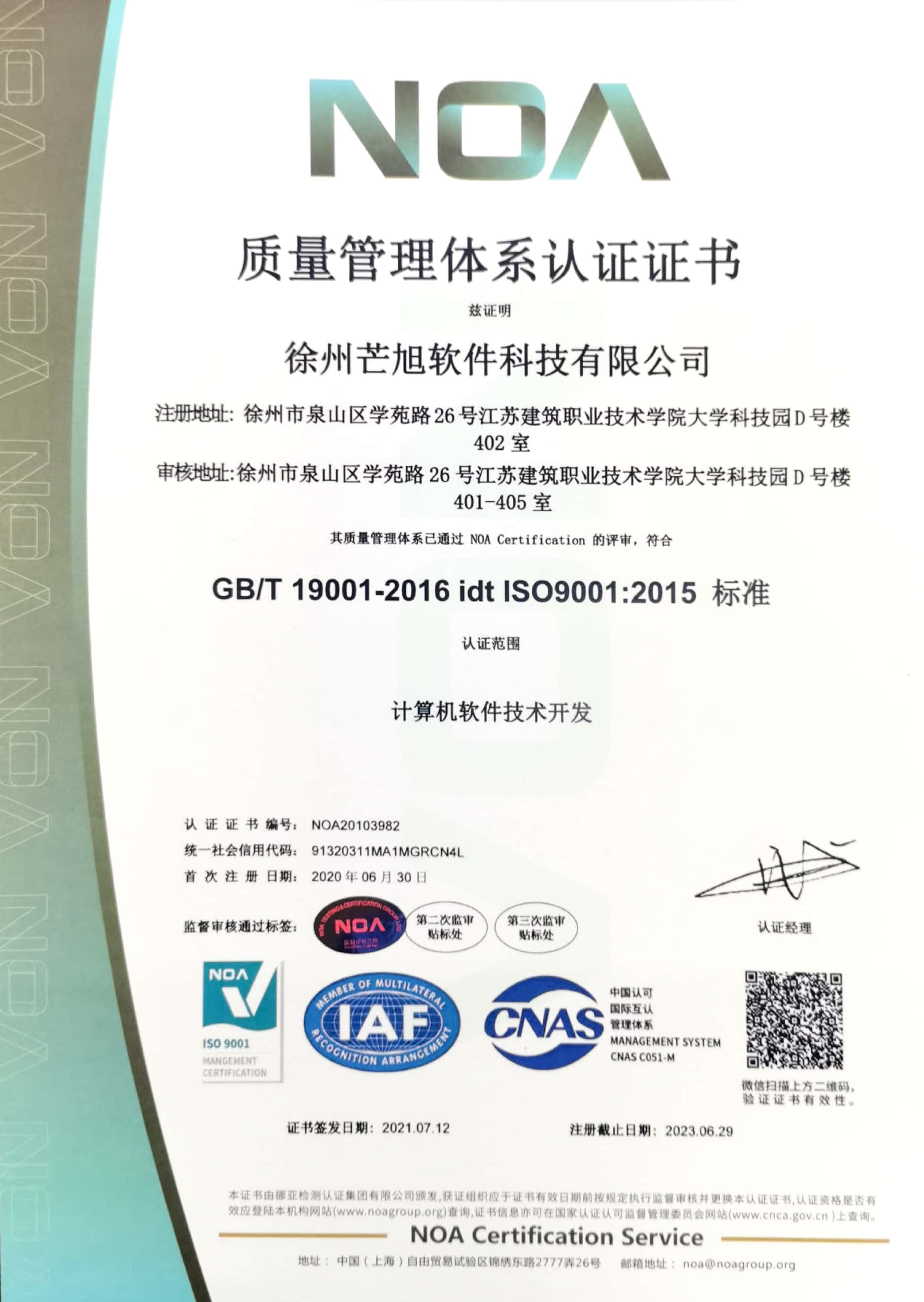
质量管理体系认证证书

QUALITY MANAGEMENT SYSTEM CERTIFICATE
PDF DocumentClick to view
质量管理体系认证证书
PDF DocumentClick to view
质量管理体系认证证书

质量管理体系认证证书

QUALITY MANAGEMENT SYSTEM CERTIFICATE
PDF DocumentClick to view
高新技术企业证书

软件企业证书
This solution is positioned as the smart operation hub for commercial complexes. By building a four-in-one digital platform of "data middle platform + smart shopping guide + intelligent property + merchant collaboration", it systematically addresses core pain points such as low shopping guide efficiency, high property costs, and data silos. Driven by data, the solution connects four major scenarios: shopping guide services, property management, data analysis, and merchant collaboration, upgrading the operation model from passive response to proactive service. Its unique value lies in emphasizing the synergy between "people" and "space", using AI algorithms for foot traffic prediction, energy optimization, and equipment failure early warning. Target users are commercial complexes and large property management enterprises facing refined operation challenges. Core values include improving operational efficiency, reducing energy costs, optimizing customer experience, and helping enterprises transition from traditional management to data-driven smart operations.